





#1
#2
Deep down, Americans and Europeans aren’t that different. We all have the same cultural heritage, and it doesn’t take much to understand each other. Just a bit of goodwill and patience. However, it’s normal to expect some differences, especially when it comes to the economy.
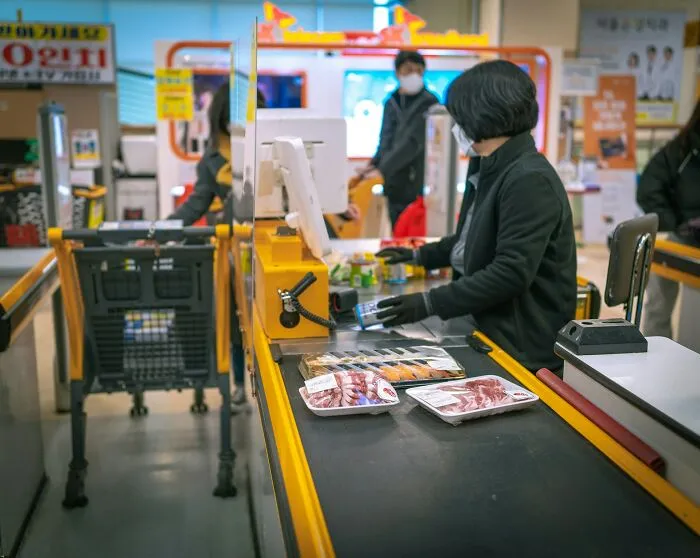
For instance, grocery prices can feel surprisingly different for Americans moving to Europe. The Washington Post showed a comparison between two antibiotic-free, boneless chicken breasts that cost nearly $9 at a US big-box store, while the equivalent cost less than $5 in France. That means the French option was roughly 44% cheaper for the same type of product.
#3

#4
Salary differences add another layer to the comparison. During 2024, the average annual wage, adjusted for purchasing power, was about $82,933 in the United States, compared with $63,691 in the United Kingdom, $60,901 in France, $69,829 in Germany and $53,317 in Italy.
When incomes differ this much, everyday prices have a very different impact on people's budgets. Familiar expenses suddenly feel cheaper, even when the price tag itself does not seem extremely lower.
#5
#6
Restaurant tipping can be another cultural adjustment. While Americans are used to leaving a pretty big tip at restaurants, tipping works differently in many European countries.
Tips of 15% or more are generally unnecessary in many European destinations, with some countries including service charges or simply expecting diners to round up.
#7

Was literally overwhelmed with emotions in the moment, will never forget it.
#8

The real biggest shock was how after a decade here I went back to the Us and realised how much church and religion is pushed down your throat. Like constantly nonstop in every interaction, tv shows, the radio, back of taxis, just walking or driving down any street, it’s f*****g everywhere.
I just don’t think I realised it when I first moved here several decades ago, it was just quiet. But now in retrospect I deal with amost zero religion.
#9

The contrast is not necessarily about Europeans caring less about money, but about what customers are expected to pay for. In many European restaurants, the listed price already covers the meal and service, while tipping remains optional or modest.
For Americans who are used to adding a tip without even thinking about it, eating out in Europe can feel like a huge cultural change.
#10
And sick leave is the same. First is just that people call in sick all the time. For good reason but it just shocked me. They didn't feel well, so they didn't come in. As simple as that. But also the people who had bigger issues, took 6 months off and came back like nothing happened. No one complained, it's just accepted that they needed that time off and are now back and ready to work.
edit: grammar.
#11
#12
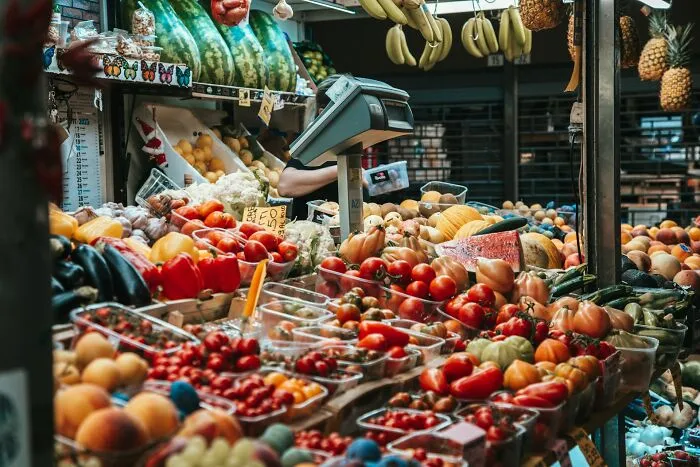
Also how hard it was to find cilantro.
Speaking of cultural changes, walking is one everyday habit that can make European cities feel different to Americans. A survey found that 61% of people said they had walked for at least 10 minutes on 4 or more days the previous week. This gives us a good idea of how common regular walking is across Europe.
In fact, an European Commission research highlights everyday activities such as walking, cycling and climbing stairs as important forms of physical activity. In many European cities, these actions can naturally become part of commuting, shopping and socializing, rather than something people deliberately schedule as a workout.
#13
I lived in Philadelphia and our public transportation was a*s in comparison.
I now live in Vienna. The buses are almost always on time and come in 9 minute intervals. The trains arrive every 4-6 minutes.
Also EVERYTHING is so efficient and clean! No trash anywhere. All the train stations are even clean!
#14

#15
1. call in sick to work when sick/say no to work that was offered even when I was already working 7 days a week
2. just go to a doctor or dentist when needed without first taking weeks and months to budget, compare prices and practices, emotionally work up to it...
I remember a moment in our first apartment in Germany where an old filling fell out while I was brushing my teeth, and my husband picked up the phone and started calling someone, and I asked what he was doing, and he said, "You need a dentist, so I am calling a dentist to make an appointment?" Whaaaaaaaat?! Just like that?! Absolutely amazing. .
I think that part of the difference may simply come down to how European cities are built. Many have older, smaller city centers where shops, restaurants, and other places are packed closer together, so walking often feels like the easiest option.
Instead of driving everywhere, people can sometimes get where they need to go on foot without even thinking about it.
#16
#17
#18
One detail that called my attention is Europe's greener reputation. The European Environment Agency found that food accounted for 49% of the EU's consumption footprint in 2023, followed by housing at 18% and mobility at 17%. The figures show how everyday consumption remains closely connected to environmental impact.
European environmental policies increasingly focus on the major sources of household impact rather than isolated green habits. Choices surrounding what people eat, how they heat and cool homes, and how they travel are particularly relevant when discussing Europe's environmental approach.
#19

The Dutch insist it’s actually Big Bird’s cousin, Pino, but I wasn’t fooled. You know he’s actually Big Bird who escaped to lead an alternative lifestyle.
#20
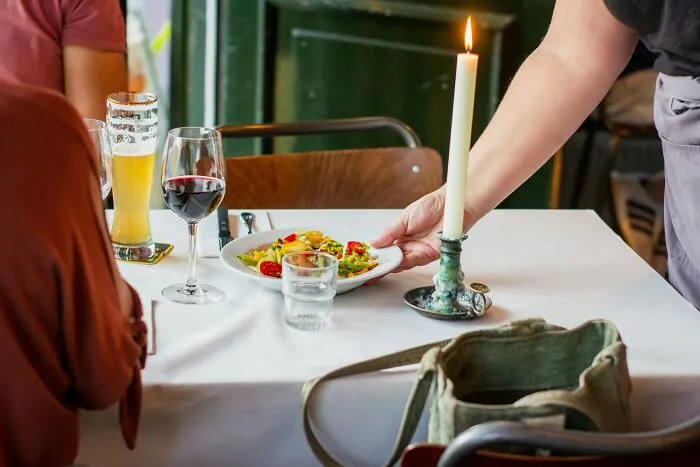
The first thing we noticed when going to a restaurant was that we hadn’t been asked in the middle of our meal how the food was the entire time we were in Europe. Not only that, nobody is in a rush to get you a bill at a restaurant in Europe. You can just enjoy some conversation after your meal without being rushed out the shop.