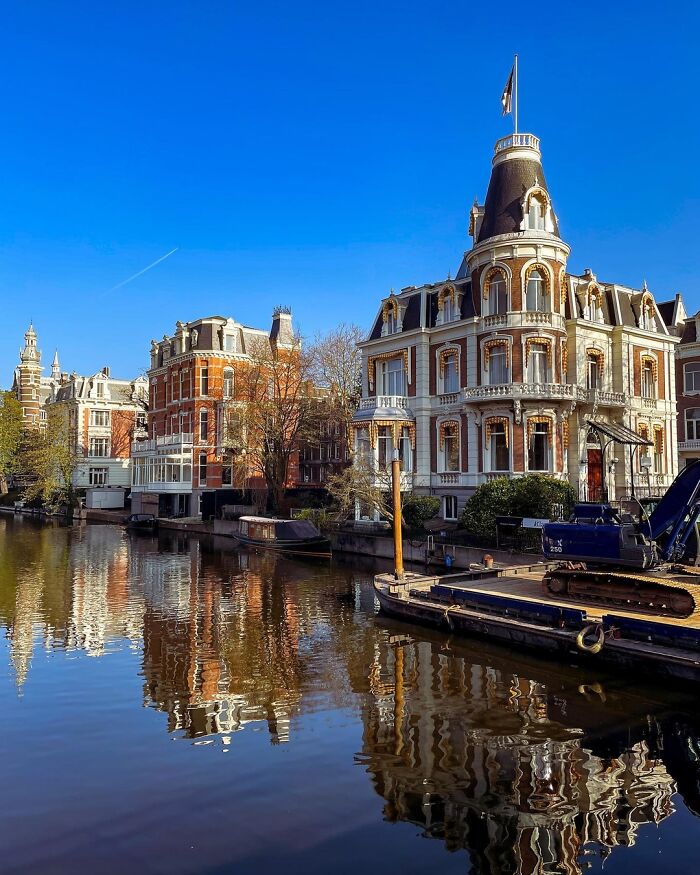
Amsterdam’s canals are not just scenic, but the backbone of the city. Built more than four centuries ago by 17th-century Dutch planners, the canal system was engineered for transport, defense, and water management, shaping the city’s layout long before tourism existed.
That infrastructure later earned global recognition when the canal ring was designated a UNESCO World Heritage Site in 2010. Today, visitors experience it from the water or on foot, weaving past historic houses, bridges, and former warehouses that define Amsterdam’s character.
Cultural life fills the spaces between canals. World-renowned museums like the Rijksmuseum and the Van Gogh Museum anchor the city’s art scene, while sites such as the Anne Frank House preserve its wartime history.
Alongside that legacy, attractions like Madame Tussauds, The Upside Down Amsterdam, and Icebar Amsterdam reflect the city’s more playful, modern side.
The future, however, is less certain. The
World Atlas reports that Amsterdam is sinking by up to 8 millimetres per year and warns that flood risk could intensify by 2030.
Visiting in 2026 means experiencing the city at a moment when its historic beauty and environmental vulnerability are inseparable.