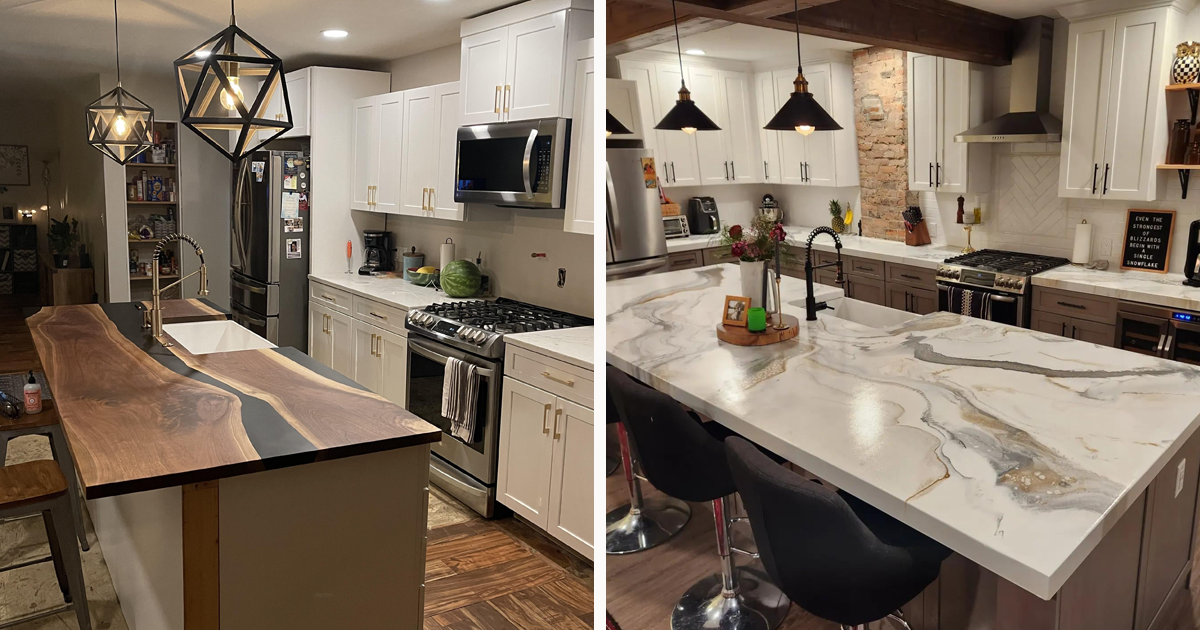
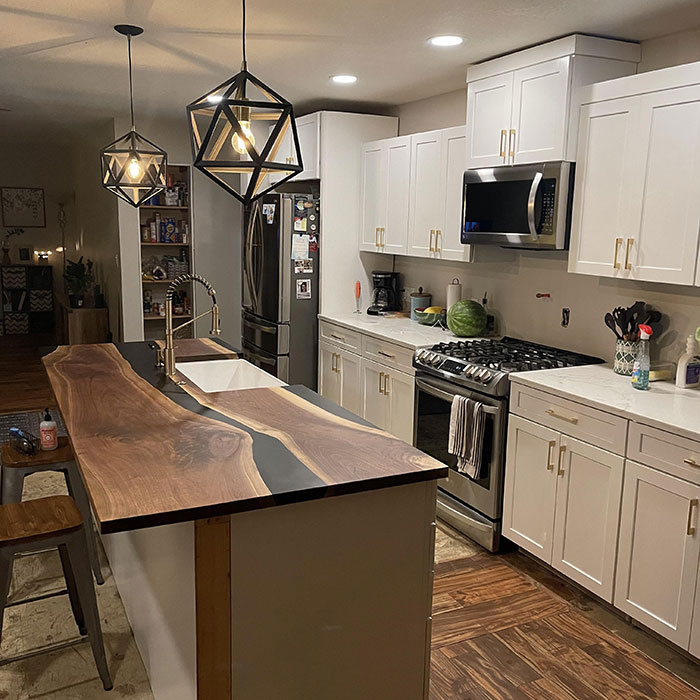
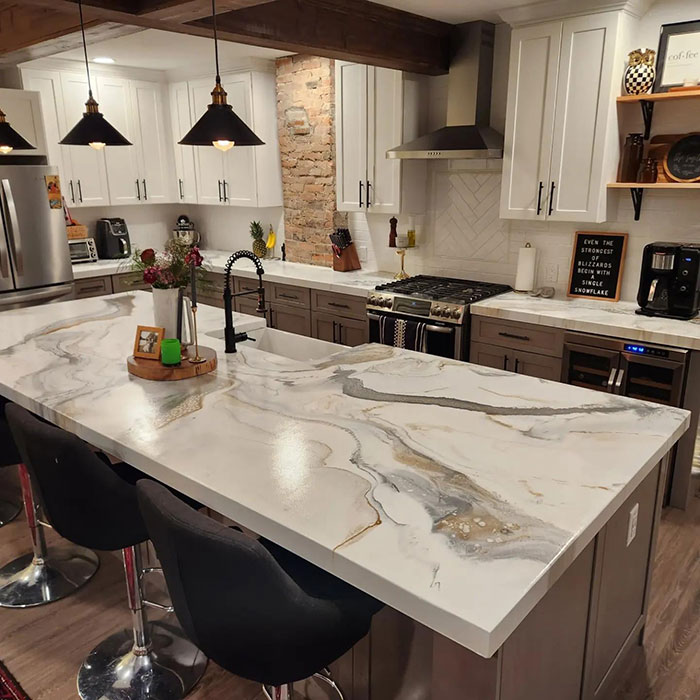
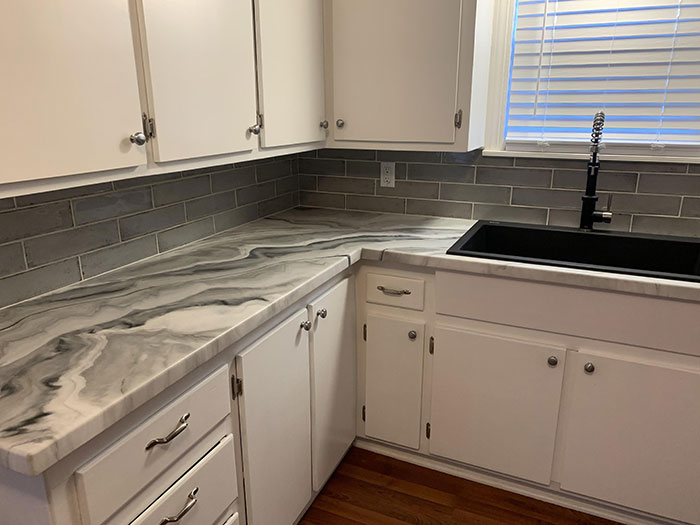
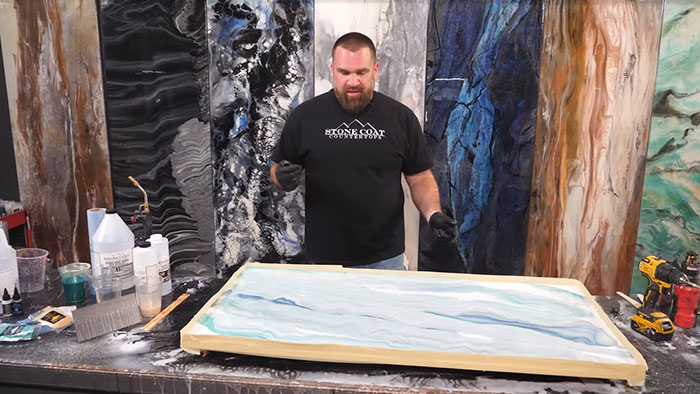
When thinking about the design of the countertop, we usually think of traditional materials like wood, marble, or granite. However, it seems like epoxy has recently been coming to the spotlight. Yes, it’s not the first choice that comes to mind, but epoxy countertops may be the next big thing.
Making an epoxy kitchen countertop is fun and exciting. Still, it could turn into a mess if you’re not careful. Before you decide if epoxy countertops are the best solution for your project, let’s look at all the pros and cons of installing one in your home.
One notable advantage of epoxy is the creative freedom it offers. Instead of a rigid slab, epoxy starts as a fluid mixture. Traditional epoxy comes in two liquid-filled tubes—one with epoxy resin and the other with a hardener. Mixing them creates a flexible material that is easy to handle and transport, but the benefits don’t stop here.
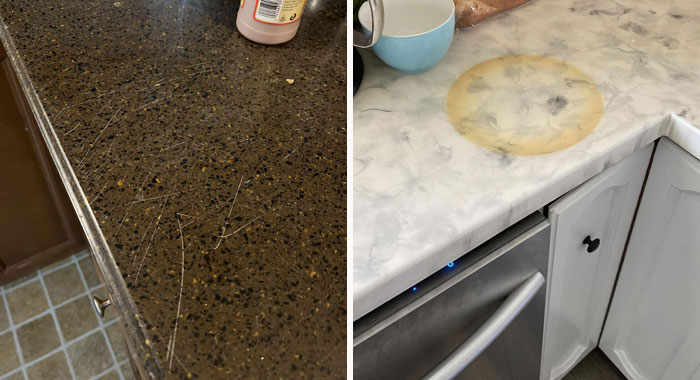
While there are obvious advantages to epoxy countertops, it’s essential to be aware of the drawbacks.
Using epoxy for your countertop has its benefits and drawbacks. Just don’t let the shortcomings alone guide your decision. Know that if you choose the right materials and follow the necessary steps, you can easily mitigate all the challenges and enjoy the benefits of epoxy countertops.
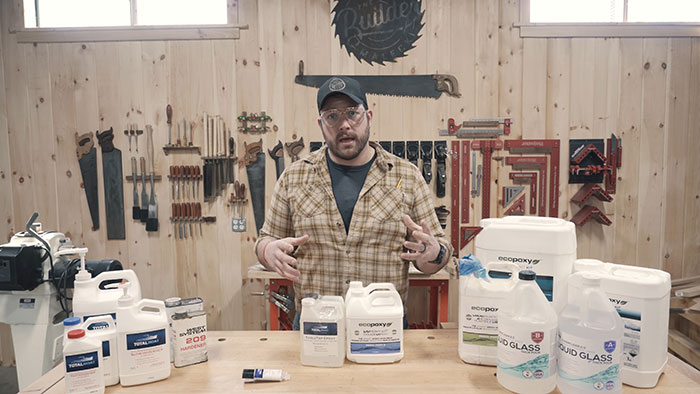
Before going for a generic brand, let’s explore crucial considerations to guarantee the best outcome for your project:
If you’re unsure which epoxy to choose, consider consulting a contractor. Their expertise can prevent the headache of potential mistakes, offering valuable assistance for a successful countertop project. Remember, a little help can go a long way.
Building an epoxy kitchen countertop is a challenge to any DIY fan. While you don't have to be an expert, you must be savvy enough to avoid making your kitchen a mess. Before you proceed, we suggest first familiarizing yourself with the tools, materials, and steps you need to take to build your unique epoxy countertop.
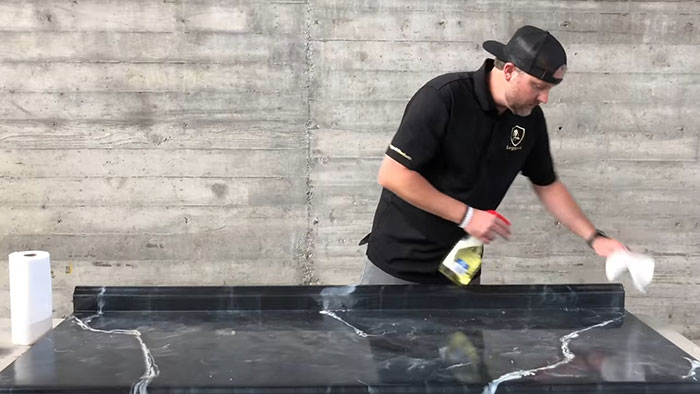
Let’s make a DIY epoxy countertop. Follow these steps carefully, and we promise you’ll save time and money on your kitchen project. For more instructions, you might want to check our video below.
1. Prepare the surface: Clean off dirt and grease, then create a rough surface by sanding for better epoxy adhesion.
2. Apply primer (Optional): Apply primer and let it dry.
3. Level and mask the surface: Use painter’s tape where needed and level out the surface for an even epoxy distribution.
4. Prepare the epoxy: Follow manufacturer instructions to create an epoxy mixture.
5. Add some color (optional): Introduce epoxy dye for a colorful result.
6. Apply the epoxy: Start with the edges using a paintbrush. Pour the rest and level with a leveling tool (if needed).
7. Removing bubbles: Use a foam roller and heat gun to eliminate bubbles.
8. Curing: In most cases, one to two days is enough for epoxy to set. However, each manufacturer may have different suggestions—always check the label.
9. Finishing touches: Sand the surface with fine-grit sandpaper to remove imperfections.
10. Clean up: Remove painter’s tape, clean the work area, and use acetone or alcohol to clean the tools and the mixing container.
In most cases, sandpaper and more epoxy will solve all the problems. However, like with most new challenges, you may sometimes need a different solution.
Congratulations. You have completed your DIY project! Now you can pair it with other furniture in your kitchen. Decided to go for a marble finish? Get some white cabinets to match your new countertop. Maybe you have a beautiful island? A new epoxy countertop can be a great way to give it a fresh look.