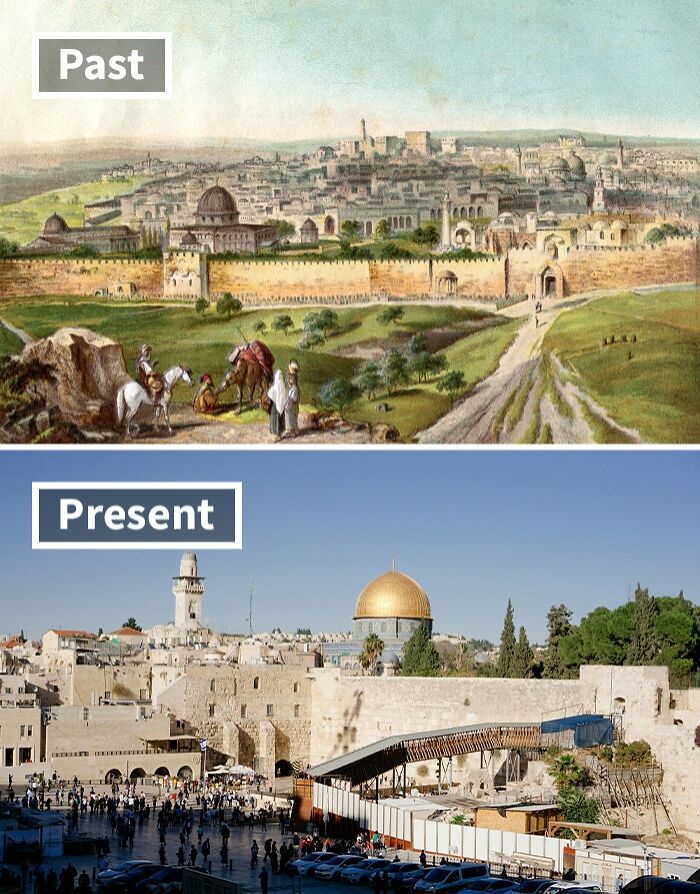
Britannica traces written and archaeological records back roughly 5,000 years, which helps explain why the city can feel like several eras stacked into the same streets.
That layering is most visible in the Old City, the historic walled core of Jerusalem. Sacred landmarks shape the day-to-day flow as much as they shape the skyline, with people passing the Temple Mount, the Church of the Holy Sepulchre, and the Dome of the Rock on the way to shops, prayers, and ordinary errands through dense quarters rebuilt again and again over centuries.
UNESCO lists the Old City of Jerusalem and its Walls for their cultural and religious significance to Judaism, Christianity, and Islam, recognizing a place where faith, history, and daily movement overlap.
That same compact geography helps explain why the city’s political status is disputed.
Jerusalem is claimed by both Israelis and Palestinians as their capital. Israel administers the entire city and considers it its capital, while Palestinians seek East Jerusalem as the capital of a future Palestinian state, a position widely supported by the international community.
Even with those tensions, the city runs on routine. Nearly 1 million residents move through markets like Machane Yehuda, gather on pedestrian streets in West Jerusalem, and fill the Old City’s narrow lanes each day, navigating a place where ordinary life continues inside an unresolved history.