Bored PandaBored Panda
Categories
FunnyAnimalsInstallationEntertainmentAutomotiveCuriosities
Art & DesignBlogRelationshipsMemes FeedLifestyleSociety
Resources
Contact UsAbout usAdvertisingPrivacy PolicySitemap
Follow Us
FacebookFacebookX (Twitter)X (Twitter)InstagramInstagram
FunnyAnimalsInstallationEntertainmentAutomotiveCuriositiesArt & DesignBlogRelationshipsMemes FeedLifestyleSociety
Doctors And Medical Experts Reveal The Most Terrifying Illnesses They've Ever Encountered (20 Answers)
Health & Wellness,LifestyleAPR 29, 2026

Doctors And Medical Experts Reveal The Most Terrifying Illnesses They've Ever Encountered (20 Answers)

Indrė Lukošiūtė
Nikita Manot
Indrė Lukošiūtė and Nikita Manot
38
6
Advertisement
For many of us, even a simple cough can spiral into something unsettling. You start off thinking it’s nothing, and the next moment, your mind is racing through worst-case scenarios. When symptoms don’t ease up, it’s only natural to feel a little anxious. But beyond everyday illnesses like the flu or a cold, there are conditions out there that most people rarely hear about, and they can be far more unsettling than we imagine.
Speaking of which, when someone online asked doctors and medical practitioners of Reddit what the scariest disease they know of is, the responses came pouring in—not just from medical professionals, but from people across the platform. The answers ranged from deeply unsettling to outright terrifying, offering a glimpse into conditions many of us have never even heard of. Keep scrolling to find out more… just a gentle heads-up, some of these might be difficult to read.

# SweetPickleRelish reply

SweetPickleRelish reply
I’m going to throw severe, intractable schizophrenia into the ring.

Mild schizophrenia? Take some meds and you can be a normal person.

Severe schizophrenia? It’s like trying to navigate the worst horror movie you can think of forever. And you’re always disoriented and confused. And it progresses over time and gets worse. It starts to affect your body and your pain sensors. I’ve seen someone rip off his testicles with his bare hands. A guy I know scratched his own eyes out. Many can’t do basic hygiene. Sometimes your senses switch and I’ve known people to purposely defecate on themselves and sit in it for days.

And it’s forever. If it’s intractable (medication doesn’t work) you live that way for 50 or 60 years.

The severe end of that spectrum is just something else. Literally a nightmare come true.
SweetPickleRelish, Екатерина Мясоед
Reportar
6puntos

# Shynosaur reply

Shynosaur reply
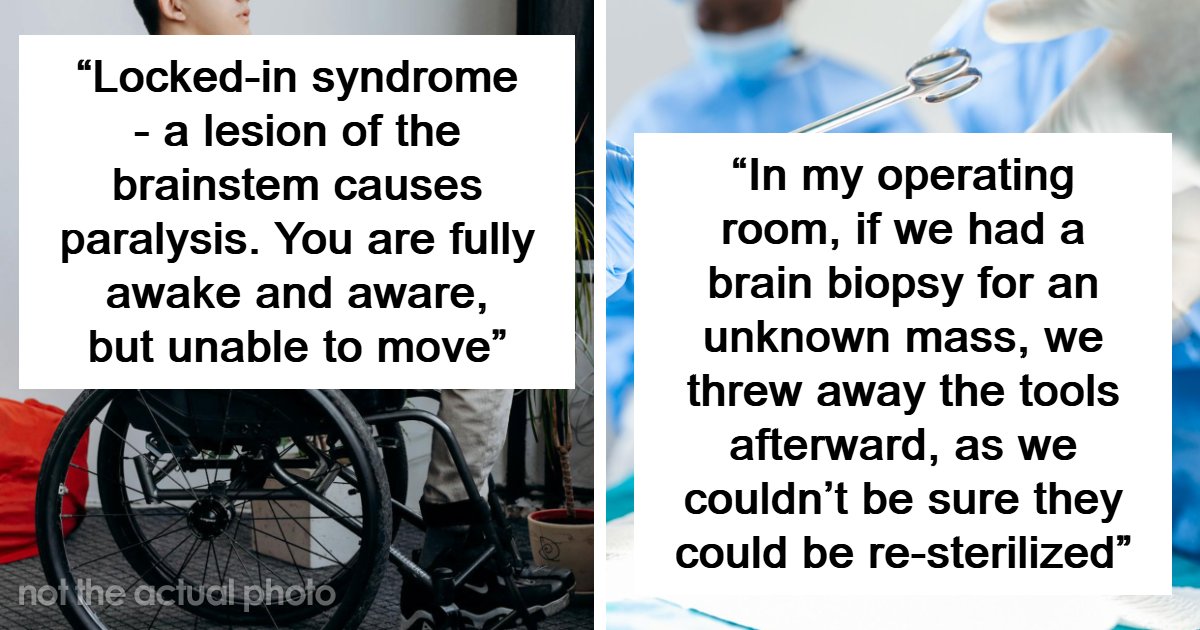
Locked-in syndrome - a lesion of the pons (part of the brain stem) causes total paralysis, usually leaving you with only the ability to perform vertical eye movements. You are still fully awake and aware and able to see and hear, but unable to move at all. Any meaningful degree of recovery is extremely rare.
Shynosaur, Mikhail Nilov
Reportar
5puntos

# ImmunotherapeuticDoe reply

ImmunotherapeuticDoe reply
Everyone is saying prions and rabies, and I don’t dispute either, but total medicine resistant bacteria?? Come on. We have a cure for rabies as long as it is administered in a timely manner. sCJD is exceedingly rare and all other variants of prion disease are even more rare. Antibiotic resistant bacteria? Everywhere.

Imagine dying of something we “cured” 100 years ago, except we didn’t because of misuse of antibiotics and bacteria adaptation. This is the reality in many developing nations.

Imagine dying of a toothache, or a skinned knee, or an ear infection. People think we’ve beaten bacteria. Not even close. Finish your antibiotic courses people.
ImmunotherapeuticDoe, JESHOOTS.com
Reportar
5puntos

# SwornFossil reply

SwornFossil reply
I’m a doctor and it is prion disease.

Rapidly progressive, neuro-degenerative, no treatment, fatal, and can be transmissible in specific circumstances.

Editor's explanation - Prion diseases are rare, fatal, and rapidly progressive neurodegenerative disorders caused by misfolded proteins that damage brain cells, creating sponge-like holes. They affect humans and animals, characterized by dementia, ataxia, and involuntary movements. The prognosis is extremely poor, with most cases resulting in death within one year of symptom onset, and there is no cure. 
SwornFossil, Robina Weermeijer
Reportar
4puntos

# captainHZ reply

captainHZ reply
Trigeminal Neuralgia. The pain is so severe the patient gives up on life. Shooting pain across the face which is triggered by barely touching the face, eating, shaving or even if it’s touched by cold air.
Scariest part is it’s more common than you know. It can happen without any cause, though it’s been theorised that it happens due to compression of nerves.
There is no cure yet but there’s periodic management of symptoms.
captainHZ, kaboompics
Reportar
4puntos

# Wooden_Astronaut4668 reply

Wooden_Astronaut4668 reply
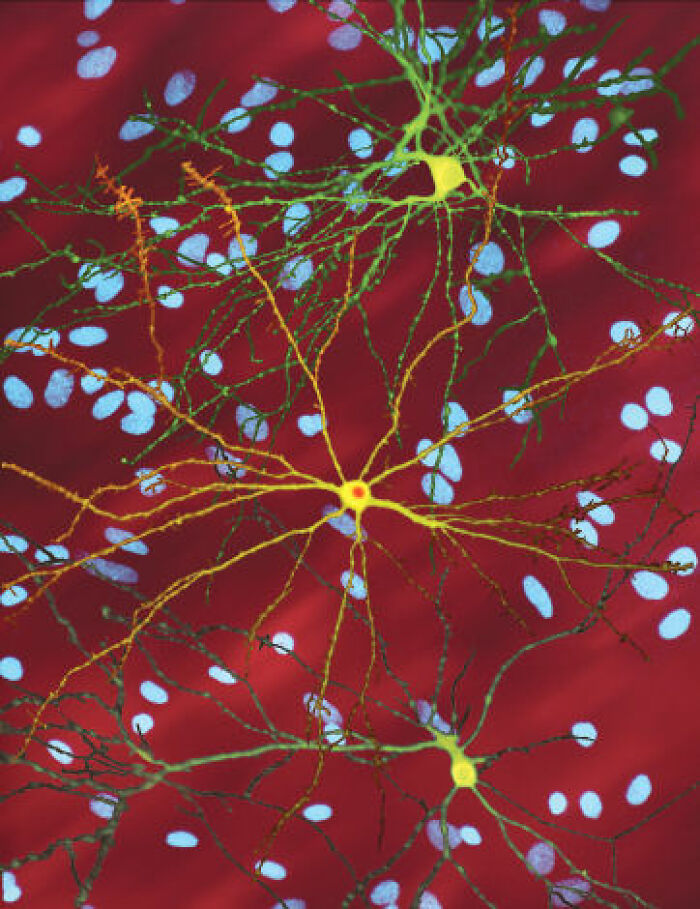
Not mentioned yet but Huntington’s is a really awful, sad disease

Editor's explanation: Huntington’s Disease is an inherited, progressive brain disorder caused by a single defective gene on chromosome 4, which leads to the gradual decay of nerve cells in the basal ganglia and cerebral cortex. This degeneration results in a triad of symptoms: involuntary jerking movements known as chorea, severe cognitive decline resembling dementia, and various psychiatric disturbances such as depression or irritability. Symptoms typically emerge between the ages of 30 and 50, and while medications can help manage the physical and mental symptoms, there is currently no cure to stop or reverse the underlying progression of the disease.
Wooden_Astronaut4668, Dr. Steven Finkbeiner, Gladstone Institute of Neurological Disease
Reportar
4puntos

# LupusHouseMD reply

LupusHouseMD reply
Rabies. Rabies is the scariest thing in humans.

Editor's explanation: Rabies is a viral infection of the central nervous system that is almost exclusively transmitted through the saliva of infected mammals via bites or scratches. Once the virus enters the body, it travels along the nerves to the brain, where it causes acute inflammation and severe neurological distress, including symptoms like confusion, agitation, and a characteristic fear of water. Because the disease is nearly 100% fatal once clinical symptoms appear, immediate medical intervention through post-exposure prophylaxis (PEP) is essential following any suspected contact with a rabid animal.
LupusHouseMD, Phan Cuong
Reportar
3puntos

# kandis2984 reply

kandis2984 reply
ALS is definitely the scariest to me.
Editor's clarification: ALS (Amyotrophic Lateral Sclerosis), often referred to as Lou Gehrig’s disease, is a progressive neurodegenerative disease that affects nerve cells in the brain and the spinal cord. It specifically targets motor neurons, which are the cells responsible for controlling voluntary muscle movement. Key Characteristics
Muscle Decay: As motor neurons degenerate, they stop sending signals to the muscles. This leads to muscle weakness, atrophy (wasting away), and fasciculations (twitches).
Loss of Function: Over time, the brain loses the ability to initiate and control voluntary movement. This eventually affects the ability to speak, eat, move, and—critically—breathe.
Cognitive Preservation: In many cases, a person’s mental capacity, memory, and personality remain intact, even as the body loses physical function.
Prognosis: While the rate of progression varies significantly between individuals, the average life expectancy is typically 2 to 5 years from the time of diagnosis, though some people live for decades.
kandis2984, Getty Images
Reportar
3puntos

# Cute-Beyond-8133 reply

Cute-Beyond-8133 reply
I am admitley not a Doctor.

But it's definitely dementia

(It's much scarier then Rabies or the painfull diseases because it can irreversibly change you ).

Dementia can causes personality changes by damaging brain cells, particularly in areas regulating emotions, impulses, and motivation. Common shifts include increased irritability, apathy, social withdrawal, reduced empathy, and impulsive or socially inappropriate behavior

It's essentially just a eraser of your loved ones brain.

Dementia can so deeply change a person that you won't be able to recognize them anymore.
Cute-Beyond-8133, cottonbro studio
Reportar
3puntos

# styrofoamladder reply

styrofoamladder reply
Idiopathic Pulmonary Fibrosis(IPF) maybe not the scariest but it’s bad. Kills more people annually than breast cancer and no one is doing any marches for it. The only “cure” is a double lung transplant and often a heart and double lung transplant are necessary. There are like 3 doctors in the US that specialize in it.

Editor's explanation: Idiopathic Pulmonary Fibrosis (IPF) is a chronic and progressive lung disease characterized by the scarring, or fibrosis, of lung tissue without a known cause. Over time, this thickening and stiffening of the tissue make it increasingly difficult for the lungs to transfer oxygen into the bloodstream, leading to symptoms such as a persistent dry cough, fatigue, and shortness of breath during physical activity. While the damage to the lungs is permanent and the disease typically worsens over several years, treatments such as antifibrotic medications and oxygen therapy can help slow the progression and improve the quality of life for those affected.
styrofoamladder, Getty Images
Reportar
3puntos

# mckulty reply

mckulty reply
Retinitis pigmentosa.

All you can do is watch it get worse.

Macular degeneration is bad, but RP steals sight from the young.

Editor's explanation: Retinitis pigmentosa is a group of rare genetic disorders that involve a breakdown and loss of cells in the retina, the light-sensitive tissue lining the back of the eye. This progressive condition typically begins with the loss of rod cells, leading to difficulty seeing at night and a gradual narrowing of the peripheral field of vision, often described as "tunnel vision." As the disease advances, it can eventually affect the cone cells responsible for central vision and color perception; while the rate of vision loss varies greatly among individuals, various assistive technologies and emerging gene therapies are being utilized to help manage the impact on daily life.
mckulty, Natalia Blauth
Reportar
3puntos

# XY_OR_RN reply

XY_OR_RN reply
In my operating room if we had a brain biopsy for unknown mass we threw away the tools afterward as we couldn’t be sure they could be re-sterilized.
XY_OR_RN, Getty Images
Reportar
3puntos

# ldiaml reply

ldiaml reply
Throughout my medical training, I always said the scariest disease to me was pancreatic cancer, having seen so many patients diagnosed very late with poor prognosis and few/no options for treatment. 

My mom was diagnosed stage IV pancreatic adenocarcinoma in May 2023, we got 8 months together before it took her. I miss her every day.  .
ldiaml, Kateryna Hliznitsova
Reportar
3puntos

# Shot_Revolution8828 reply

Shot_Revolution8828 reply
Since no one has said it yet, Parkinson's disease. Your body fails you while your brain is still sharp so you're acutely aware of the progression of the disease.

Editor's explanation: Parkinson’s Disease is a progressive central nervous system disorder that primarily affects the motor system due to the loss of dopamine-producing neurons in a specific area of the brain called the substantia nigra. This depletion of dopamine leads to hallmark physical symptoms such as resting tremors, muscle rigidity, slowed movement (bradykinesia), and impaired balance or posture. Beyond physical movement, the condition can also involve non-motor symptoms like sleep disturbances, cognitive changes, and mood disorders, and while various treatments and lifestyle adjustments can significantly manage these symptoms, there is currently no known cure.
Shot_Revolution8828, Tima Miroshnichenko
Reportar
2puntos

# aguafiestas reply

aguafiestas reply
Stevens Johnson’s syndrome / toxic epidermal necrolysis

Drug reaction where your body sheds its own skin. 

Don’t Google it.
aguafiestas, MART PRODUCTION
Reportar
2puntos

# Witty_Committee3946 reply

Witty_Committee3946 reply
I’ll throw out diabetes. It precipitates so many awful downstream effects if left uncontrolled. Increase risk of heart disease, stroke, renal disease, eyes, neuropathy, decreased wound healing and many more.

A lot of the patients I end up seeing are d/t complications arising from DM.
Witty_Committee3946, i-SENS, USA
Reportar
2puntos

# DominaVesta reply

DominaVesta reply
Epidermolysis Bullosa (EB) is a devastating group of genetic disorders characterized by skin so fragile that it is often compared to a butterfly's wings, where any minor friction or touch causes painful, full-thickness blistering. This condition creates a life of relentless physical trauma, as patients face daily, agonizing hours of wound care and dressing changes akin to treating severe burn victims. Beyond the skin, EB can cause the fingers to fuse, the esophagus to narrow, making eating nearly impossible, and lead to aggressive, life-threatening skin cancers at a young age. With no known cure, management is limited to palliative care and infection prevention, making it one of the most physically and emotionally taxing medical conditions in existence.
DominaVesta, Getty Images
Reportar
2puntos

# Agile-Slide1350 reply

Agile-Slide1350 reply
Doctor here: Naegleria fowleri causes Primary Amebic Meningoencephalitis (PAM), a rare, rapidly fatal brain infection acquired when the amoeba enters the nose from warm fresh water. Or prion disease, or rabies, if you had any of those you’re cooked.
Agile-Slide1350, Marco Bianchetti
Reportar
2puntos

# sworzeh reply

sworzeh reply
Doctor here with multiple sclerosis. MS is pretty scary to me because it can do anything. At any point could my brain and spine get attacked and I may not be able to walk. Thankfully the meds are getting pretty good but it’s personally scariest to me because I have it.
sworzeh, Getty Images
Reportar
2puntos

# Nymanator reply

Nymanator reply
I personally find gestational trophoblastic neoplasia terrifying.

Editor's explanation: Gestational trophoblastic neoplasia (GTN) is a group of rare, pregnancy-related tumors that develop from the abnormal growth of trophoblast cells, which normally form the placenta. This condition most frequently arises following a molar pregnancy, though it can occur after any type of pregnancy, and is characterized by the overproduction of the hormone human chorionic gonadotropin (hCG). While these tumors have the potential to invade the uterine wall or spread to other parts of the body, GTN is considered highly treatable and often curable with specialized chemotherapy and monitoring, even if metastasis has occurred.
Nymanator, Brooke Cagle
Reportar
2puntos
38
6