





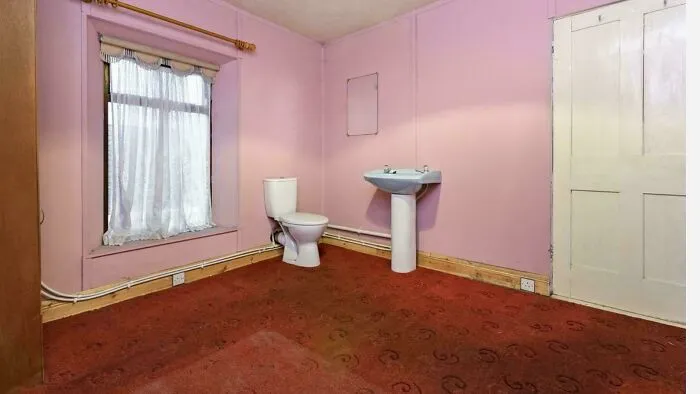
#1 The Amount Of Floor Space In This Single Toilet Bathroom Is The CVS Receipt Of Bathroom Floor Spaces

#2 Disney Tricycle That Was Banned From Sale For Having Pointy Parts Right Where Your Little Girl's Face Is Going To Go Should She Have A Sudden Stop


The question of ‘good’ and ‘bad’ taste is a complex one. Often, you can intuitively tell whether something is designed well or not, even if you don’t quite have the vocabulary to explain why you think so. No matter your subjective preferences, there are objective factors that improve a product’s quality or detract from it.
Legendary designer Dieter Rams argued that good design has 10 core principles. From his perspective, good design is innovative, aesthetic, unobtrusive, honest, long-lasting, thorough to the last detail, environmentally friendly, and not overdesigned. What’s more, good design makes a product useful and understandable.
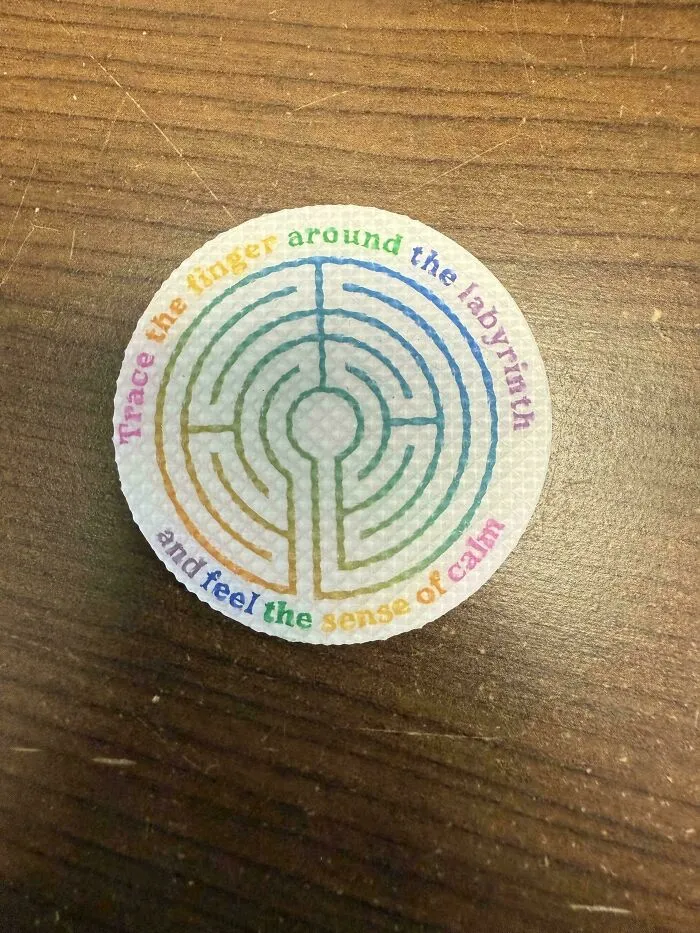
#5 I Can't Be The Only One That Thinks It Says To Follow The Child Home Right?


According to Sterlin L. Mosley, Ph.D., a professor of human relations at the University of Oklahoma, there is no “clean answer” as to whether or not taste is objective or subjective.
From his perspective, the question itself is “malformed.” He argues that Western design’s idea of good taste “reflects cultural institutionalization, not universal truth.”

#8 Beach House With An Amazing View... Of Their Fireplace. Literally Across The Street From The Ocean

“Taste is both [objective and subjective], and the relationship between the dimensions is dialectical rather than hierarchical, always contextual, always relational, always in conversation with who is doing the designing and who or what they are designing for,” Mosley writes in a post on Psychology Today.
He emphasizes that coherence, rather than something “too variable and too culturally embedded” as beauty, should be the standard.
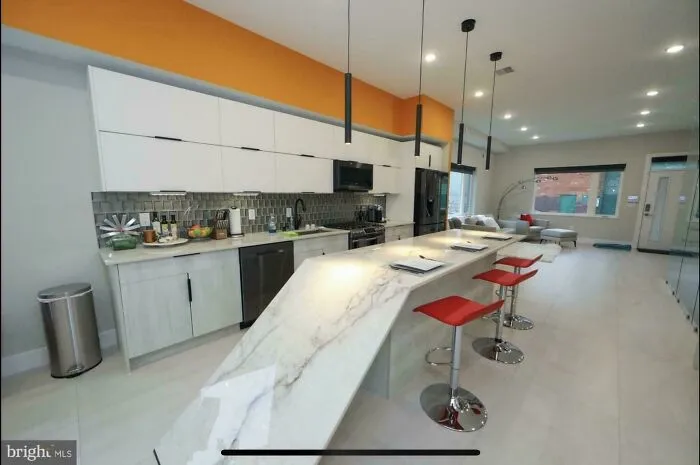
#10 At What Point Do You Just Go "Ya Know What, It Isn't Worth The Open Floor Water Feature"



Mosley explains that, for him, coherence is “the degree to which a visual environment accurately externalizes the inner logic of the person or community to which it belongs.”
“It cannot be used as a bludgeon the way ‘good taste’ has historically been used, but it is also not arbitrary; most people can feel the difference between a space coherent with their inner experience and one that isn't, even when they lack the vocabulary to say why,” he states.
“That level of attunement with the self is what I mean by taste, if I mean anything precise by the word at all. Not a ranking of objects according to an inherited hierarchy of refinement, but a sensitivity, both to oneself and to the world being made, and the ongoing dialectical conversation between the two.”

#14 The Pool Of The Fountain At My Local Mall Is Too Small To Catch Its Water, Creating A Slip Hazard Around It

#15 Kids Word Search Unevenly Spaced; How Can They Find Vertical And Diagonal Words?!

Objectivity and subjectivity aside, professionals disagree about core things, such as whether you can learn and teach good taste. For some, it is a question of acquiring new ideas. For others, taste is something deeply personal, something that you’re born with.
Meanwhile, Emmanuel Platt, the director of merchandising at MoMA, explained to House Beautiful that everyone can learn taste. It is a question of studying, research, exposure, and experience.
“You learn from different people, different travels… You meet with artists, designers, manufacturers.”


On the other hand, Omar Nobil, creative director of Design Within Reach, sees things differently than Platt.
“I don’t think you can teach taste. Our job is to expose and educate people to what we think is important and to explain to them why. What they take from that is up to them and how that evolves their perspectives.”
From Nobil’s perspective, taste is individual. “If you’re lucky, you're exposed and connected to the people who will bring out the best of that.”

#20 Step 1: Pull Forward And Park In This Spot. Step 2: Car Pulls In Behind You. You Are Now Stuck