




Being with family means getting to be around people you trust, people who love you no matter what, and people you can rely on regardless of what’s happening in your life — and yes, family can mean your best friends, your relatives, or anyone you consider to be home.
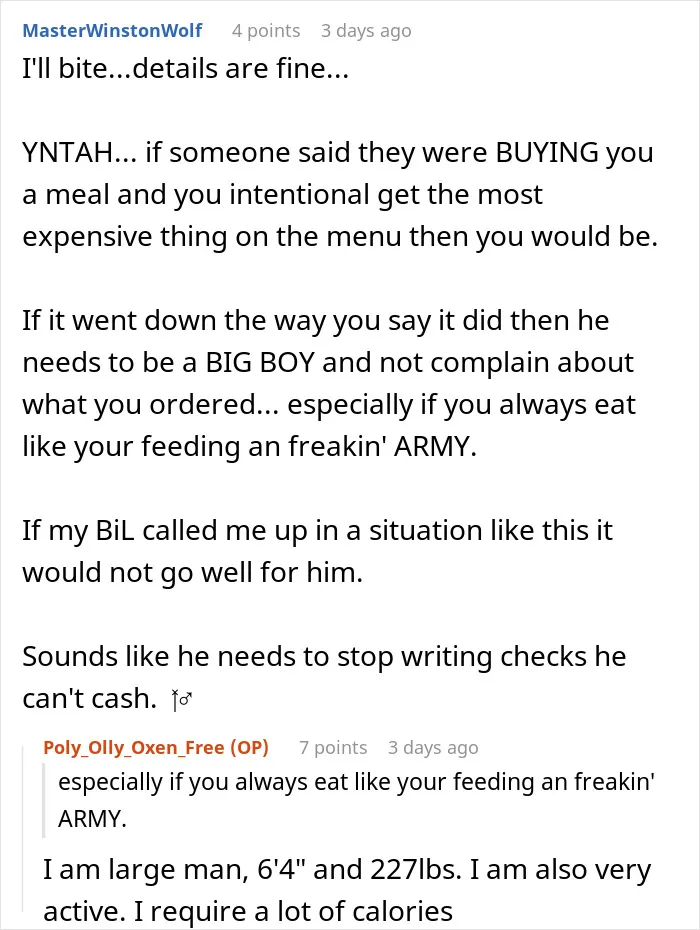
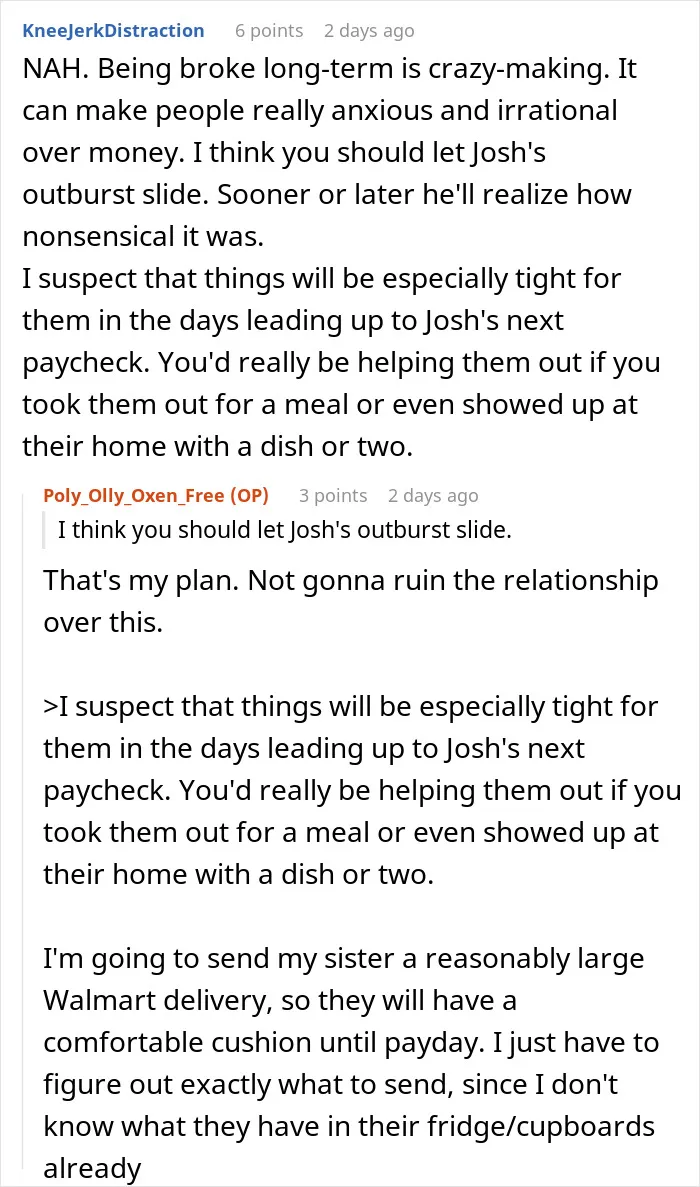
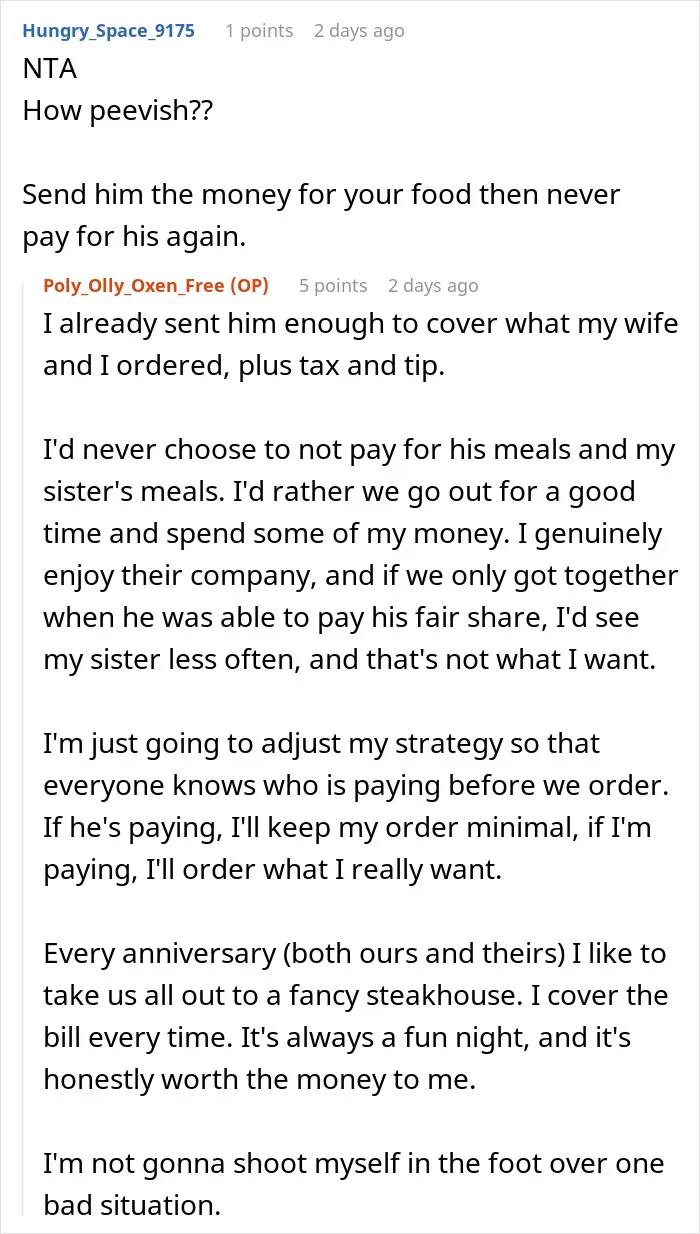
And this also means that, when it comes to economic differences, it’s a two-way street — if they help you, then you’ll want to help them in return. Usually, at least. But this time around, a man shared on r/AITAH that his brother-in-law wanted to pay for their breakfast, but things didn’t exactly end the way he expected. What started as a fun time quickly turned sour, and here’s what happened.
We always like to treat our family to a meal and a good time, but it doesn't always go according to plan

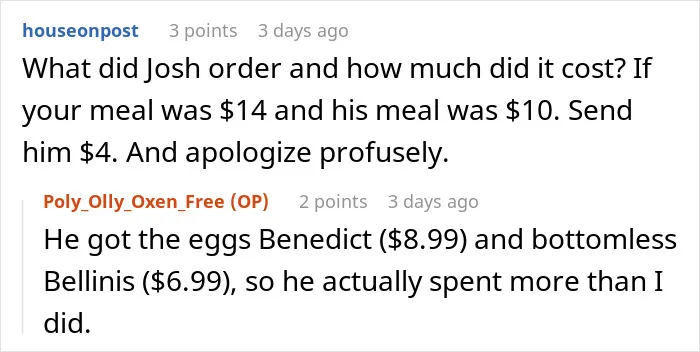
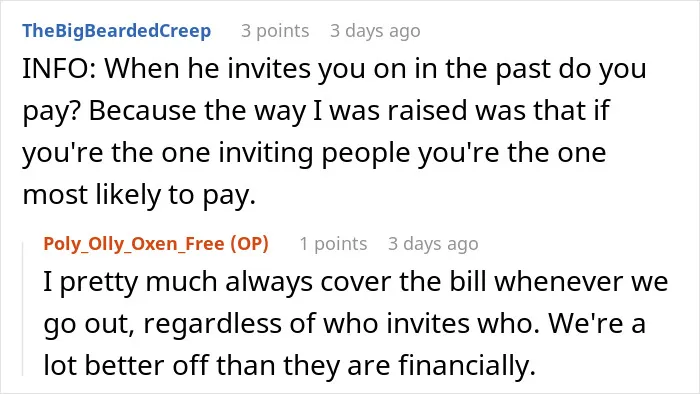
A man happily takes on the financial burden during family outings, but his brother-in-law decided to surprise them by paying the bill himself, and he was shocked by what he saw
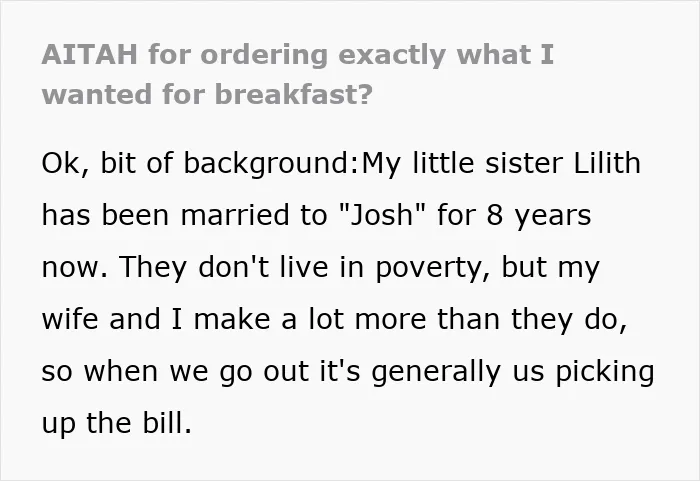
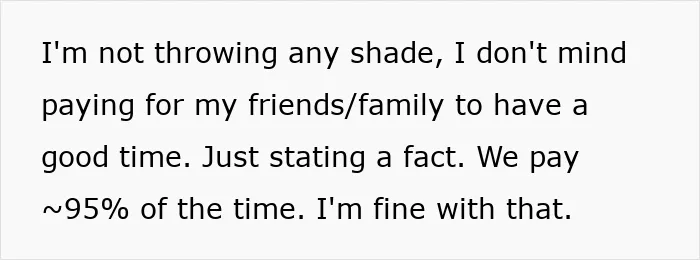
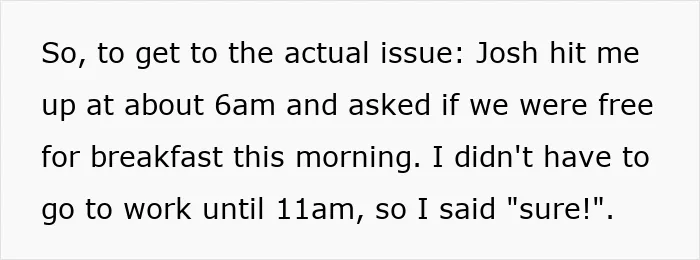



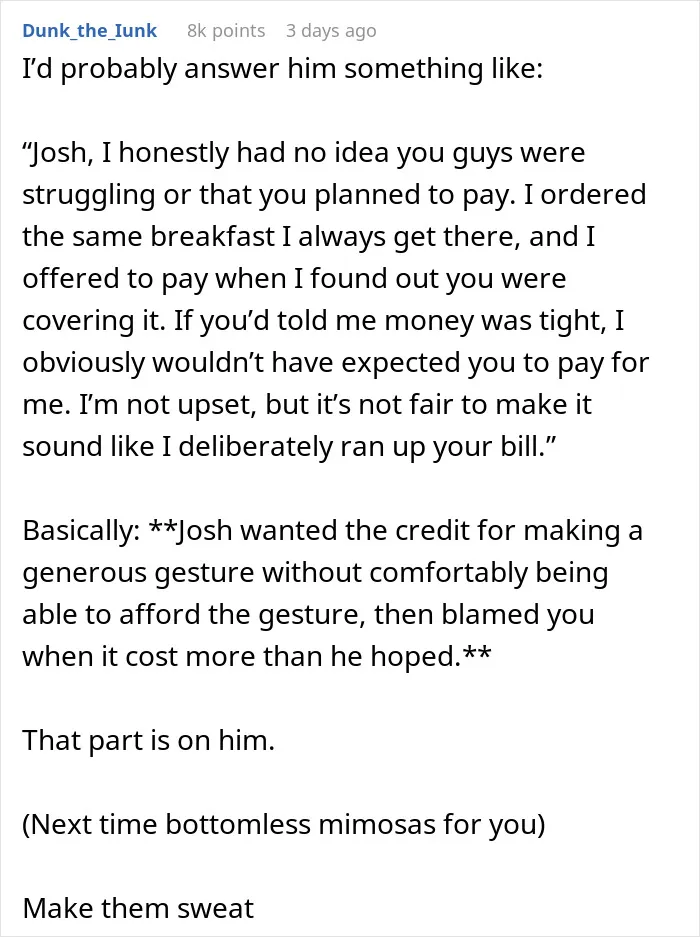
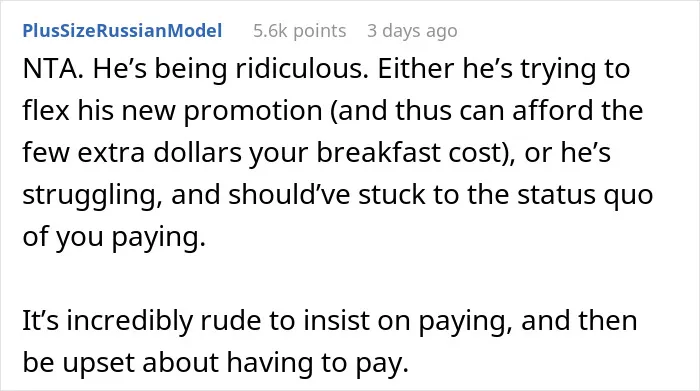
While "Josh" might have had good intentions, the narrator knew it came down to his insecurities
Everyone wants to fit in with their peers, but if you see a disparity between yourself and those around you, that can actually become a problem. This is called Relative Deprivation Theory, and it explains that people usually judge their wealth, success, and status not by society’s standard measures, but relative to a reference group. In this case, the brother-in-law and his wife, who are wealthier.
So, to “Josh,” it isn’t about his own household income, but rather how it compares to the narrator’s wealth. And there’s also a psychological trigger here. Studies have shown that those with lower status in a hierarchy tend to become more defensive and compensatory, and it can even lead to what he did: trying to pay the bill and insisting on doing so despite not having the means.
And yes, pair that with the fact that he’s a man, and it’s a recipe for disaster. This may sound targeted, but actually, a 2020 study published in Psychological Science does show that fragile masculinity and status threats are common among men experiencing an income deficit, especially compared to those around them, potentially leading to erratic spending in an attempt to preserve self-esteem.

The narrator wasn't at fault, but communication should be clearer in the future
So, after realizing how much he ended up spending, he realized that, well, he had gone beyond his means. This is often called “post-purchase dissonance.” This means that while Josh may have felt as if he had performed the social role of the affluent host, he was still on a tight budget. He then blamed another party for his poor decision, which psychologists call projection, a defense mechanism.
Unfortunately, this can lead to awkward moments as the couples continue to interact. And it’s not all that surprising. According to a study by the American Psychological Association (APA), money is a major cause of social and relational stress, and 60% of adults say financial insecurity affects their personal relationships.
So, what can they do to make sure this doesn’t happen? They could make an explicit agreement. Family researchers indicate that conflict often comes from unspoken social contracts, so the best way to avoid them is to discuss them. The wealthier couple might want to say explicitly that they don’t mind taking on the financial burden, and if the other couple ever wants to pay, they should agree on that beforehand.
So, tell us, Pandas, do you see where the brother-in-law was coming from? And most of all, do you think by offering to pay, he was trying to do a good deed or to try to stroke his own ego by "flexing" his promotion? Let us know what you think!

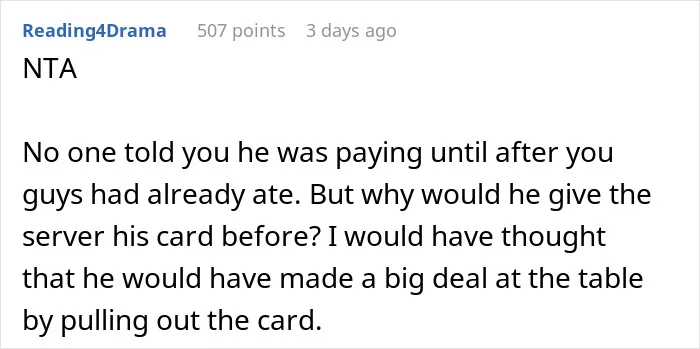
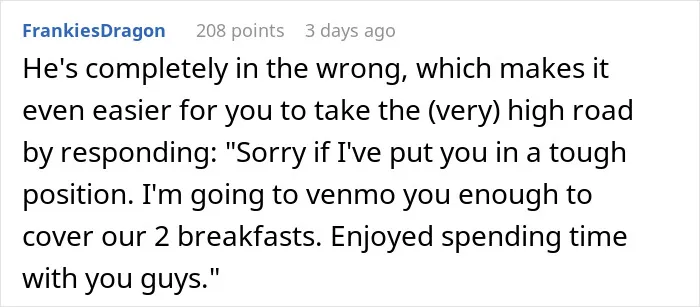
Most readers were actually baffled by the early call, rather than the events that occurred