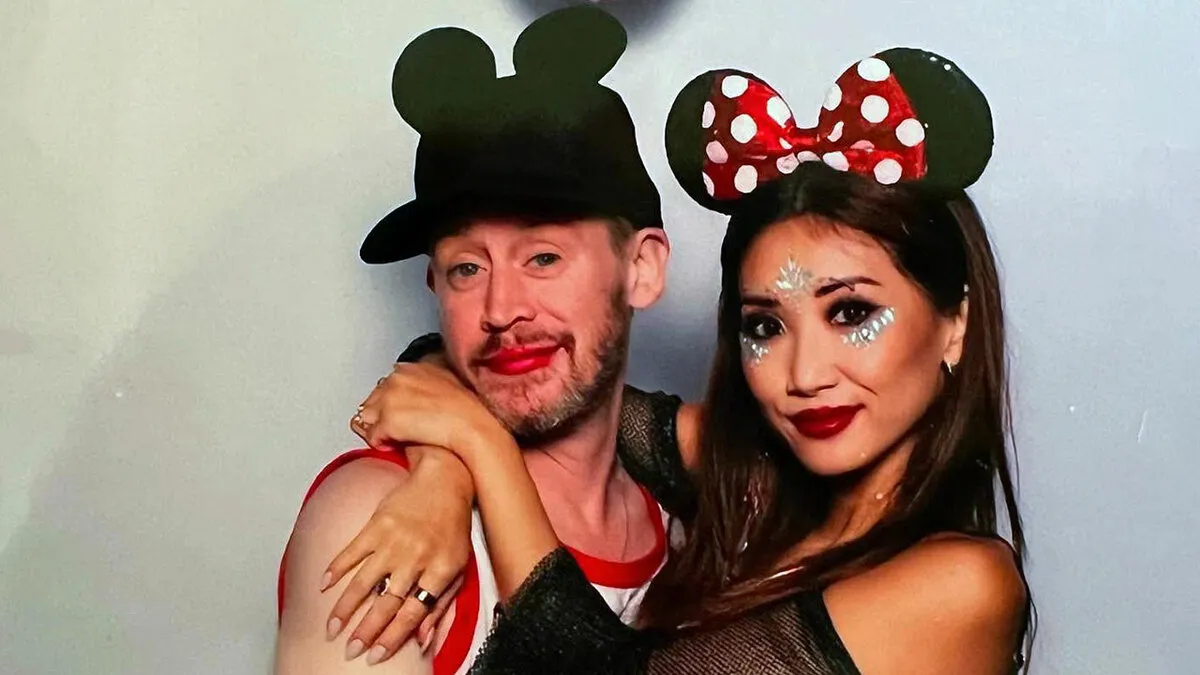
Growing up, we were warned about the stranger at the school fence. The shadowy figure who would offer us sweets laced with something sinister, who would introduce our innocent young minds to the horrors of narcotics through a chain-link boundary. I am still waiting for that man. What actually happens is much less cinematic and more insidious, and it starts not at a fence but inside the developing brain of a child who has been placed, by the adults around them, in a situation their neurology was never designed to handle. Bored Panda spoke to psychiatrists, addiction specialists, and clinical directors about what actually happens at a molecular level when a young person encounters substances, and the answer has very little to do with peer pressure, bad influences, or moral failure. Hayden Panettiere was sixteen when it started. Ahead of a red carpet event for Heroes, someone on her own team handed her a pill to manage her exhaustion. Not a stranger in a coat and a trilby trying to lure in a new customer. Someone who was supposed to be looking after her. "Within minutes, a wave of energy washed over me, like I'd just woken up from the most refreshing night's sleep of my life," she wrote in her memoir. She called it the gateway substance that ushered her toward the good of pharmaceuticals and the downfall of addiction. She died at 36, one of the less lucky ones who follow a disturbing pattern from child star to troubled adult. haydenpanettiere / Instagram, haydenpanettiere / Instagram The first thing to understand about adolescent addiction is that the teenager saying yes to a substance is not making the same calculation an adult would make. They are operating with fundamentally different hardware. Dr. Michael Kane, a board-certified psychiatrist with over thirty-five years of experience and current Chief Medical Officer at the Indiana Center for Recovery, explains that adolescents have heightened reward and novelty sensitivity while the systems responsible for impulse control and long-term judgment are still under construction. Those systems do not finish developing until the mid-twenties. In practice, this means the part of the brain that shouts “yes!” is fully operational, while the part that asks “are you sure?” is still being installed. Dr. Sarah Boss, psychiatrist and Clinical Director at The Balance, describes the adolescent brain as experiencing a dopamine storm, a period of intense neurological activity that makes the highs higher and the lows more destabilizing. During this period, the brain is actively seeking stimulation, reward, and novelty. It is doing exactly what it is supposed to do developmentally. The problem is that substances can hijack that process in ways the adolescent brain has no defense against. "That glorious, slow, ongoing dopamine wash that life is meant to be for teenagers was simply no match for the internet's exhilarating flood," she says, and the same principle applies to drugs and alcohol. The brain learns the shortcut and begins to prefer it. AJ Diaz, Chief Clinical Officer and Co-Founder of You Are Accountable, has spent nearly a decade working with young people in addiction and has seen the sequence play out consistently. A child is not looking for drugs. They are carrying something, a sadness, an anxiety, a pressure they cannot name or articulate. They find themselves in a situation where something is offered, and they accept, partly to conform, partly because the cultural signals around them have already told them it cannot be that bad. And then their shoulders drop, anxiety lifts, noise quiets. The brain files that information immediately and permanently. The reinforcement becomes simple: when I take this, I feel better. Everything else takes a back seat. "Once they realize that a substance was solving for them," Diaz says, "that use ceased to stay recreational." ddlovato / Instagram For child stars, this neurological vulnerability exists within an environment specifically engineered to maximize stimulation and reward, and then to take it away without warning. Dr. Boss draws a comparison that reframes the entire conversation about Hollywood addiction: "With the child actor or public figure, the family of origin's addiction is to fame itself. The child becomes the family's designated driver to that drug." The child is not just a child in an adult environment. They are the vehicle through which the adults around them access something they are themselves addicted to, and the child's needs become structurally secondary to the maintenance of that access. Dr. Kane describes what happens when a child is given adult responsibility without the emotional maturity of adulthood. Long hours, financial pressure, the weight of being the primary breadwinner for a family: these create conditions in which admitting to exhaustion, anxiety, or distress feels impossible. The performance must continue. The substances that make the performance feel manageable are, in many cases, offered by the very people whose job is to manage the performer. Hayden Panettiere's pill came from her team, and Drew Barrymore was in rehab at twelve. Demi Lovato told a podcast that she was already drinking at thirteen when a doctor prescribed her opiates after a car accident: "My mum didn't think she would have to lock up the opiates from her thirteen-year-old daughter." The dopamine of fame is real and measurable. Attention, validation, recognition: these activate the same reward pathways that substances do. When a child's entire sense of self is built around that dopamine, and then the career slows or ends, Dr. Kane explains, the loss feels existential. Not like losing a job. Like losing the answer to the question of who you are. "Who am I now? Who do I perform for?" The substances that were managing the pressure now become the only remaining source of the feeling that once came from the work. Former Disney star Christy Carlson Romano, writing after Panettiere's death, described early fame as resembling a traumatic brain disease. "We have almost no language for what happens when stress, scrutiny, rejection, adult pressure, and the collapse of privacy become the architecture of a childhood," she wrote. She is right that the language is inadequate. What she is describing is a childhood in which every normal developmental experience has been replaced by performance, and the brain has been shaped accordingly. Panettiere's death came within a year of Michelle Trachtenberg's and months after Daveigh Chase's, two child stars whose struggles with substances were documented and public. Michelle Rodriguez, who worked alongside Panettiere, told Variety that the number of young people leaving was not normal. "It's making me think, what's going on?" What is going on is the pattern Dr. Boss and Dr. Kane describe, playing out across generation after generation of young people placed inside a machine not designed with their neurological development in mind and with no particular incentive to start. But the pattern is not inevitable. Some people found their way through it, and the routes they took reveal what protection actually looks like. Lindsay Lohan's comeback is one of the more remarkable stories in recent Hollywood history, not because it was easy or clean or linear, but because it happened at all. The years between the girl in Mean Girls and the woman who showed up for Irish Wish and the subsequent work she has built were not hidden. They were public, painful, and well-documented. In a recent 40th birthday Instagram post, she wrote: "There was success, attention, expectation - and underneath it, a girl still figuring herself out. I was learning through experience, through pressure, through mistakes, trying to hold onto who I was while the world decided who I should be." What her return demonstrates is that recovery is possible even after the kind of sustained, very visible unraveling that the industry and the internet treated as entertainment for years. She was not extended much grace during those years. She eventually extended it to herself, and that is the part that mattered. Amanda Bynes, who is only 2 months older than Lindsay, has not been so lucky. Her very public unraveling is still happening, and the help and grace seem nowhere to be found. What a Girl Wants / YouTube, amanda.bynes_ / TikTok Drew Barrymore went to rehab at twelve, was legally emancipated from her parents at fourteen, and has spent the decades since becoming one of the most self-aware and grounded people to have come through that system. She has spoken about her experiences with honesty that makes other people feel less alone in theirs. She is also, demonstrably, still standing, which, given where she started, is huge. Macaulay Culkin, who became the most famous child in the world as Kevin McCallister and spent his young adulthood navigating the wreckage of that, has found something that looks like genuine peace. He is now in a long-term relationship with Brenda Song, who went through the Disney pipeline herself and came out the other side with her own equilibrium intact. Two people who understand exactly what the other survived, building something quiet together. It is not a dramatic comeback story. It is better than that. Natalie Portman broke out at thirteen in Léon: The Professional, a film whose entire premise placed her in proximity to adult darkness, and responded by treating her education as the non-negotiable foundation of her identity. She attended Harvard. She avoided the Hollywood lifestyle entirely during her formative years. She built an adult career on the foundation of a self that existed completely independently of her fame, which is perhaps the most protective thing any young person in that industry can do and also the thing the industry makes hardest to achieve. Joseph Gordon-Levitt left Hollywood after years on 3rd Rock from the Sun to study at Columbia University. He returned on his own terms, to the kind of career he wanted, and has been one of the more scandal-free and apparently functional people to navigate the transition from child star to adult actor. The education was the exit ramp. Dakota and Elle Fanning came up under levels of media scrutiny that would destabilize most adults and emerged, by every available account, as exceptionally well-adjusted people, and their mother is consistently credited. She apparently understood what the industry could take from a child and built a wall around their actual childhoods even while managing their professional ones. The girls were not the family's designated driver to fame. They were, first, children with a parent who prioritized that. The pattern across all of these stories is not strength, virtue, or superior willpower. It is structural protection. An education. A parent who got the hierarchy right. A partner who understood the specific damage. An identity that existed outside the performance. The people who struggled were not weaker. They were less protected, often by the adults who were supposed to provide that protection but instead consumed the reward that the child's fame produced. drewbarrymore / Instagram AJ Diaz has been working with young people in addiction long enough to know that the signs parents are told to look for- red eyes, secrecy, missing money, declining grades- are the late signs. By the time those are visible, the pattern is already established. The early signs are much more muted. A child who stops bringing their day to you, who hunkers in their room processing alone instead of talking. Or the opposite: a child who has stopped emoting altogether, a general flatness where there used to be peaks and troughs. Parents read this as teenagers being teenagers, which is sometimes accurate and sometimes a missed signal. The sneakiest sign is the child who, by every external measure, is doing brilliantly. Honor roll, popular, cheerful, apparently fine. Some of the young people Diaz works with were using not to escape distress but to maintain the performance of being fine, to keep the grades up, to keep the anxiety manageable enough to function. Nobody suspected them. That is precisely why they were missed for so long. He also identifies something important about how young people test the adults around them before deciding whether to ask for help. They will make a passing comment about a friend who got caught with something, or casually brush off a hangover, and they are watching to see how you respond. They are running a calculation: if I told them the truth, what would happen? If the answer, based on prior evidence, is punishment, disappointment, and the removal of privileges, the truth stays hidden. Neutrality, Diaz says, is what keeps the door open. And when a young person does finally come forward, they are not asking for the problem to be solved. They are asking not to be alone in it. The parent who immediately moves to fix, smooth over, and make consequences disappear is removing the very thing the child needed to develop: the experience of moving through something difficult with support. "I've sat across from so many versions of the same story," Diaz says. "A 25-year-old who's been using for ten years, and parents who've finally hit the point where they're ready to set some limits. What happens is that the parents are now fighting ten years of a pattern they helped build." culkamania / Instagram lindsaylohan / Instagram Addiction is a chronic illness. William Moyers, vice-president of public affairs for Hazelden Betty Ford and himself in recovery since 1989, says it plainly: "Living in recovery means doing the best we can, but doing it imperfectly." Relapses happen. Treatment saves lives even when it does not produce the clean, linear story we want recovery to look like. Hayden Panettiere told People Magazine in 2024 that her addiction was in the rear-view mirror. A doctor had previously told her that if she did not stop drinking, she would be dead within five years. She tried, and she was honest about her struggles in a way that took courage and that, as Moyers noted, the constant public scrutiny she lived under may never have given her the private space to fully address. She appeared in her first commercial at 11 months old, ensuring she would never have a childhood entirely her own. The pill that arrived at sixteen came from the people who were supposed to protect her, in an industry that had been shaping her since before she could form memories, inside a brain that was neurologically unprepared for everything it was being asked to manage. Her help never arrived. The real danger was never outside. It was in the green room, in the trailer, in the hands of someone with a professional title and a vested interest in the performance continuing. The least we can do, watching from the outside, is stop being surprised when the pattern repeats. And start asking who, specifically, was supposed to be protecting them.