




#1

Women have always worked whether it was on a farm, in the fields or in the industrial age. There are pictures from the Victorian era with factories filled with female and child workers and almost no adult men. Women did not "go to work for the first time because of WW2." They weren't doing the same jobs before then but they were certainly working.
Many professions were filled with women such as: sailmakers, seamstresses, store clerks, cashier's, typists, telephone operators, office workers cleaning and cooking staff, etc.,.
This is one of the most inaccurate arguments I have heard in my life. My grandmother was a telephone operator for Ma Bell from the late 1920s until she retired in the 1960s. During the Great Depression she supported the family and half of every paycheck was paid in stock rather than cash. This is what enabled the family to survive. I find the whole premise that women didn't have jobs absurd in the face of actual history.
#2

#3

Napoleon Bonaparte being a small man is one of the most persistent myths in history. Poor guy! He was approximately 5'7", which was above average for a French man of his era. The myth originated from a combination of British wartime propaganda, a unit conversion error between French and English measurement systems, and the fact that his nickname among his troops was "le petit caporal," a term of affection, not a physical description.
British cartoonists, particularly James Gillray, depicted him as a tiny, temperamental figure, and the image stuck so completely that we named an entire psychological phenomenon after it. The Napoleon Complex is the theory that short men overcompensate with aggression and ambition, and is named after a man who was not actually short. It is one of history's more successful character eliminations.
#4

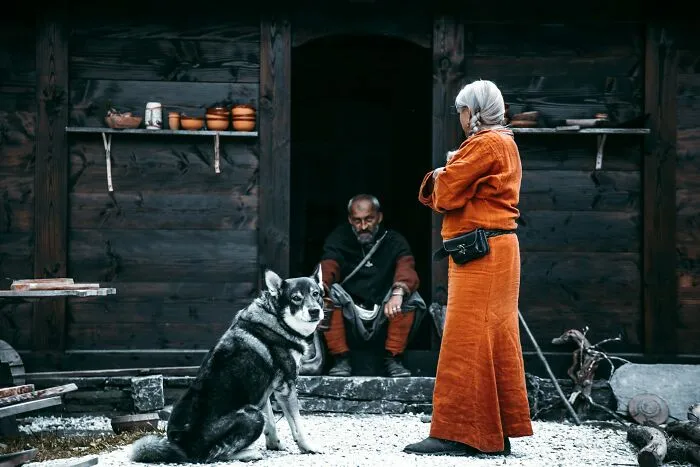
TV and movie art departments invented and have been lazily recycling this 'viking' look for years.
#5
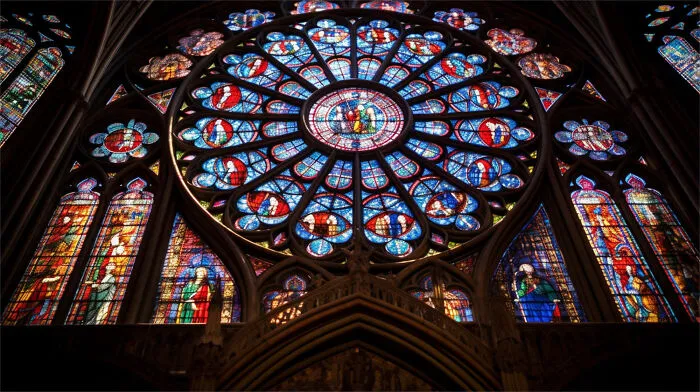
You’ll often hear that medieval windows are thicker at the bottom because glass is technically a liquid and has gradually sagged under gravity. But old window glass was already uneven when it was made, because historical manufacturing methods produced panes with varying thickness. Glaziers generally installed the heavier edge at the bottom for stability. And in some instances, they didn't bother and the glass is thicker at the top.
At ordinary temperatures, glass is an amorphous solid. If it flowed quickly enough for cathedral windows to noticeably sag over a few hundred years, ancient glass objects would show the same deformation. They don’t.
It’s one of those wonderfully persistent “facts” that sounds scientific enough to survive long after it’s been debunked.
The name Mother Teresa has become so synonymous with selfless goodness that it functions as its own shorthand. "She's a real Mother Teresa" needs no further explanation in any language. She was even canonised as a saint in 2016. She is one of the most recognisable figures of the twentieth century. But upon closer examination, she is considerably more complicated than the sainthood suggests.
Critics, including the late Christopher Hitchens who wrote an entire book on the subject, documented serious concerns about the conditions in her Calcutta missions. Patients in significant pain were denied adequate medical care on the grounds that suffering brought them closer to God, while the organisation itself received hundreds of millions in donations.
She accepted money and praise from dictators and fraudsters without question. She opposed contraception and abortion in countries where poverty and overpopulation were causing enormous suffering. Her own letters, published posthumously, revealed decades of private spiritual crisis. None of this erases the genuine good she did. It does complicate the mythology significantly, and the mythology is what most people are working with.
#7
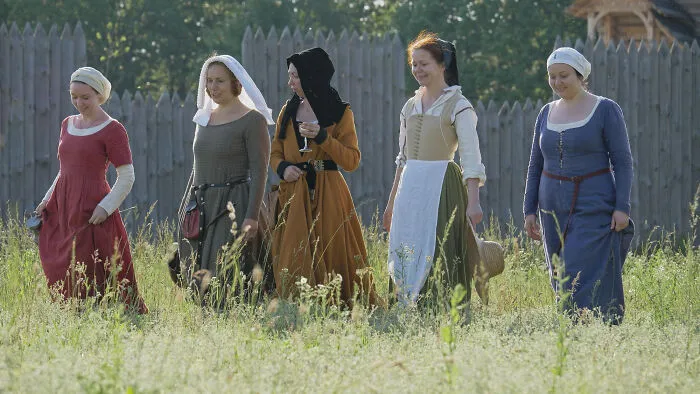
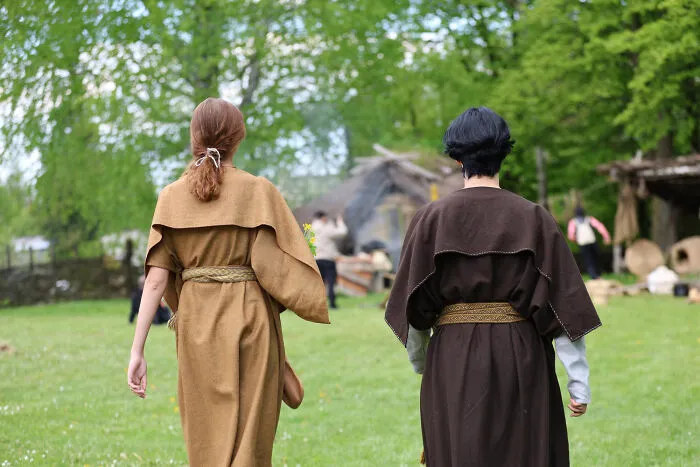
The reality was that people in the mediaeval period wore all sorts of bright colourful clothing. Some of the colour combinations would be seen as gaudy with our modern sensibilities and style choices. The only thing restricting people's choice of colour was the cost and difficulty of getting hold of certain coloured dyes and, in some places, sumptuouary laws that strictly defined how folk could dress depending on their social standing. .
#8

King Khufu tasked Hemiunu, his vizier and chief architect, along with commissioned skilled laborers, artisans and craftsmen from across the lands to help construct the great structure. Many of them are actually buried in a separate chamber of the pyramid in fact.
#9
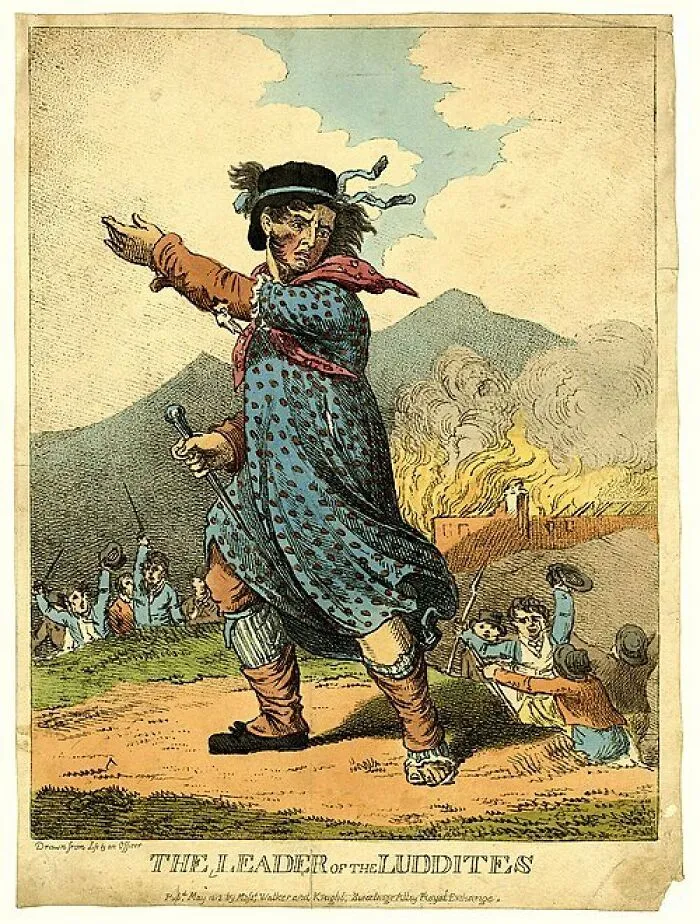
In reality: Luddites hate technology stealing their jobs.
The woman that we all love to hate, Marie Antoinette, never actually said "let them eat cake." The phrase appears in Jean-Jacques Rousseau's autobiography "Confessions," written when Marie Antoinette was approximately nine years old and living in Austria. The phrase was simply attributed to "a great princess." And if we are being really nitpicky, she actually said: "then let them eat brioche."
By the time the French Revolution made Marie Antoinette the most famous queen in Europe, the quote had been circulating for years and simply got attached to her name because it fit the narrative of aristocratic indifference so perfectly that nobody felt the need to verify it. She was, by many accounts, aware of the poverty surrounding her and made genuine charitable efforts. The cake quote, however, was already too good to let accuracy get in the way.
#10

The ancient Greeks theorised about gravity centuries earlier
In NO account did the apple fall on his head. Other people, writing decades after his works were published, recall how he described apples falling from the trees in his family's orchard and wondered what attraction made apples fall perpendicular to the ground, and how far that attraction extended.
#11
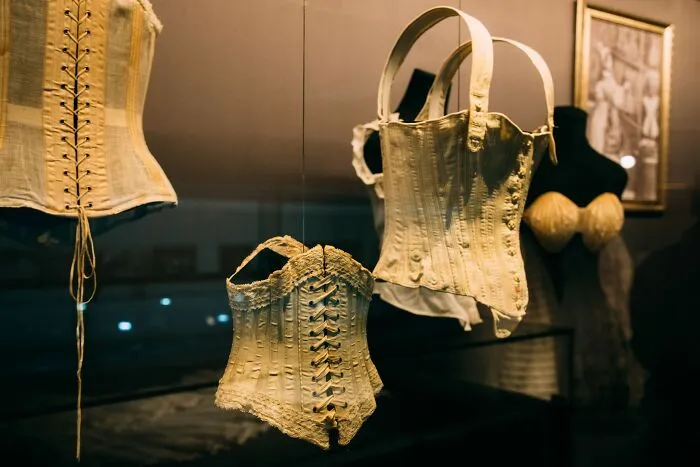
In reality, corsets helped distribute the weight of your clothes more evenly and supported your back. It took some getting used to, but you could breathe fine and it was pretty comfortable. Tight-lacing was the equivalent of tik-tok trends that most people mocked and very few people actually practiced.
It was also not worn directly on your skin. And sometimes men wore them as well.
#12

They came from Leiden, where they had lived with almost complete religious autonomy for over a decade.
They left the Netherlands because they didn’t want to participate in Dutch society.
They established a theocracy in the new world that would go on to severely oppress its citizens.
The Mandela Effect is the phenomenon where large groups of people share the same false memory with total confidence, and it is named after Nelson Mandela because thousands of people incorrectly remembered him never surviving prison. He was actually released in 1990 and became President of South Africa in 1994.
The false memory was so widespread and so specific that it spawned an entire theory about parallel universes and alternate timelines. We just can't accept when we are wrong, can we?
#13
#14
#15
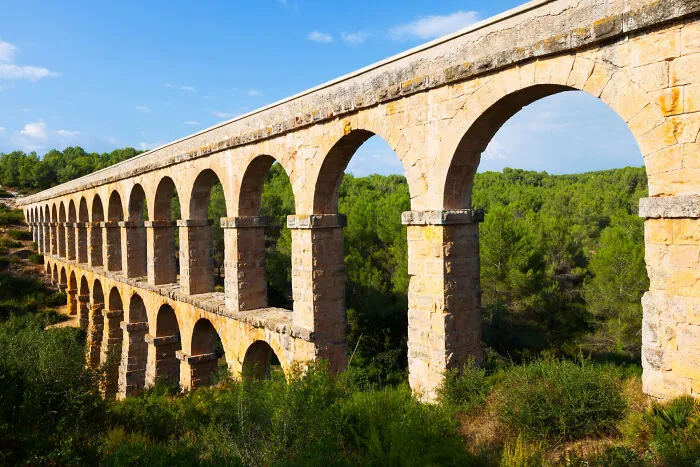
Actually, most of the technology was preserved. This is the time when they built cathedrals...etc.
Spoiler alert for everyone who still wants to celebrate Columbus Day, but Christopher Columbus did not discover America. He arrived in the Caribbean in 1492, never set foot on the North American mainland, and encountered millions of people already living in the Americas who had been there for tens of thousands of years and had therefore, by any reasonable definition, beaten him to it.
Leif Erikson and Norse settlers established a settlement in Newfoundland around 1000 CE, approximately five centuries before Columbus left Spain. The framing of Columbus as a discoverer requires accepting that a place is not discovered until a European arrives, which is a position that has aged extremely poorly.
The myth of Columbus as a heroic discoverer was largely constructed in the 19th century, significantly boosted by Washington Irving's 1828 biography, which invented several details, including the flat-earth story, the idea that Columbus bravely sailed against the consensus that the world was flat. Medieval scholars had known the earth was round for centuries.
#16
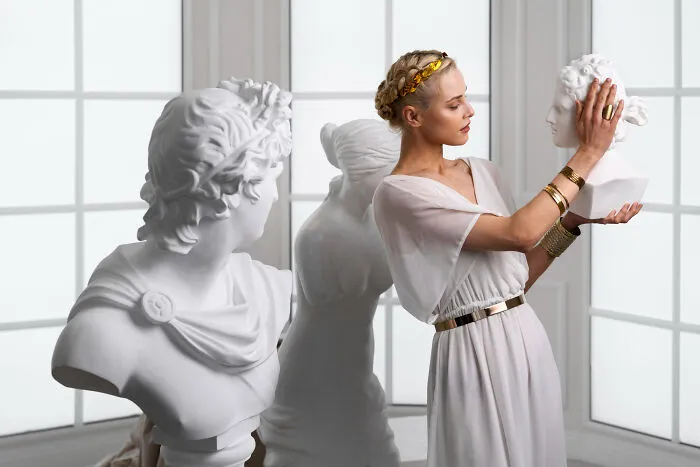
The Romans and Greeks painted all of their statues, and their houses we plastered, and covered in paint. Ceilings
too.
A Roman city was not white on white on white. It was very colourful in all aspects.
#17
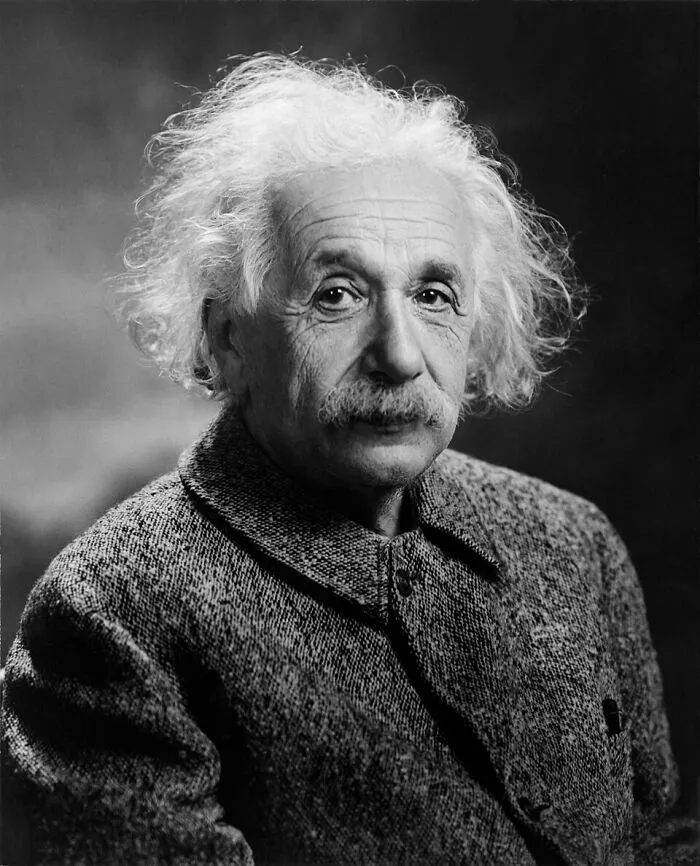
Nope. He was a great student. The myth has a few roots, but some of them tie back to a misunderstanding of the grading scale of the school he went to at the time as well as some comments he made during his life about how he disliked rote learning and other traditional teaching approaches that kind of made it sound like he had an axe to grind with respect to his childhood education.
#18
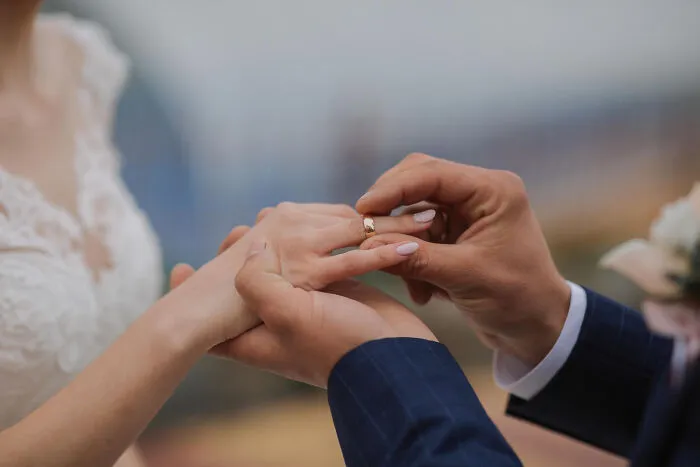
It turns out that teenage marriages were primarily in the upper class for dynastic reasons, and peasants mostly married in their mid-20s. The urban tradesmen class had the men marrying even later as no family would let their daughter marry a man who was not certain to have a trade to support her (and at some points the 'journeyman' phase of training was literally travelling hundreds of miles to learn from many masters).
One of the more bizarre facts that we throw around proudly is that George Washington had wooden teeth. False! He had several sets of dentures over the course of his life, made from a combination of human teeth, animal teeth, and ivory from elephant and hippopotamus tusks, held together with metal springs. They were reportedly extremely uncomfortable and significantly affected his speech.
The wooden teeth myth is so persistent that it appears in children's history books and has essentially become a founding father fun fact, despite having no basis in fact whatsoever. Wood would have been a spectacularly poor material for dentures because it absorbs liquid, swells, and warps. Nobody designing dentures in the eighteenth century was reaching for timber. The actual materials were unpleasant enough without introducing carpentry into the situation.
#19

If you can afford spices then you can afford fresh meat.
#20