




Everyone is entitled to their beliefs, but sometimes those beliefs mean being judgmental and harsh towards people who need your support, like family members. Of course, it’s pretty short sighted to throw stones if you happen to be in a glass house.
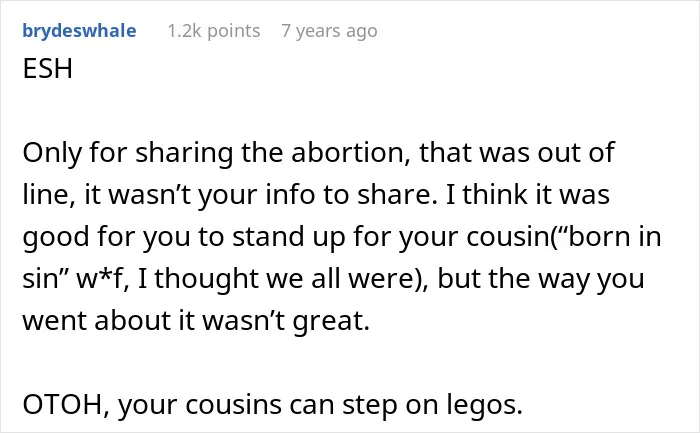
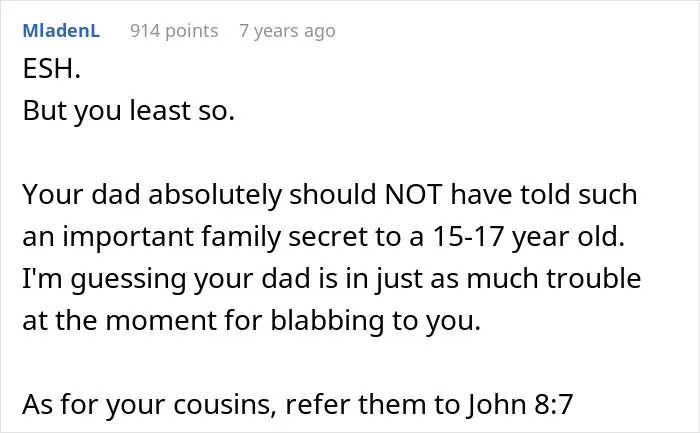
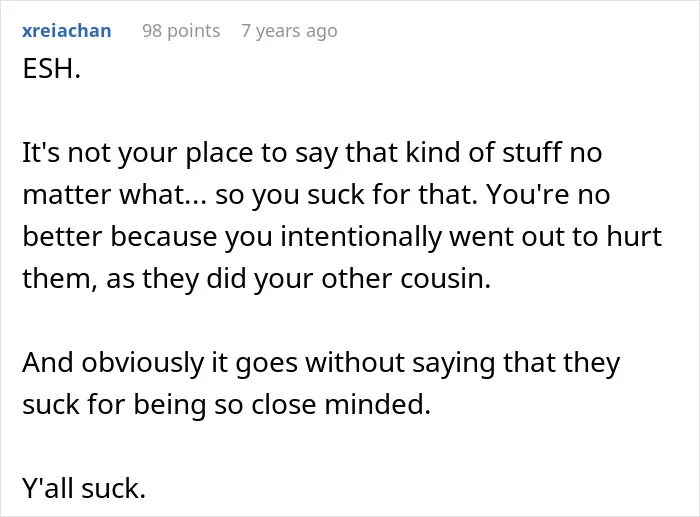
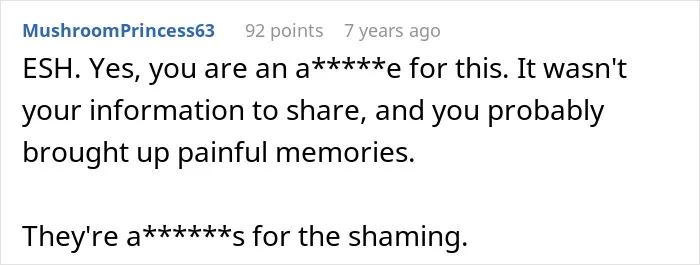
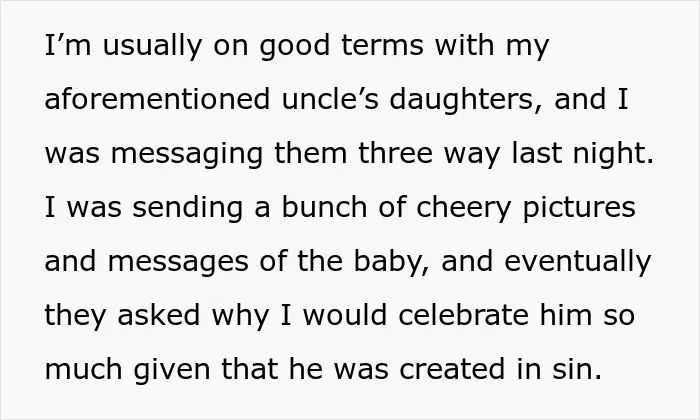
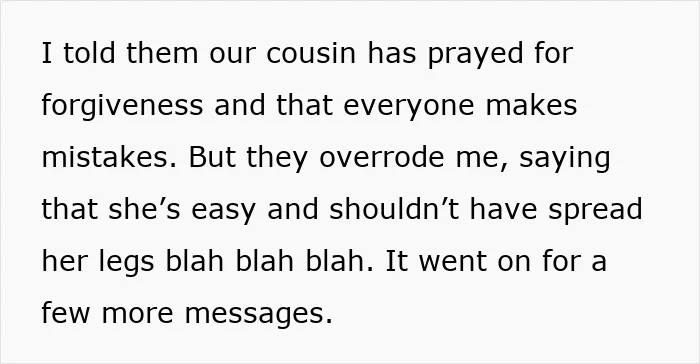
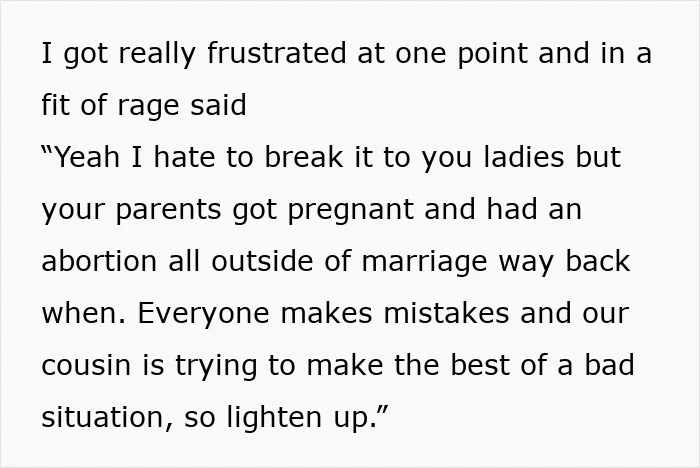
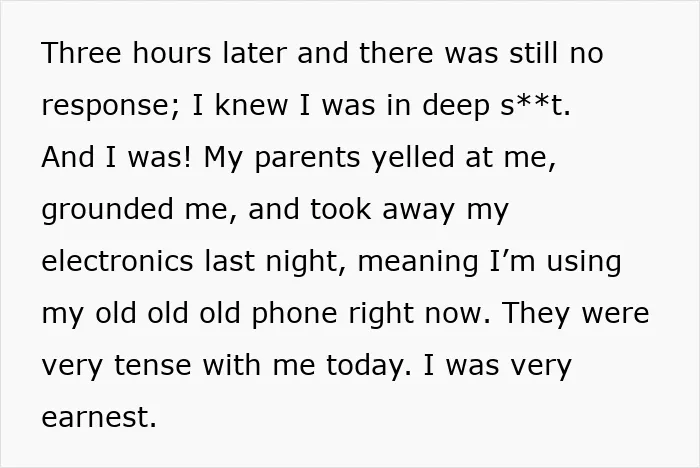
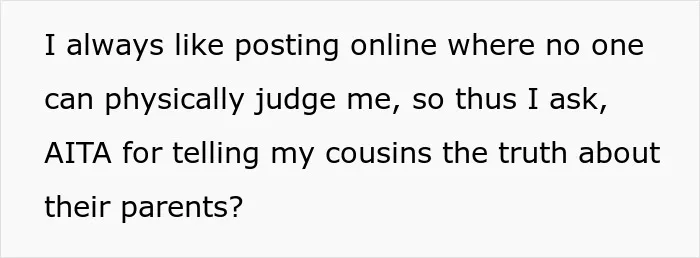
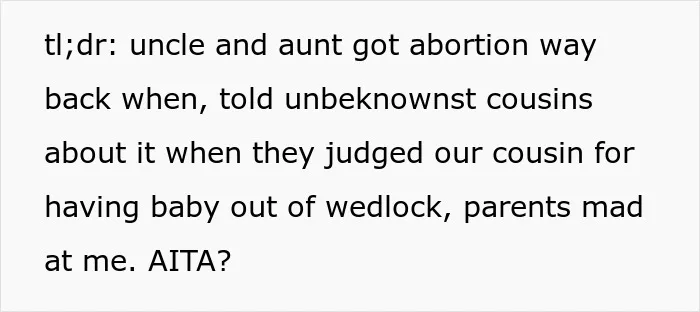
A netizen asked the internet if they were really in the wrong for revealing to their cousins that their parents, while outwardly pro life, had an abortion when they were younger. This immediately sparked a fair bit of family drama. People online discussed the story as not everyone had the same opinion.
Not all family members are there to support each other

But one netizen decided they had to reveal to their cousins their parents secret

Some stories pose interesting moral questions
The instinct in a story like this is to treat "but it was true" as a complete moral defense, and it's worth slowing down on that assumption before accepting it. Philosophers who've spent careers on honesty rarely treat truth telling as automatically clean just because lying is treated as automatically dirty. Immanuel Kant is the thinker most associated with an absolute duty not to lie, famously insisting a person shouldn't lie even to protect a friend from someone dangerous at the door. His reasoning had nothing to do with kindness or outcomes. It was about consistency: if everyone lied whenever convenient, people would eventually stop listening to anyone at all, since a false story only works in a world where most statements can be trusted.
That argument targets liars, not truth tellers, but people often borrow Kant's confidence in reverse, assuming that if dishonesty is always wrong then honesty must always be right. Most ethicists resist that leap, because truth can still be delivered cruelly, weaponized, or handed over by someone who had no right to hand it over in the first place, and none of that stops being true just because the underlying fact checks out.
That last part is really the center of this situation, because the information wasn't the poster's alone to release. It belonged to two other adults, shared under an explicit understanding that it would stay between a small circle.
That last part is really the center of this situation, because the information wasn't the poster's alone to release. It belonged to two other adults, shared under an explicit understanding that it would stay between a small circle.
The philosopher Sissela Bok wrote a whole book wrestling with exactly this kind of dilemma, and part of her argument is that secrecy raises distinct ethical stakes across nearly every relationship, from family life to work to government, because concealing and revealing both carry real consequences for the people involved. Under that lens, breaking a confidence is its own ethical event, separate from the question of accuracy. The poster didn't fabricate anything, but they did convert someone else's private history into ammunition, in someone else's kitchen, without asking either of the people it belonged to.
Revealing a secret because you are mad also isn’t exactly great behavior
Motive matters here too. There's a real difference between disclosing a hard truth to help someone see themselves clearly and disclosing it in anger to win an argument and make two people feel small. The second one is still true, but it isn't offered as a gift, it's thrown as a punch, and that changes what kind of act it is even if the facts inside it are accurate.
There's also a reason the cousins' reaction landed the way it did, and it isn't only about abortion or religion. Research on hypocrisy consistently finds that people react to double standards with unusual intensity, and one set of studies found that people dislike hypocrites even more than they dislike outright liars, because condemning behavior you've quietly excused in your own family sends a false signal about who you really are. That same research found people are far more forgiving of someone who admits their own inconsistency upfront than someone who gets publicly exposed for it. The uncle and his wife chose decades of silence and public certainty over an early, quiet admission, and that choice is arguably what made the blow land so hard once it finally arrived, delivered by a teenager mid argument rather than by them on their own terms.
None of this makes the cousins' cruelty toward their newborn relative acceptable, and it doesn't erase the double standard they were living inside. But there's a difference between a truth that needed to exist and a truth that needed to be handed over by that specific person in that specific moment, in someone else's voice, about someone else's past. Ethics rarely lets one true sentence answer every question raised by how, when, and whose secret it was to tell.
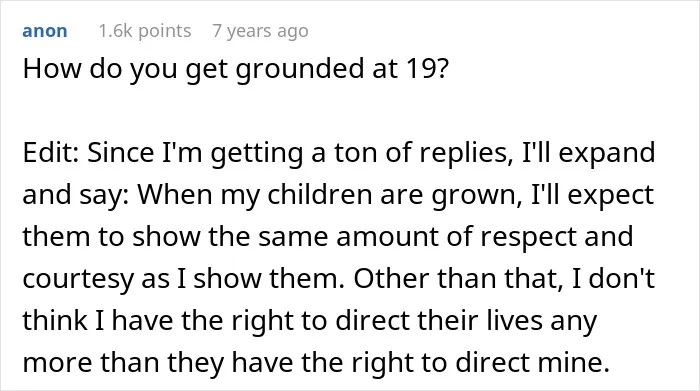
He added some more details later
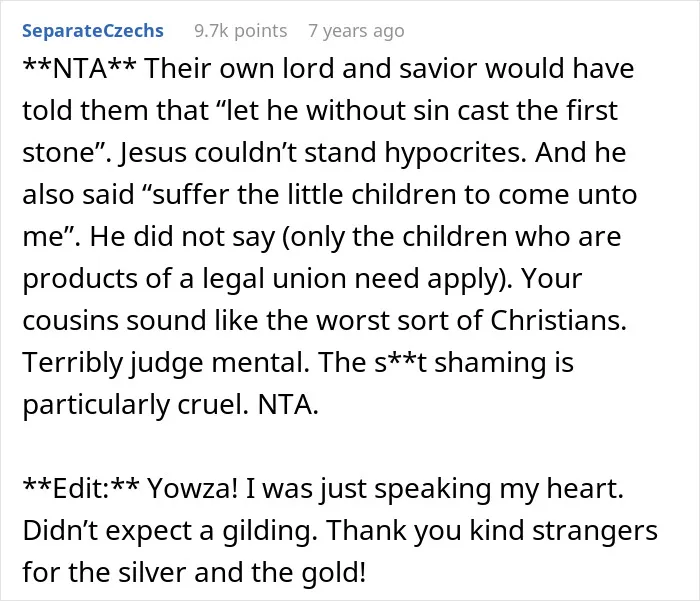
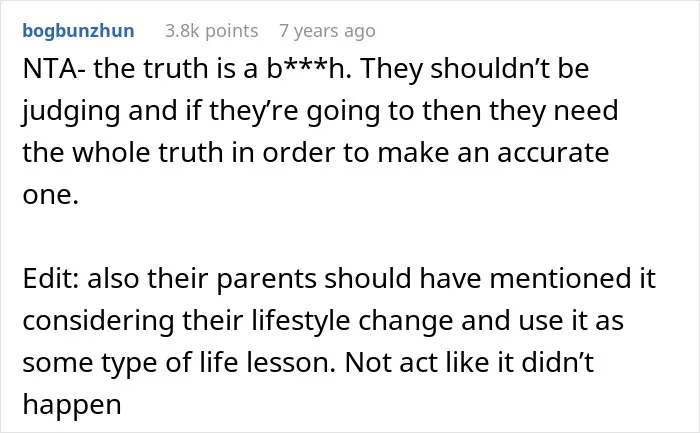
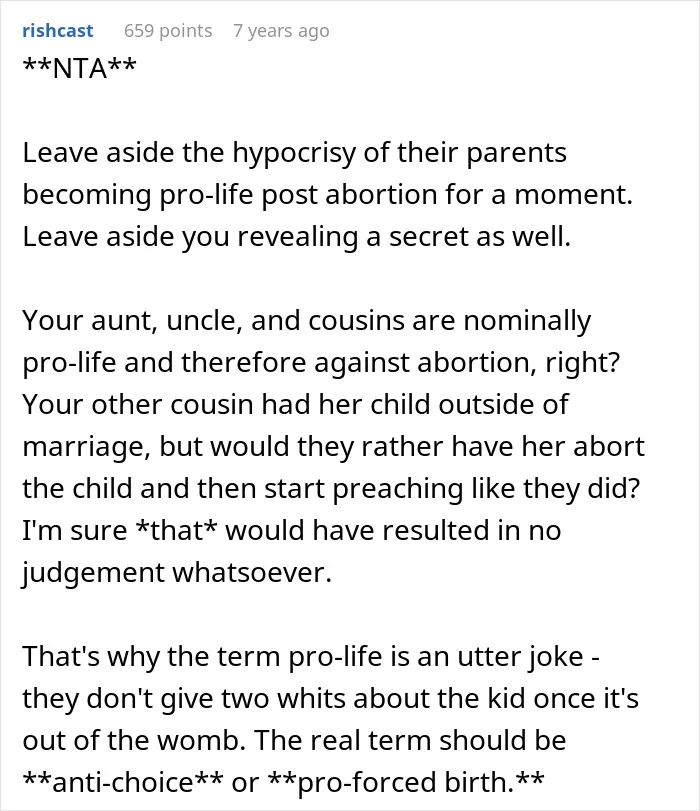
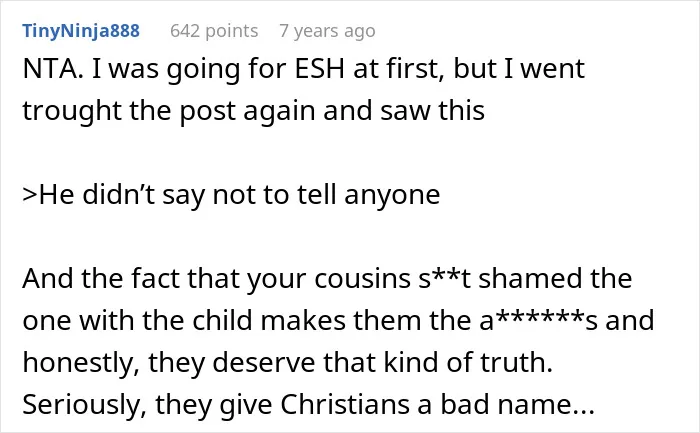
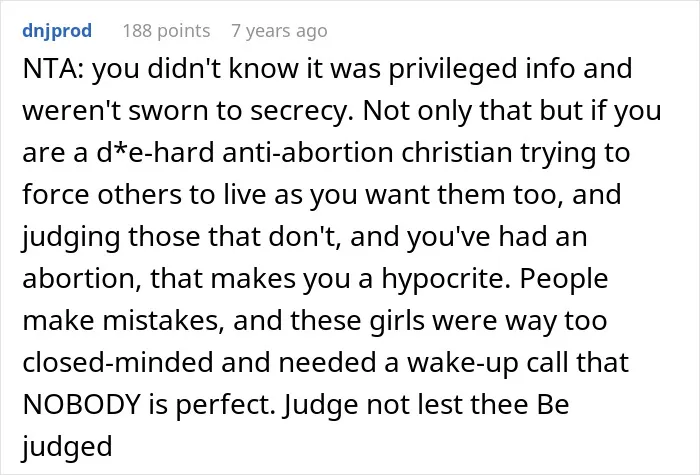
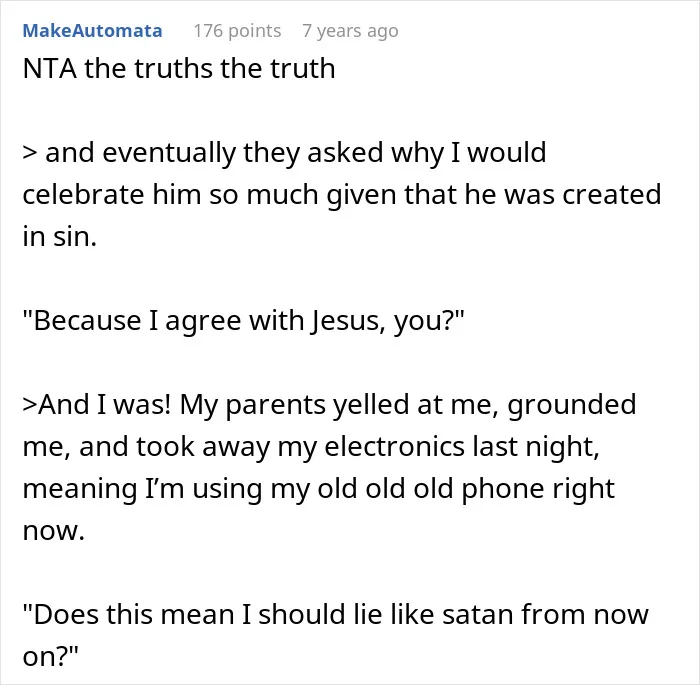
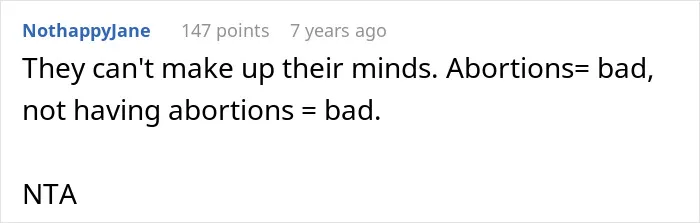
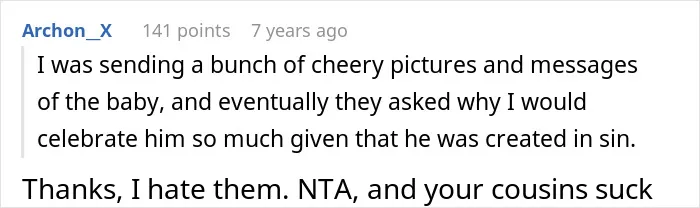
Many thought he was right to tell the truth
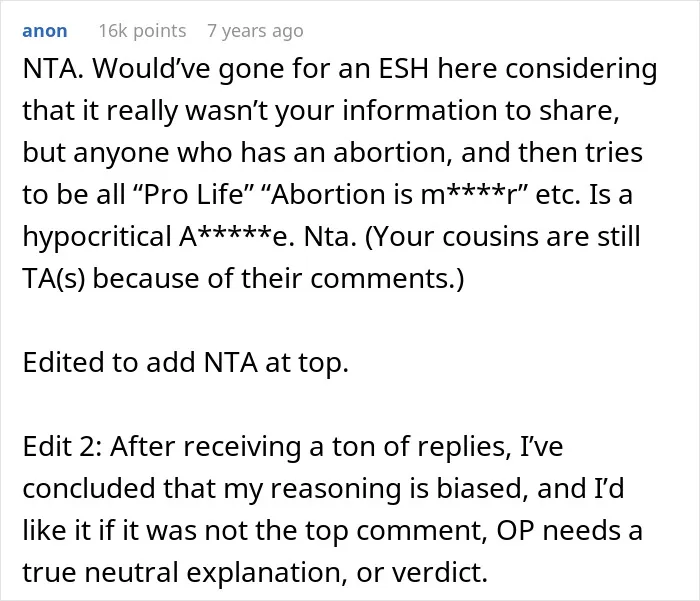
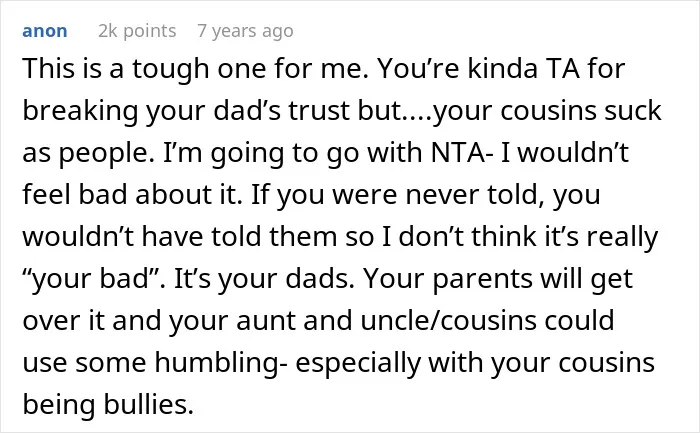
But some thought it wasn't his place