






#2
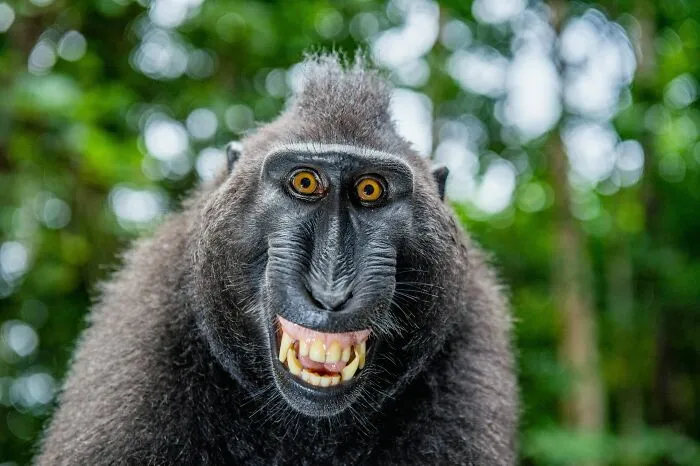
There is that gym bro guy on TikTok that is convinced that because he works out he can win against a fight with a chimp.
No you cannot. Even if you do win, you’ll walk away without a face, finger, or private parts.
#3

Confidence can be a surprisingly poor indicator of whether someone actually knows what they are talking about. People may feel a certain way about an idea because it seems familiar, logical, or convincing, even when there is little evidence behind it.
Research by Phys explores this gap between confidence and accuracy, noting that people can struggle to recognize their own mistakes when they lack the knowledge needed to evaluate their performance properly. While the popular understanding of the Dunning-Kruger effect has been challenged, the broader point remains that people are not always good judges of how accurate their own knowledge is.
#4

It was stage 4 endometriosis.
Multiple doctors including gynecologists said this. And a psychiatrist diagnosed it as “pain disorder,” basically hypochondria.
#5

This guy talking about leaving the US and coming back in illegally because of how great it is to be an illegal. The free apartment, food, money, and healthcare. Yeah man, being an illegal immigrant super duper easy. They live like kings! Kings!
#6

It was a politician from Georgia.
Last I saw they were still in office.
That becomes especially relevant when someone has only a partial understanding of a subject. A person may know a few facts, recognize some terminology, or have heard a particular explanation several times and mistake that familiarity for expertise. Limited knowledge can make it harder to spot what is missing from an explanation, while confidence can grow simply because the idea feels easy to understand.
Repetition can strengthen that feeling too, meaning something heard often enough may eventually seem like common knowledge. The result is a peculiar kind of certainty where someone isn't necessarily trying to fool anybody, they may genuinely have no idea that their conclusion is shaky.
#7

#8

Meanwhile in the United States, another coworker “Jill” had people from work over her house to watch the game. Before the game started she said: Maybe I should call Bob in China and he can let us know the score of the game since the time in China is ahead of us!
We all looked at her like 🤨.
#9

Another reason people can arrive at spectacularly wrong conclusions is that the brain is constantly filling in gaps. Research into source monitoring and memory shows that people do not always preserve a perfect distinction between what they directly observed and what they inferred, imagined, heard from somebody else, or concluded later.
When information is incomplete, the mind naturally tries to construct a coherent explanation. That is generally useful for navigating everyday life, but it also means an assumption can gradually become difficult to distinguish from something that was actually witnessed or established.
#10

#11

When I asked why, the answer was 'well, he wears one of those funny little hats'.
#12

This can turn an innocent guess into something that feels remarkably similar to a fact. If an explanation fits what someone already expects, it can become particularly convincing, even when other possibilities make just as much sense.
Memory itself is also less like a video recording than people tend to imagine. Psychology Today notes that memory errors are a normal part of how memory works rather than rare glitches in an otherwise perfect system. That helps explain why someone can confidently repeat an incorrect interpretation years later and genuinely believe they remember it correctly.
#13

#14

This remains the dumbest sentence I’ve heard in my life.
#15

Once people have committed themselves to an idea, correcting it can become even harder. A mistake is not always experienced as a simple piece of information that needs updating. It can become tied to someone's sense of competence, intelligence, reputation, or even their relationships with other people.
If they have already argued their point forcefully, being proven wrong can also mean confronting the fact that they were previously very confident about something they misunderstood. Psychology Today also highlights how people can become attached to their recollections and interpretations, and people are often reluctant to openly acknowledge mistakes because failure can feel personally uncomfortable.
#16

You got cancer because you’ve not a vegetarian.
You got cancer because you’re not honoring your creativity.
#17

#18

"That's not the ocean. We live in Chicago."
"But it has a beach. What else could it be?".
That discomfort can lead to some impressive mental gymnastics. Instead of simply saying "I got that wrong", someone may reinterpret what happened, find a new explanation, focus on an exception, or become defensive about the person challenging them.
The goal can quietly shift from figuring out what is actually true to protecting the version of events they already accepted. One reason an obviously questionable statement can become even more elaborate when the speaker is challenged is that backing down is no longer just about correcting information, but about admitting their original confidence was misplaced.
#19

#20