





#1

#2

25-ish years later. I have a good job. Built enough savings that whatever happens, my dog will not end up in a shelter. Got a puppy from shelter. Raised and trained the puppy all on my own. I got good enough with this dog training thing that I volunteer at an animal shelter as a dog behavior rehabilitation trainer. I do it for the two dogs I failed cuz I was a f*****g kid.
Turned out I have an actual gift to connect with traumatized dogs, and generally good with animals…something they robbed me for decades.
Somewhere in there I realized my parents were just lazy narcissistic a*****s incapable of loving another living creature. Cut them off when they pulled a “you do as I say cuz I’m your parent, else you are disowned” card again and I told them that their wish to disown me is granted.
Did I pick dogs over my parents? Yes. Yes I did. Zero regrets.
Edit: There are loads of emotional, physical, and financial a***e they put me through. But yeah, this was the final straw.
#3
There is very specific data on family estrangement that tells us a lot more than a psychologist ever could. According to a longitudinal study published in 2023, people are significantly more likely to be estranged from their fathers than their mothers, 26% versus 6%. So there is no surprise why a whole mental health industry has been built around "daddy issues."
Daughters are slightly more likely to be estranged from their fathers than sons, and gay, lesbian, and bisexual respondents are between 10% and 14% more likely to be estranged from their fathers than heterosexual respondents. The pattern, across almost every demographic measured, points consistently in the same direction. Dad has some work to do.
#4
#5
She refused to pay it back, saying it wasn’t her fault. Which was bad, but then I began hearing nasty things she was saying about me around town calling me all sorts of things saying that she was paying all my bills and I was just a money hungry b***h. I had been paying my parents bills since I could work. Literally gave them over $10,000. The most they ever gave me was a microwave and that’s it. That was the last straw for my mom. Everything I had done and given meant nothing to her.
For my dad: growing up he said he had terminal cancer and was going to d*e, leaving behind kids he didn’t like and wasn’t proud of. When my sister d**d of cancer, and I saw the massive difference between his ‘cancer’ and her cancer I knew he had been lying to our faces for decades. Guilt tripping us with his rapidly approaching d***h for sympathy and money. He’s still very much alive despite swearing he’d be d**d by 2003. I was already low to no contact with him (he was already an a*****e alcoholic) but seeing terminal cancer play out in real life really sealed the deal on no contact, permanently.
#6
Therapist Rachel Haack has a theory about why no contact is on the rise, and it is not entirely flattering to contemporary culture. She argues that postmodernism and critical theory (frameworks that taught us to question authority and identify power imbalances) have trickled down from academia into the family unit, where they have reframed relational dynamics in ways that aren't always helpful.
Parents become oppressors. Children become liberators. Love becomes suspect. Forgiveness starts to look like a betrayal of the self. These are useful lenses in certain contexts. As the only lens through which every family interaction is filtered, they create a framework where reconciliation is recast as weakness and estrangement as the only authentic response to imperfection.
#7
- leaving me with my grandparents until I was 7
- taking me from my grandparents as soon as my brother was born at the ago of 7
- putting my brothers crib in my room and expecting me to look after him during the night, before school, and after school
- beating me for any grades below an A
- expecting me to take my brother to the nursery before school and then pick him up
- attend his parents conferences.
My father never got involved so I left home at 16, put myself through school, left the country to go to University.i havent seen my parents for 16 years and not planning to.
#8
#9
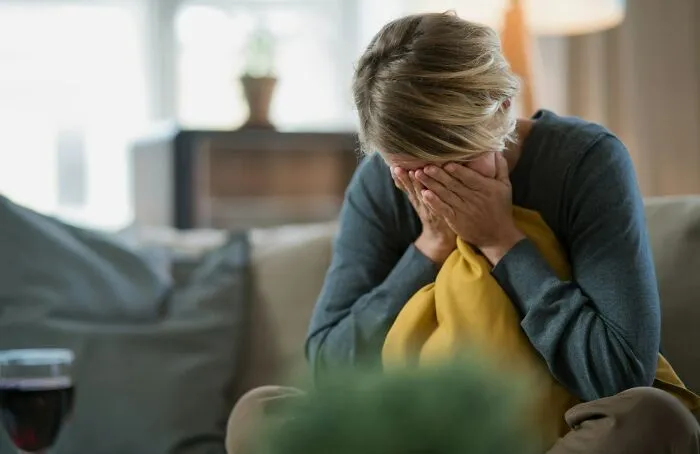
The pain and and anger from all the years of neglect broke me.
For context, my Mum never hugged or comforted me even when upset or in distress.
If I cried, she wouldn't ask me why, she would just tell me to stop.
I've had years of therapy and still have attachment issues to this day.
Haack also points to something that feels counterintuitive — the idea that being too connected to our parents might actually be making relationships worse. In 1960, a college student might have called home once a month. Letters were the norm. Distance was assumed and nobody read anything into a slow response time because the response time was always slow.
Now, parents and adult children can be in contact multiple times a day, and when they're not, someone starts wondering what it means.This constant accessibility has raised the relational temperature for everyone. The guilt of not keeping up, of failing to respond quickly enough, of not being present across every platform simultaneously, becomes exhausting. Haack calls it 'the age of too much para-connection' — everyone feeling simultaneously crowded and lonely.
#10
I was done. .
#11

I know it sounds like the dumbest reason without context. But I spent my entire childhood getting told by her how worthless, ugly and dumb I was, how no one could ever love me, and how she wished she'd left me on the street when I was a newborn so she could've had another, "better" child to replace me instead. Screaming and cursing and throwing s**t at me for every single thing I did, or didn't do. And if I dared say a word back, she'd break down crying and lock herself in the bedroom, crying about how everyone/I was mean to *her*. Just constant verbal and emotional a***e.
So after a several year long break from her, I was supposed to meet her and my dad (whom I love and have a great relationship with btw - no shade on him, he always stood up for me and supported me while being verbally a****d himself), hoping maybe we at least could be civil with each other. Hoping that she finally might have changed. And the first words that came out of her mouth was "you look hideous, why would you wanna walk around like that? Why do you make yourself uglier each time I see you?".
I just turned around and walked home.
We have not spoken since and will never speak again.
#12
Clinical psychologist Joshua Coleman points to rising individualism as another significant driver. When a culture becomes preoccupied with personal identity, personal happiness, and personal fulfilment, relationships with other people (including parents) become secondary to the pursuit of self.
He says that older parents in the US are more than twice as likely to have a poor relationship with their adult children as parents in slightly less individualistic countries like Germany, Israel, and the UK. The more the self becomes the primary project, the more complicated everything else gets.
#13

Mom went nuclear and said (the same ol’) ugly things about me. I calmly walked out the door and will never see either of them unless they apologize, which means I won’t see them.
#14
After months of trying to reconcile, I’m now enjoying my peace. She’s lying about what happened to her friends and our extended family, but thankfully none of them have any bearing on my life. Pretty sure she’s also disinherited my sibling and I which is an insult to our dad’s final wishes. Oh well. We put up with her emotional a***e for 4 decade, but no amount of money is worth the grandkids’ physical safety. We’re the protectors we wish we had when we were children.
#15
He also mentions therapy as a big driving force. While therapy has been enormously beneficial for many people navigating difficult family relationships, Coleman argues that some therapists have contributed to estrangements by effectively diagnosing family members with personality disorders like narcissism, borderline personality disorder, emotional mistreatment etc.
This all happens without ever meeting them, based solely on one person's account. He has met many adult children who, following therapy, have applied clinical labels to parents in ways that make reconciliation significantly harder. This flies in the face of professional ethics in psychiatry and psychology, but it happens. Labels, once applied, are difficult to remove.
#16
When I told her that I was upset with her for causing him to become homeless and endangering his life, she screamed that I would eventually have to take care of him anyway and she deserves to enjoy the remainder of her life. It was then that I realized that she had planned the entire scenario. She literally sandbagged me with the responsibility caring for an acutely ill person from across the country. Mind you, I was the only one of her children with a career and I also have a disabled adult child of my own to care for. I was furious to the point that my body was on fire. That was the last time that I spoke to her.
All told, I’ve spent over a third of my life not speaking to her. I hope she enjoys her beautiful house on the bay in Florida while she ages and d**s alone.
#17
He told my brother that he “saw something in me that he didn’t like”. He even claimed his estrangement was because he didn’t have my phone number, as if he incapable of asking my brother for my phone number. I’ve ALWAYS had the same phone number; it’s never changed.
Twenty years later, and I don’t care if he’s happy, sad, alive, or d**d.
He was a racist, bigoted, self-important loser who let his wife at the time inflict sustained a***e and humiliation on me.
The BEST thing he ever did for me was estrange himself from me.
#18
I am slow to forgive but I love my mom. I hate having to defend the choice to cut her out (even if it's just for now), because most people don't seem to understand how inappropriate and horrible that is to experience since it's not physical.
A YouGov survey tells us the actual reasons people cite for estrangement. Among people estranged from a parent, the most common reasons given are manipulative behaviour, physical or emotional mistreatment, and lies or betrayal. There were all cited by roughly a third of respondents.
What's also worth noting is the reconciliation data. Among parents estranged from their adult children, 70% say they would be willing to reconcile. Among adult children estranged from a parent, only 35% say the same. The gap between those two numbers tells its own story about who is carrying more of the pain from the original relationship, and who has done more of the work of moving on from it.
#19
#20
My mother - I was on LC with her. I was getting married, and tried multiple times to have her attend, at which she kept refusing... even after I told her I would pay for everything.
But that wasn't the final straw.
Right before I got married, I saw my extended family so they could meet my husband. One of my Aunt's had a long term disease that was incurable, so being able to see her was really special. I asked her if I could have a photo with her, and she said yes - on the promise that I not share the photo online as she was physically not at her best and she was sheepish. I promised her that I would only share with my mother (as she had asked multiple times for the photo.)
She said that was alright.
A couple of weeks later, I got married, and a week after that, my Aunt suddenly passed (there was no indication anything was wrong.) I was on my honeymoon.
My sister called me to let me know, and she told me that mom posted the photo on Facebook.
I go to her Facebook and there was my Aunt in the photo... AND... my mother cut me out of the photo. The whole post was about how devastated she was that her older sister is gone, and how special this final photo of her was to her, and that she had to share it.
I cannot tell you the rage and anger I felt. This Aunt was my mothers closest sibling, and the moment she d**d, any promise she had to my aunt d**d, and from that point, it was only about my mother and her trauma. At that point, I went (effectively) NC. I filtered her off my FB and stopped actively interacting with her... seeing how long it would take for her to notice.
It took 9 months.
By the time she realised, I gave her a very direct message, and that was that. She isn't aware of "the incident" that broke the camel's back, and even *if* we speak again on this subject, I won't focus on it, but rather the decades of a***e and a*****e patterns she goes through.
I have had 3 interactions with her in the intervening 10 years and all were shut down immediately by me.