





#1

#2
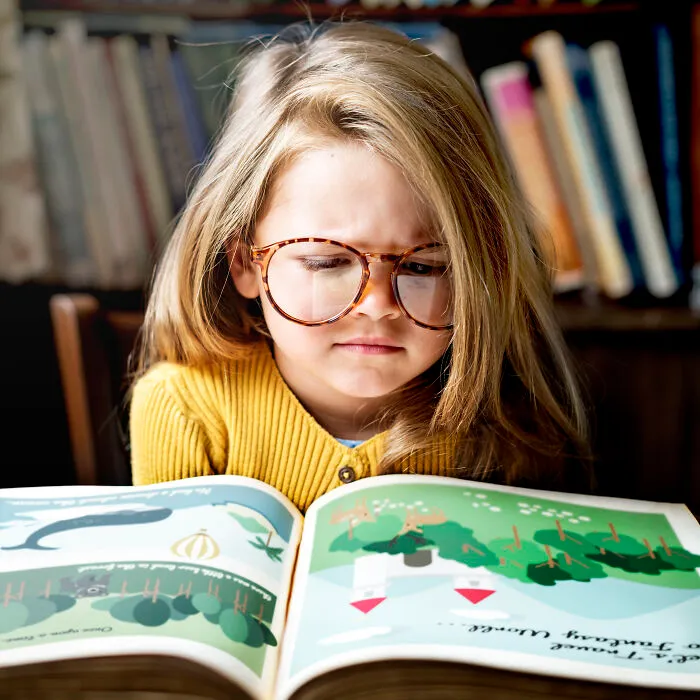
(I’m still impressed by librarians but it’s no longer based on this assumption).
#3

Children have a remarkable ability to turn a confusing moment into a perfectly reasonable explanation, even when that explanation makes very little sense to an adult. Parenting Science explains that children are naturally motivated to make the world feel predictable and understandable, so when something surprises them or doesn't fit with what they already know, they try to fill the gap.
Rather than simply accepting that they don't know why something happened, they may build a simple explanation using ideas about cause and effect, purpose, or agency. The stranger the event, the more tempting it can be to come up with a reason for it.
#4

#5

#6

Little did the monsters know, there wasn’t a werewolf and it was just little me under those covers. D**n fools.
That tendency is actually part of how children learn. An unexpected event can prompt them to form a hypothesis about what caused it, giving them a chance to adjust their understanding as they encounter new information. The explanation might be wrong, but the process is useful because children are essentially testing different ways of making sense of the world.
This helps explain why a child can develop an elaborate rule about something completely ordinary: once the explanation makes sense within their limited mental model, there may be little reason for them to question it. They also point to children's tendency to assume that objects and events have a purpose, meaning a child may look at something in nature and instinctively decide that it must exist for something.
#7
#8

#9

As children develop, however, they are also learning where imagination ends and reality begins. Tulsa Kids notes that by around ages 3–4, many children can distinguish pretend situations from real ones in straightforward circumstances. Yet that boundary isn't always firm.
A child can know that an imaginary friend isn't physically present while still saving them a seat at dinner, or understand that monsters aren't real while becoming genuinely worried about one after a frightening story. Their judgment can shift depending on how emotionally powerful or vivid an idea feels, which helps explain why something imaginary can occasionally become convincing enough to influence their behavior.
#10

#11

When I learned the truth it felt like ultimate betrayal.
#12

The situation surrounding an idea can make that effect even stronger. Something that seems obviously fictional in one setting may feel much more believable in another, particularly when darkness, an adult's tone of voice, or repeated warnings are involved. Vivid and recently encountered ideas are also easier to picture, which can make them feel more plausible.
A child who has heard about something repeatedly may therefore give it more weight than an adult would. Their ability to think about their own thoughts and evaluate what they actually know is still developing, so they may rely heavily on familiarity, emotion, and whatever explanation feels most immediately convincing.
#13

#14

#15

That also helps explain the famous childhood habit of asking "why?" According to Psychology Today, children aren't simply trying to annoy adults with an endless stream of questions; they are working out how causes and consequences fit together.
They want explanations that make events feel complete and predictable, but an explanation doesn't necessarily have to be accurate to satisfy that need. Children can be more interested in whether an answer seems to fit their question than whether it has been properly verified. A simple explanation can therefore become surprisingly powerful if it neatly fills the gap in their understanding.
#16

#17

#18

Purpose-based explanations can be particularly appealing because they make complicated things easier to understand. Instead of dealing with a complicated chain of causes, a child can decide that something exists because it has a particular job or purpose. They may also assume that everything must have an explanation, making "nobody knows" an unsatisfying answer.
Add a trusted adult, an exciting story, or a frightening idea, and the explanation can become even harder to challenge. A child may technically know that something isn't real while still treating it as a useful rule for navigating the world.
#19

#20