


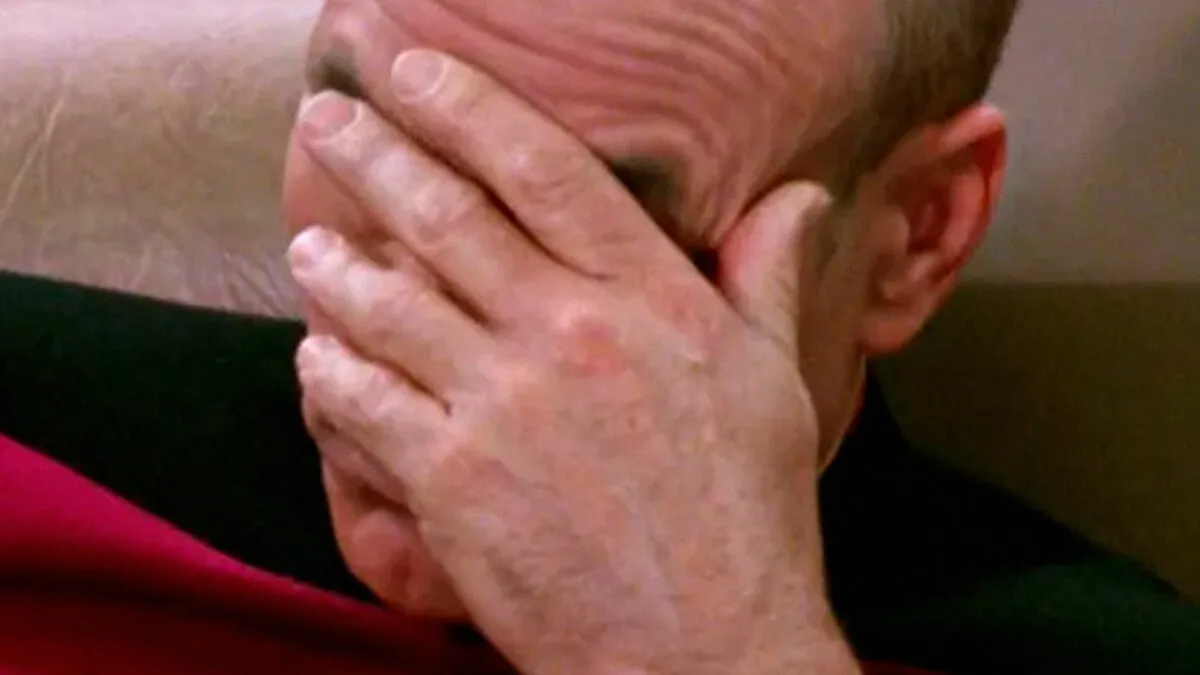






It's hard to meet someone nowadays who isn't familiar with the facepalm phenomenon. Online, it often relates to secondhand embarrassment and self-deprecation and is common in meme culture. Merriam-Webster added the word to its dictionary in 2017, while the Macmillan dictionary introduced it in 2006.
People use it as a verb and a noun, and the gesture itself is thousands of years old. However, according to Merriam-Webster, the written word only started making rounds about 30 years ago. Its first documented appearance was back in 1996 on a Google Groups message board: “Christie facepalmed. ‘Well, her hair was red this morning, right? It's blonde now. You figure it out.’”


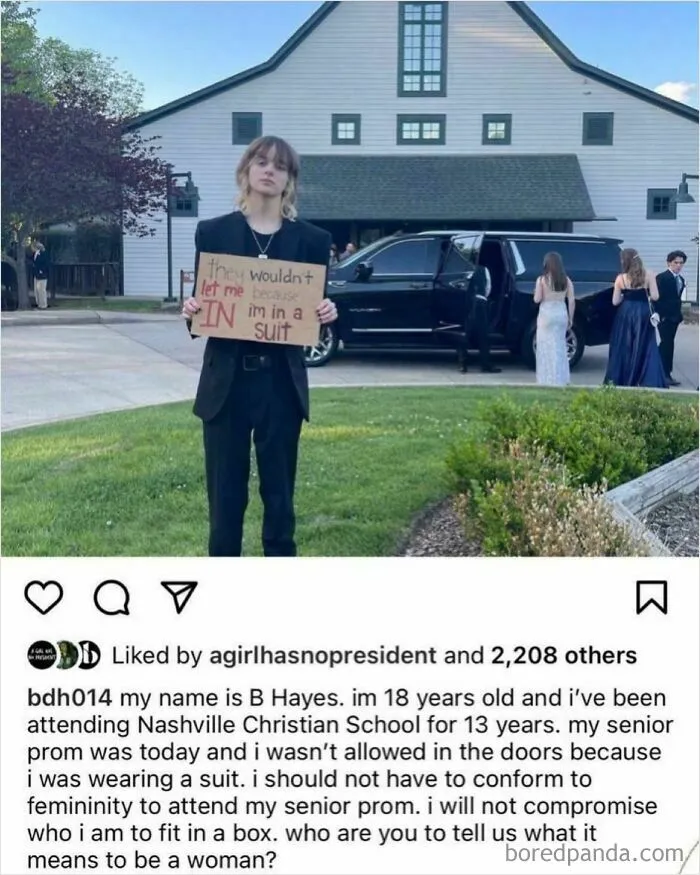
#6 Nashville, Tennessee Christian School Refused To Allow A Female Student To Enter Prom Because She Was Wearing A Suit
In meme culture, the facepalm is strongly associated with a screengrab of the actor Patrick Stewart as Jean-Luc Picard from Star Trek: The Next Generation. For many, it’s the go-to meme for conveying facepalming and embarrassment. The moment is from season 3, episode 13, but a few episodes later, in episode 16, Picard does a double facepalm, putting both of his hands on his face in exasperation and frustration.
Nowadays, it’s the quintessential image for the facepalm reaction. Another notable reaction image is a scene from Naked Gun: a “group facepalm,” where a crowd makes the gesture. It’s often used for ultimate facepalm moments, when one wants to convey enormous disbelief. On YouTube, the clip is even titled “Epic Facepalm.”
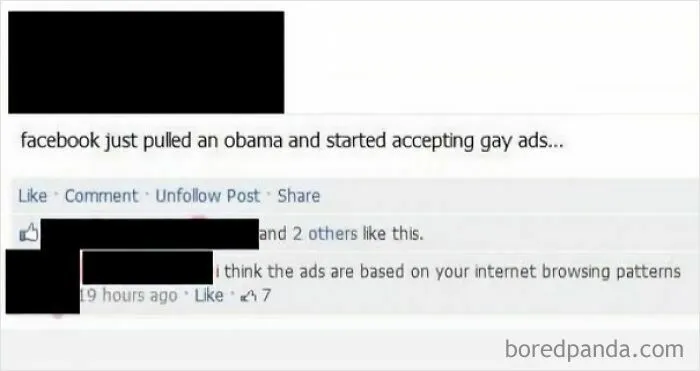
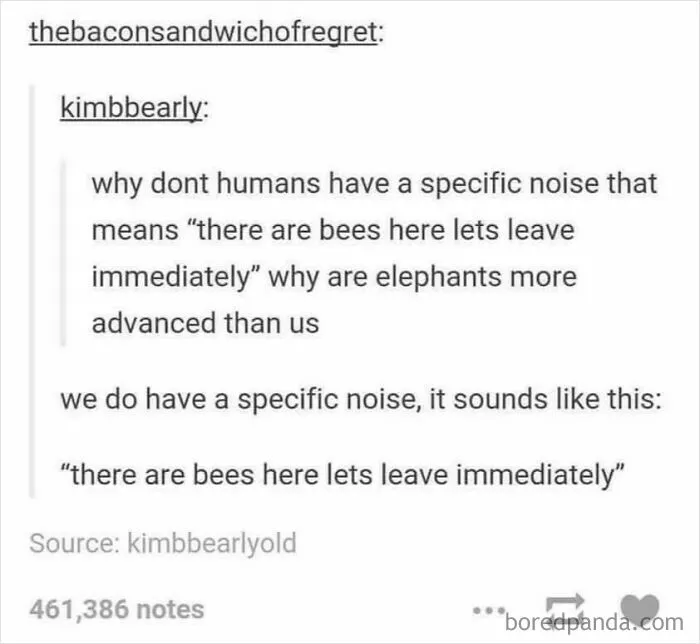

The facepalm gesture itself isn't much of a novelty. An ancient Roman sculpture on Trajan’s column depicted something akin to a facepalm. Among the many figures in the artwork, one man covers his face with his palm, and experts usually interpret his expression as sadness, not frustration or disbelief as we would now, especially in the context of memes.


Similarly, a 1896 statue by Henri Vidal, titled “Cain,” depicts the biblical character Cain after committing the mortal sin against his brother Abel, with his face in his hand. Vidal’s Cain is not facepalming in the contemporary sense, either. His expression is about regret, remorse, and heartbreak.



Interestingly, humans aren’t the only species on Earth that facepalm. English mandrill monkeys do it too. Alas, again — not because they’ve just seen something stupid on the internet. Their facepalms sometimes last as long as 17 minutes, and, as evolutionary biologist Mark Laidre told National Geographic, they do it to avoid social interactions. The mandrills would cover their eyes when they were alone and were more likely to be left alone as long as they kept their eyes covered.


The peak of facepalm memes and reactions was around 2012, at least according to Google Trends search interest. Search interest for “facepalm” has only decreased since then and is now only 6%. Nevertheless, lexicographer Susie Dent has faith in the longevity of “facepalm” as a word and as a phenomenon.
“One of the reasons I think it is so successful – and this is always a key indicator of linguistic survival or success – is that the phrase can move about in different ways and you can put it into different parts of speech,” she told The Guardian back in 2011. “So it is being used as a verb or a noun.”