






Your first impulse when you meet a new person is probably to trust them. Why wouldn’t you? You don’t know anything about them, so why would you assume the worst? Well, apparently, not everyone deserves to receive the benefit of the doubt. But it might take extreme attention to detail to determine who does and who doesn’t.
Highly observant people have recently been opening up on Reddit about the nearly imperceptible traits that they notice to determine a person’s true intentions. Whether it’s reading into every word they say or noticing small changes in body language, these traits and behaviors might provide some insight into what a person is really thinking. Below, you’ll find all of their most fascinating replies, so be sure to upvote the ones that you’ll start noticing from now on too.
#1

How they treat people they don't need anything from. It's surprisingly hard to fake consistently.
Report
31points
#2

People who are constantly complaining about others to you are also complaining about you to others.
Report
29points
#3

People often accuse others of their worst personal traits. This is especially true for people who are emotionally immature or have narcissistic traits. When their egos are threatened, they will randomly accuse you of whatever mean spirited traits they themselves feel. This is because they can't handle the reality of how terrible they feel, so they project their negative feelings onto others.
29points

#5
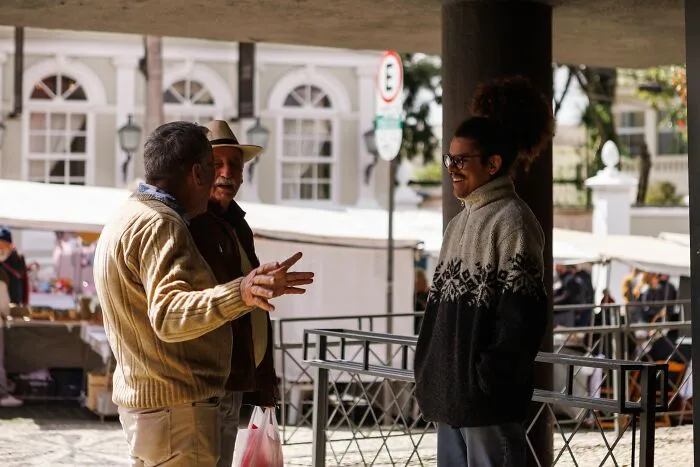
The subtle way that they treat people who are “below their social status”. It’s hard to explain, but they will act really bubbly and talkative with people who they view as their equals. But if someone else tries to talk to them who they see as not good enough for them, they will give them this blank stare and one word answers.
Report
24points
#6

A big one is how someone reacts when they have a tiny bit of power over someone who can’t really benefit them.
Not “how they treat the CEO” or “how charming they are at a party.” I mean the almost invisible moments: the server gets something wrong, the cashier is slow, a junior coworker asks a basic question, someone interrupts them by accident, a kid is in the way, an elderly person is taking too long.
Some people stay basically the same person. Maybe annoyed, but still decent.
Other people change instantly. Their tone sharpens. Their face drops. They suddenly need the other person to feel small. And it’s usually not dramatic enough for everyone to notice — just a little contempt, a little impatience, a little “you are beneath me” energy.
To me, that’s one of the clearest tells. A person’s character shows up most clearly when there’s no social reward for being kind and no immediate penalty for being cruel.
Not “how they treat the CEO” or “how charming they are at a party.” I mean the almost invisible moments: the server gets something wrong, the cashier is slow, a junior coworker asks a basic question, someone interrupts them by accident, a kid is in the way, an elderly person is taking too long.
Some people stay basically the same person. Maybe annoyed, but still decent.
Other people change instantly. Their tone sharpens. Their face drops. They suddenly need the other person to feel small. And it’s usually not dramatic enough for everyone to notice — just a little contempt, a little impatience, a little “you are beneath me” energy.
To me, that’s one of the clearest tells. A person’s character shows up most clearly when there’s no social reward for being kind and no immediate penalty for being cruel.
Report
22points
#7

Notice how they handle disagreement. Character usually shows up under stress, not comfort.
Aerhyce:
Admitting mistakes as well.
Aerhyce:
Admitting mistakes as well.
Report
21points
#8

Doing something good when they think no one is watching.
19points
#9

If they keep mentioning how honest and reliable they are and that you can trust them... Don't trust them.
Report
18points
#10

The assumptions they make about other people’s intentions tells you more about a person than almost anything else.
Report
15points
#11

Outward denial of their true intent. "I'm not here to make trouble for you..." Yes you are. "I would never say that about her." Yes you did.
Report
15points
#12

How people treat their kids. I had a neighbour who was so falsely nice to everyone, but I kept catching her sneering and seething at her kids for the most benign reasons. I could see her mean streak a mile away but everyone thought she was a ray of sunshine. Low and behold it all came out her and her boyfriend have been putting her hands on her 14 year old son and he’s just been sent to live with his grandmother by social services.
Report
15points
#13

How they talk about other people when they are not around is one of the biggest things I pay attention to. I don't just base my opinion of people off of how they treat me directly but how they treat others, especially when they don't get their way. Are they happy for their friends or are they just thinking, "must be nice for them" when they get opportunities they don't have? Are they ever the villain in their stories or are they always the victim with zero account of their own actions? Do they respond to the things you say, or just move onto whatever semi-related thing they already decided they want to say? Do they ignore harmful behavior in their friends just because they aren't personally affected?
Report
14points
#14

When every conversation turns into being about them.
13points
#15
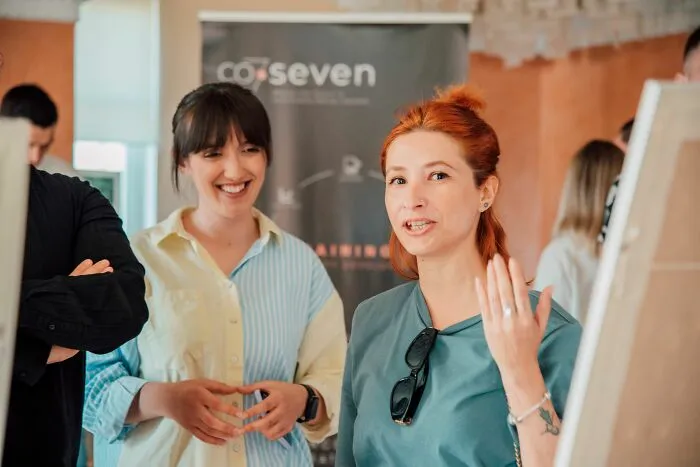
When someone is effusively nice. I’m not talking about genuinely kind people, I mean fake niceness. It means they want something.
I used to work with a guy who was like this. I give a presentation, “oh my god, that was brilliant.” I write a video, “you have more talent in your pinky than I have at all.” Direct quotes. I’d ask him to stop, and he’d say something like “but I can’t ignore your talent!”
It stopped the literal day he realized that I did not have the power to promote him. Within a week, he was making comments to me like “stick to your job” and “you’re a little [drama]-stirrer.” Saw it coming from jump.
I used to work with a guy who was like this. I give a presentation, “oh my god, that was brilliant.” I write a video, “you have more talent in your pinky than I have at all.” Direct quotes. I’d ask him to stop, and he’d say something like “but I can’t ignore your talent!”
It stopped the literal day he realized that I did not have the power to promote him. Within a week, he was making comments to me like “stick to your job” and “you’re a little [drama]-stirrer.” Saw it coming from jump.
Report
12points
#16

How they talk about other’s success. If they’re upset and jealous anytime anyone in their life is doing well/better than them, I steer clear. The world is big enough for everyone to win, and people who get upset over other’s success is a huge red flag.
Report
12points
#17

When someone keeps glancing at their watch or phone while you're telling them something important, but they try to hide it. They think we don't notice but it's so obvious they want to leave or stop listening.
Also people who agree with everything you say immediately without thinking. That's usually not genuine, they just want something from you.
Also people who agree with everything you say immediately without thinking. That's usually not genuine, they just want something from you.
Report
11points
#18

I have C-PTSD so hypervigilance is my constant state of being. You can tell a lot about someone just by figuring out if they have the ability to consider how their actions affect others around them. Example - if you have no spacial awareness - constantly taking up a lot of space when there are people around you, not making room for wheelchairs or prams, stopping suddenly in front of people etc. - and you are genuinely oblivious to how you are affecting other people around you then I already know that you are likely emotionally immature and/or selfish. I’m not talking about people who are clumsy or have issues with spacial processing but people who routinely are unable to think about other people. I tend to find that this kind of behaviour is the precursor to similar behaviour that routinely doesn’t consider the other person in the interaction. If a person is unable to think ahead of time how they affect someone else, to me it’s a classic sign of not having empathy or being able to emphasise with someone - and that’s a major red flag.
Report
11points
#19
Hi. I'm highly observant. And I've been to prisons in two states. I'll share my observations.
"Character" is meaningless really. The truth is that other people are ultimately unknowable. You cannot know what is in another person's heart. Whatever you think they are thinking or feeling is a -projection- that is coming from you.
Between two human beings there are two types of exchanges: words and actions.
The closest thing to knowing a person is accurately predicting their behavior and speech. Will they continue to match your expectations of them?
The most lizard and primitive parts of the brain is responsible for sorting people into roles of expected behavior.
And at its most basic level it is a thing that is trying to sort out one question," is it safe to be with this person"
So the brain, whenever you come into the presence of another human being, decides if that person is okay to share physical space with, and it sets expectations of behavior and speech within that space.
But there's different rules of social expectations depending on the context of the situation.
So prison- a place with an unusually high concentration of people who are statistically more likely to have bad intentions. And more practice.
Every word or act is the result of an intention unless involuntary.
There are different levels of safe space sharing.
Someone who is okay to sit next to on the bus would not be cool in my living room. My co-worker is fine when we're in the car together but if he was in my bedroom that would not be welcome.
Oftentimes, the words a person chooses to speak can reveal their intentions, you can see how they're framing it mentally.
There's always a reason why a word or act was chosen.
Generally speaking, someone who is telling you something that is true doesnt really care too much if you believe them or not. They won't waste energy trying to persuade you that they're not lying.
Because they don't really care.
But the liar will need you to believe that a thing isn't true, and will keep trying.
"Character" is meaningless really. The truth is that other people are ultimately unknowable. You cannot know what is in another person's heart. Whatever you think they are thinking or feeling is a -projection- that is coming from you.
Between two human beings there are two types of exchanges: words and actions.
The closest thing to knowing a person is accurately predicting their behavior and speech. Will they continue to match your expectations of them?
The most lizard and primitive parts of the brain is responsible for sorting people into roles of expected behavior.
And at its most basic level it is a thing that is trying to sort out one question," is it safe to be with this person"
So the brain, whenever you come into the presence of another human being, decides if that person is okay to share physical space with, and it sets expectations of behavior and speech within that space.
But there's different rules of social expectations depending on the context of the situation.
So prison- a place with an unusually high concentration of people who are statistically more likely to have bad intentions. And more practice.
Every word or act is the result of an intention unless involuntary.
There are different levels of safe space sharing.
Someone who is okay to sit next to on the bus would not be cool in my living room. My co-worker is fine when we're in the car together but if he was in my bedroom that would not be welcome.
Oftentimes, the words a person chooses to speak can reveal their intentions, you can see how they're framing it mentally.
There's always a reason why a word or act was chosen.
Generally speaking, someone who is telling you something that is true doesnt really care too much if you believe them or not. They won't waste energy trying to persuade you that they're not lying.
Because they don't really care.
But the liar will need you to believe that a thing isn't true, and will keep trying.
Report
11points
#20

Zero Sum Mindset. When they genuinely believe someone else must lose so they can win. Everything, every interaction, seems very transactional or involves some kind of negotiation. Usually they rank higher on the "Dark Tetrad" spectrum.
Report
10points