





The ocean can be peaceful, powerful, mysterious, and deeply vulnerable, often all at once. The Ocean Photographer of the Year awards, presented by Oceanographic and Blancpain, bring these different sides of our blue planet together through photographs ranging from intimate wildlife encounters to conservation efforts and people's interactions with the sea. This year’s competition received more than 15,000 entries from ocean photographers worldwide.
At its core, the competition aims to highlight both the ocean's wonder and fragility while celebrating the photographers helping tell its stories. From fleeting wildlife encounters to images documenting the threats marine ecosystems face and the work being done to protect them, this year’s winners offer a striking reminder of how much remains to discover, appreciate, and preserve beneath the surface.
Scroll down to see some of the winners and finalists of this year's OPY Awards, and upvote the photographs that made the strongest impression on you.
#1 Female Fifty Fathoms Award - Jenny Stock
Location: French Polynesia
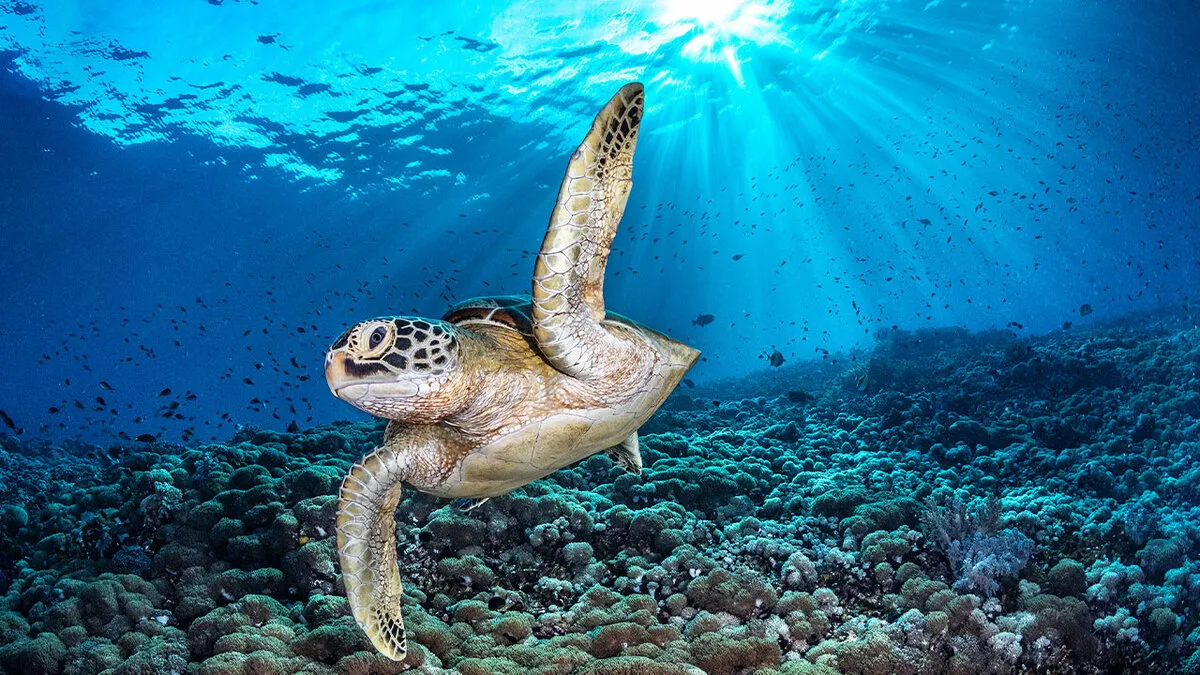
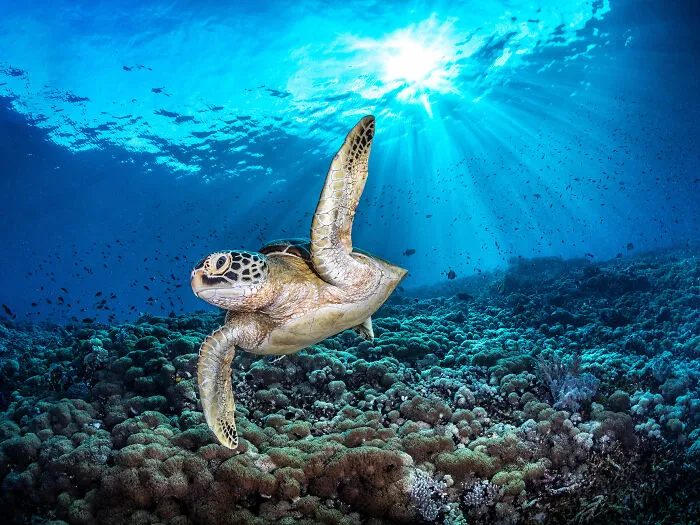
Description: A green turtle approaches the camera, appearing curious about her reflection in its dome port. The photographer positioned the camera just below her eye level to create and even more intimate portrait; staying within 3-10 meters of the surface kept the sunlight sharp, creating distinct rays through the water. A fast shutter speed and small aperture controlled the intense brightness, while a small amount of strobe light revealed the turtle's details.
Description: A green turtle approaches the camera, appearing curious about her reflection in its dome port. The photographer positioned the camera just below her eye level to create and even more intimate portrait; staying within 3-10 meters of the surface kept the sunlight sharp, creating distinct rays through the water. A fast shutter speed and small aperture controlled the intense brightness, while a small amount of strobe light revealed the turtle's details.
Report
18points
#2 Conservation (Hope) Photographer Of The Year, Finalist - Leighton Lum
Location: Hawai'i, USA
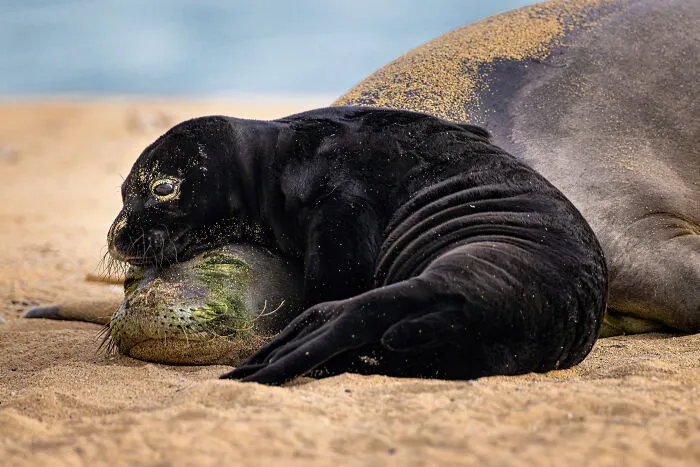
Description: A Hawaiian monk seal rests with her week-old pup on Kaimana Beach in Waikīkī. Mothers nurse their pups for around six weeks without feeding, losing up to a third of their body weight while the pup grows rapidly before becoming independent. Despite choosing one of Hawaiʻi's busiest beaches to raise her pup, Kaiwi has successfully raised several pups here. It does however require the support of conservation teams and volunteers – DLNR enforcement, NOAA and volunteer groups coordinating barriers and round-the-clock patrols to ensure that tourists and locals wouldn't get too close during such a sensitive window.
Description: A Hawaiian monk seal rests with her week-old pup on Kaimana Beach in Waikīkī. Mothers nurse their pups for around six weeks without feeding, losing up to a third of their body weight while the pup grows rapidly before becoming independent. Despite choosing one of Hawaiʻi's busiest beaches to raise her pup, Kaiwi has successfully raised several pups here. It does however require the support of conservation teams and volunteers – DLNR enforcement, NOAA and volunteer groups coordinating barriers and round-the-clock patrols to ensure that tourists and locals wouldn't get too close during such a sensitive window.
Report
17points
#3 Adventure Photographer Of The Year, 1st Place Winner - Gergo Rugli
Location: Tamarama Beach, Australia
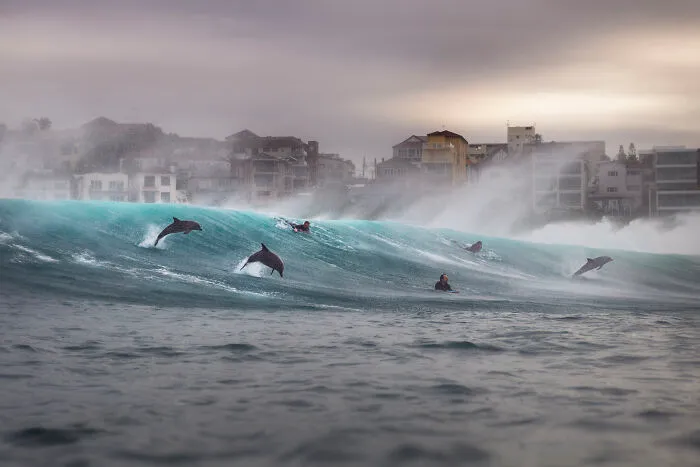
Description: Dolphins ride the waves alongside surfers at Tamarama Beach, Sydney, during a powerful swell and offshore winds. The pod stayed with the surfers for more than an hour, moving through the lineup as naturally as the people around them. Captured from the water, this image shows the ocean as a shared space, where humans and wildlife briefly move together within the same powerful coastal environment.
Description: Dolphins ride the waves alongside surfers at Tamarama Beach, Sydney, during a powerful swell and offshore winds. The pod stayed with the surfers for more than an hour, moving through the lineup as naturally as the people around them. Captured from the water, this image shows the ocean as a shared space, where humans and wildlife briefly move together within the same powerful coastal environment.
Report
16points
#4 The Ocean Unseen: Hidden Worlds Award, Finalist - Luis Arpa Toribio
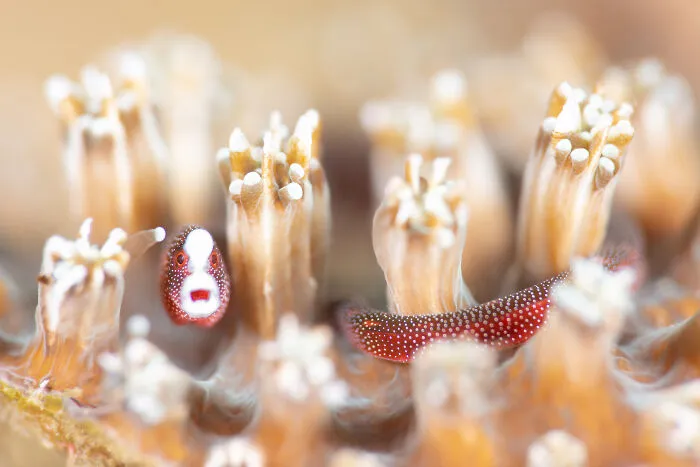
Location: Lembeh, Indonesia
Description: A Braun’s pughead pipefish (Bulbonaricus brauni) peers from between coral polyps in Lembeh, Indonesia. Its unusual features give it a curious, almost surprised expression, helping people connect with a species rarely seen outside its coral home. Some guides damage coral colonies to make these tiny fish easier to show to visitors, but this image was captured by waiting patiently and allowing the animal to appear naturally.
Description: A Braun’s pughead pipefish (Bulbonaricus brauni) peers from between coral polyps in Lembeh, Indonesia. Its unusual features give it a curious, almost surprised expression, helping people connect with a species rarely seen outside its coral home. Some guides damage coral colonies to make these tiny fish easier to show to visitors, but this image was captured by waiting patiently and allowing the animal to appear naturally.
Report
16points
#5 Adventure Photographer Of The Year, Finalist - Benjamín Yávar
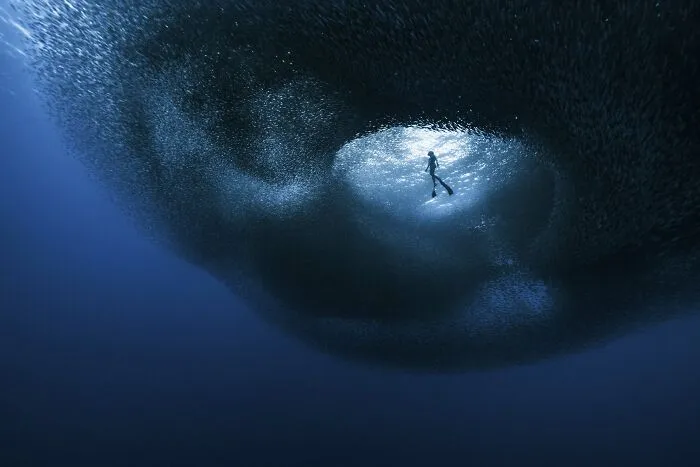
Location: Panglao, Philippines
Description: A freediver is surrounded by a vast school of sardines, which part to form a striking halo as they move around her. Captured during an unplanned morning dive, the image reveals the calm trust that can exist between people and marine life. It is a reminder that patience and respect for the ocean often lead to its most extraordinary moments.
Description: A freediver is surrounded by a vast school of sardines, which part to form a striking halo as they move around her. Captured during an unplanned morning dive, the image reveals the calm trust that can exist between people and marine life. It is a reminder that patience and respect for the ocean often lead to its most extraordinary moments.
Report
15points
#6 Wildlife Photographer Of The Year, Finalist - Abdulaziz Al Saleh
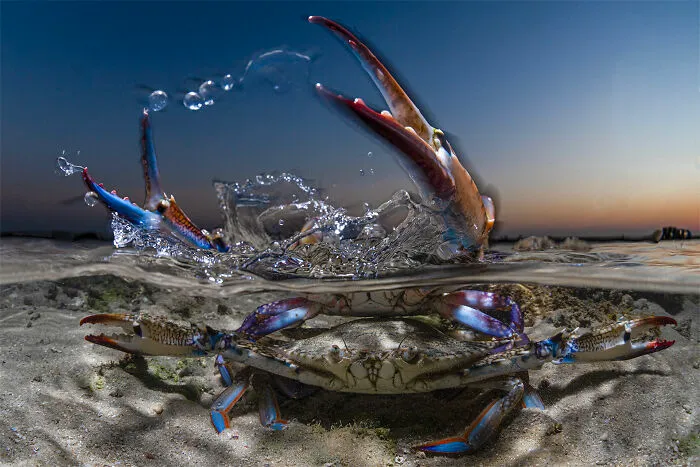
Location: Rumaithiya, Kuwait
Description: A male blue crab (Callinectes sapidus) displays his large claws above the water while protecting a female during mating in Kuwait’s Arabian Gulf. During reproduction, males guard females to reduce the risk of predation and competition. This split-level image was taken at sunrise in a shallow intertidal zone, where careful movement was essential to avoid disturbing the crabs. The female’s distinctively colored claws and her still posture contrast with the male’s defensive display.
Description: A male blue crab (Callinectes sapidus) displays his large claws above the water while protecting a female during mating in Kuwait’s Arabian Gulf. During reproduction, males guard females to reduce the risk of predation and competition. This split-level image was taken at sunrise in a shallow intertidal zone, where careful movement was essential to avoid disturbing the crabs. The female’s distinctively colored claws and her still posture contrast with the male’s defensive display.
Report
14points
#7 Adventure Photographer Of The Year, Finalist - Daniela Tommasi
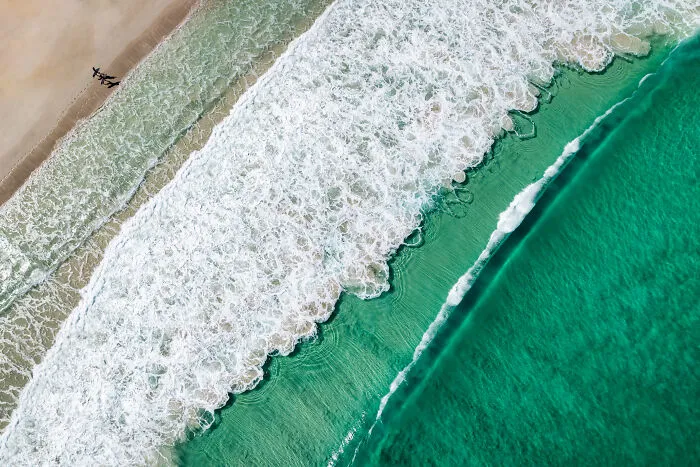
Location: Boranup, Australia
Description: Two surfers walk towards a favorite surf break on the Western Australian coast. Waves and rip currents create intricate, lace-like patterns in the water. The small figures reveal the scale of the landscape and the respect and adventurous spirit needed to enter such a powerful environment. These coastal waters are also frequented by large pods of dolphins, reminding us that this is a place shared by both people and wildlife.
Description: Two surfers walk towards a favorite surf break on the Western Australian coast. Waves and rip currents create intricate, lace-like patterns in the water. The small figures reveal the scale of the landscape and the respect and adventurous spirit needed to enter such a powerful environment. These coastal waters are also frequented by large pods of dolphins, reminding us that this is a place shared by both people and wildlife.
Report
13points
#8 Conservation (Hope) Photographer Of The Year, 1st Place - Thomas Pavy
Location: Rangiroa, French Polynesia
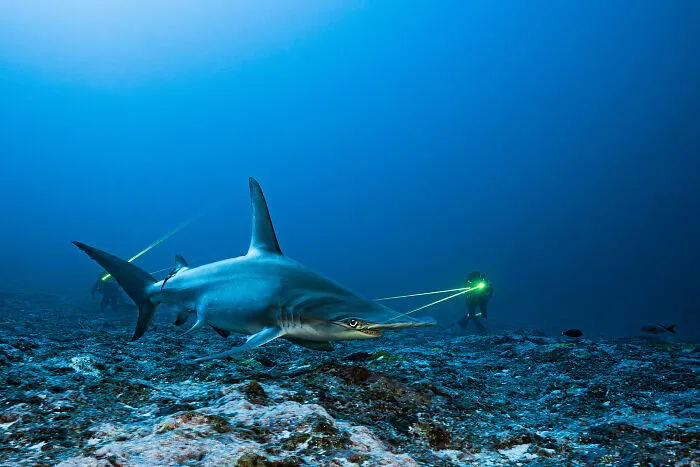
Description: A great hammerhead shark (Sphyrna mokarran) is photographed at 55 meters depth in Tiputa Pass, Rangiroa Atoll, during a population survey. This image represents the moment an anonymous shark becomes a known individual. Through photo identification and laser-calibrated video photogrammetry, scientists can track sharks over time, measuring size, sex and population trends. Conducted without bait or attractants, this research helps reveal the lives of Tamataroa, a culturally respected species protected in French Polynesia.
Description: A great hammerhead shark (Sphyrna mokarran) is photographed at 55 meters depth in Tiputa Pass, Rangiroa Atoll, during a population survey. This image represents the moment an anonymous shark becomes a known individual. Through photo identification and laser-calibrated video photogrammetry, scientists can track sharks over time, measuring size, sex and population trends. Conducted without bait or attractants, this research helps reveal the lives of Tamataroa, a culturally respected species protected in French Polynesia.
Report
13points
#9 Female Fifty Fathoms Award - Jenny Stock
Location: Cuba
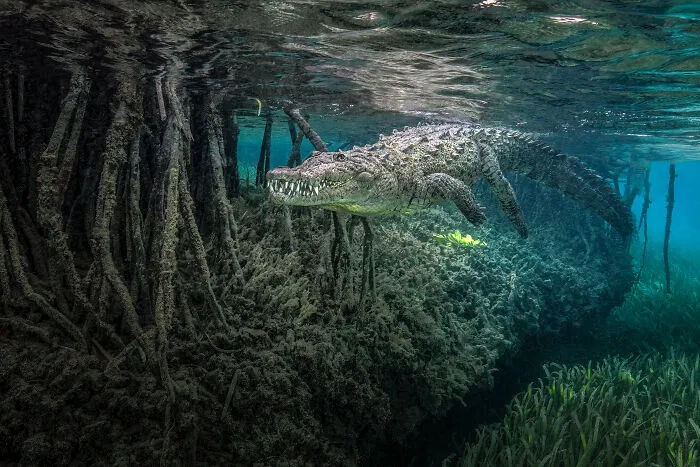
Description: An American crocodile moves through the mangroves of Cuba, a habitat that provides shelter for feedings, breeding, nesting, and raising young. Beneath the trees, fallen leaves break down into nutrient-rich sediment. For the crocodile moving carefully is essential to avoid disturbing the soft mud and consequently reducing visibility. As the crocodile approached, the photographer remained still and captured it in its natural environment. The animal passed within touching distance before disappearing among the mangrove roots.
Description: An American crocodile moves through the mangroves of Cuba, a habitat that provides shelter for feedings, breeding, nesting, and raising young. Beneath the trees, fallen leaves break down into nutrient-rich sediment. For the crocodile moving carefully is essential to avoid disturbing the soft mud and consequently reducing visibility. As the crocodile approached, the photographer remained still and captured it in its natural environment. The animal passed within touching distance before disappearing among the mangrove roots.
Report
12points
#10 The Ocean Unseen: Hidden Worlds Award, Finalist - Bing Lin
Location: Malapascua Island, Philippines
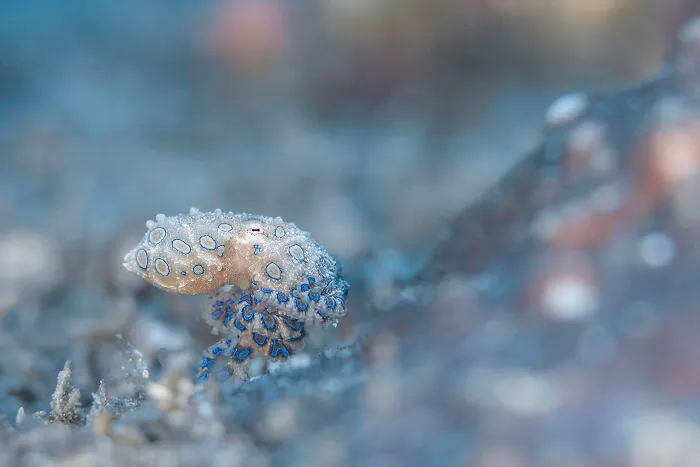
Description: A blue-ringed octopus, smaller than a golf ball, moves across the crest of a reef wall at Malapascua Island, Philippines. This species is nocturnal, intensely secretive, and rarely seen during daylight hours – much less hunting in the open, which makes moments like this incredibly rare. Using its intricate camouflage, this tiny predator blends into the reef while searching for prey among rocks and coral. Photographed with a macro lens, the image reveals details often missed in the underwater landscape.
Description: A blue-ringed octopus, smaller than a golf ball, moves across the crest of a reef wall at Malapascua Island, Philippines. This species is nocturnal, intensely secretive, and rarely seen during daylight hours – much less hunting in the open, which makes moments like this incredibly rare. Using its intricate camouflage, this tiny predator blends into the reef while searching for prey among rocks and coral. Photographed with a macro lens, the image reveals details often missed in the underwater landscape.
Report
12points
#11 Wildlife Photographer Of The Year, Finalist - Andrea Michelutti
Location: Anilao, Philippines
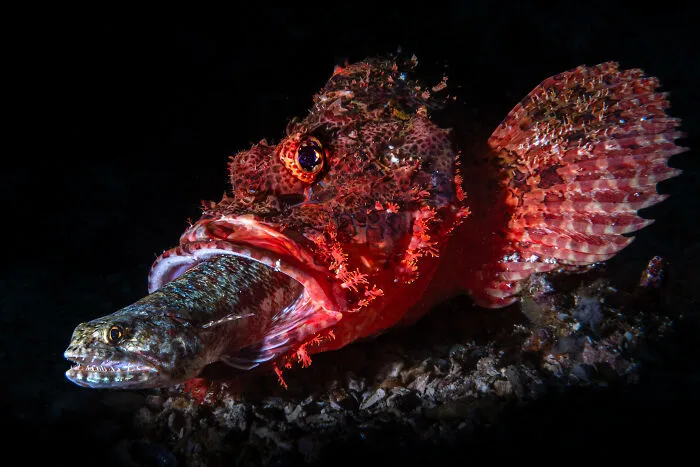
Description: A scorpionfish consumes a lizardfish in a moment of hunting behavior, revealing the constant balance between survival and vulnerability on coral reefs. The compact composition isolates the interaction using a snoot to direct light onto the two fish while keeping the background subdued. The position of both animals makes the behavior immediately visible, showing the scorpionfish’s feeding strategy and the brief, powerful encounters that shape life on the reef.
Description: A scorpionfish consumes a lizardfish in a moment of hunting behavior, revealing the constant balance between survival and vulnerability on coral reefs. The compact composition isolates the interaction using a snoot to direct light onto the two fish while keeping the background subdued. The position of both animals makes the behavior immediately visible, showing the scorpionfish’s feeding strategy and the brief, powerful encounters that shape life on the reef.
Report
11points
#12 Wildlife Photographer Of The Year, Finalist - Tamara Stubbs
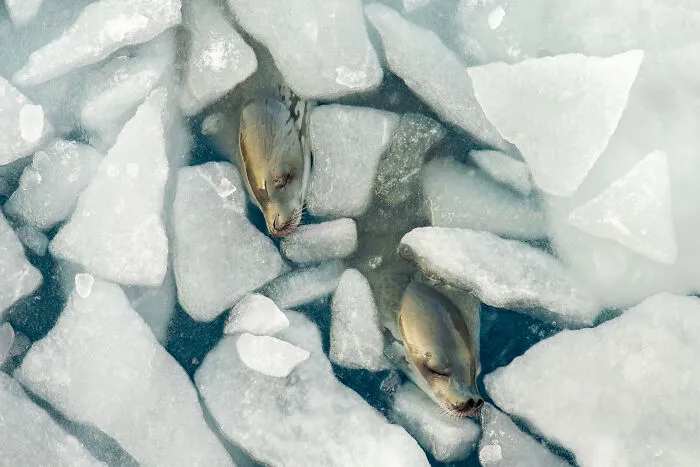
Location: Larsen Ice Shelf, Antarctica
Description: During a Weddell Sea Expedition in Antarctica, crabeater seals gathered around the icebreaker S.A. Agulhas II after the ship became surrounded by multi-year sea ice. Resting in the sheltered shade of the vessel, the seals floated motionless in the water, occasionally lifting their heads to breathe. This behavior was observed only once during the expedition. Crabeater seals are highly adapted to life in Antarctic pack ice, using sea ice as a platform for resting, breeding and avoiding predators.
Description: During a Weddell Sea Expedition in Antarctica, crabeater seals gathered around the icebreaker S.A. Agulhas II after the ship became surrounded by multi-year sea ice. Resting in the sheltered shade of the vessel, the seals floated motionless in the water, occasionally lifting their heads to breathe. This behavior was observed only once during the expedition. Crabeater seals are highly adapted to life in Antarctic pack ice, using sea ice as a platform for resting, breeding and avoiding predators.
Report
11points
#13 Conservation (Hope) Photographer Of The Year, 2nd Place - Francesca Page
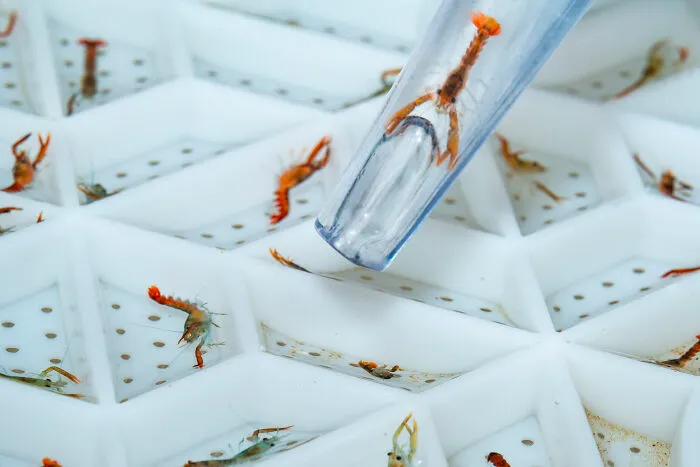
Location: Padstow, United Kingdom
Description: Thousands of juvenile European lobsters are raised at the National Lobster Hatchery in Padstow, Cornwall, UK, before being released into the wild. By protecting the young lobsters during their most vulnerable stage, the Hatchery greatly improves their chances of survival. Here, these baby lobsters are being transferred into the space-efficient AquaHive system, an innovative hatchery design where each unit holds around 4,000 juveniles, safely separated across individual trays to prevent cannibalism.
Description: Thousands of juvenile European lobsters are raised at the National Lobster Hatchery in Padstow, Cornwall, UK, before being released into the wild. By protecting the young lobsters during their most vulnerable stage, the Hatchery greatly improves their chances of survival. Here, these baby lobsters are being transferred into the space-efficient AquaHive system, an innovative hatchery design where each unit holds around 4,000 juveniles, safely separated across individual trays to prevent cannibalism.
Report
11points
#14 Conservation (Hope) Photographer Of The Year, Finalist - Leighton Lum
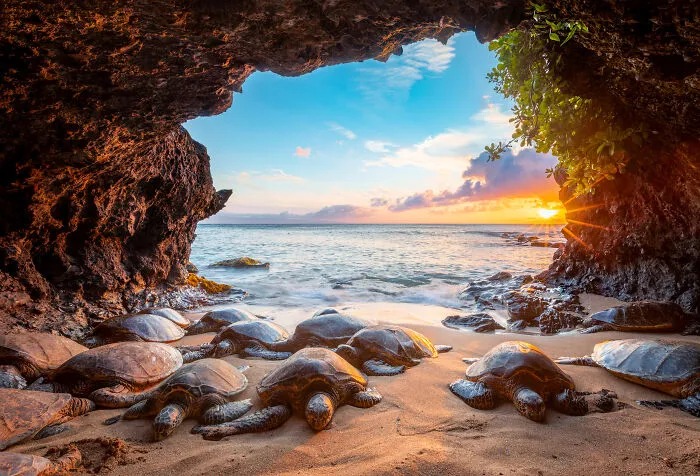
Location: Hawai'i, USA
Description: Hawaiian green sea turtles (honu) rest together inside a sheltered sea cave on Maui at sunset. Once heavily hunted, these turtles have recovered through decades of protection, and gatherings like this show the progress made. After carefully entering the cave, the photographer watched as more turtles arrived with the rising tide, eventually counting 17 individuals sharing this quiet refuge.
Description: Hawaiian green sea turtles (honu) rest together inside a sheltered sea cave on Maui at sunset. Once heavily hunted, these turtles have recovered through decades of protection, and gatherings like this show the progress made. After carefully entering the cave, the photographer watched as more turtles arrived with the rising tide, eventually counting 17 individuals sharing this quiet refuge.
Report
11points
#15 Female Fifty Fathoms Award - Jenny Stock
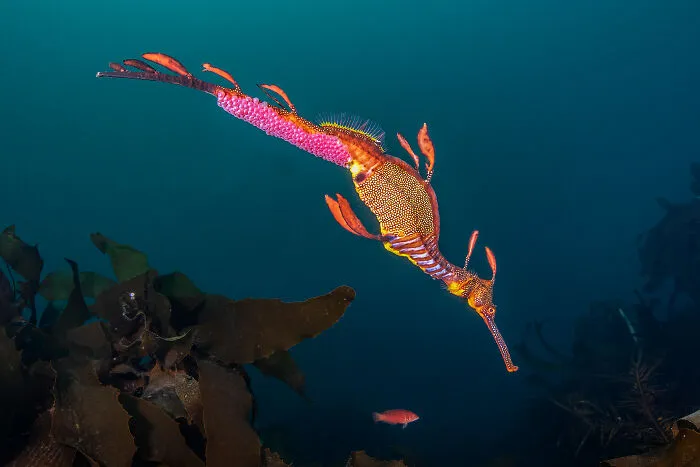
Location: Australia
Description: A male weedy seadragon carries hundreds of fertilized eggs on his tail in Tasmania's coastal waters. Unlike seahorses, which carry eggs in a pouch, male weedy seadragons attach them directly to their tails, where they develop for around eight weeks. This species grows to about 45 centimeters long and is found only in Australia. Leaf-life appendages and detailed marking provide camouflage among seaweed and seagrass. A single brood can produce up to 250 hatchlings.
Description: A male weedy seadragon carries hundreds of fertilized eggs on his tail in Tasmania's coastal waters. Unlike seahorses, which carry eggs in a pouch, male weedy seadragons attach them directly to their tails, where they develop for around eight weeks. This species grows to about 45 centimeters long and is found only in Australia. Leaf-life appendages and detailed marking provide camouflage among seaweed and seagrass. A single brood can produce up to 250 hatchlings.
Report
11points
#16 Human Connection Award, Finalist - Anita Verde
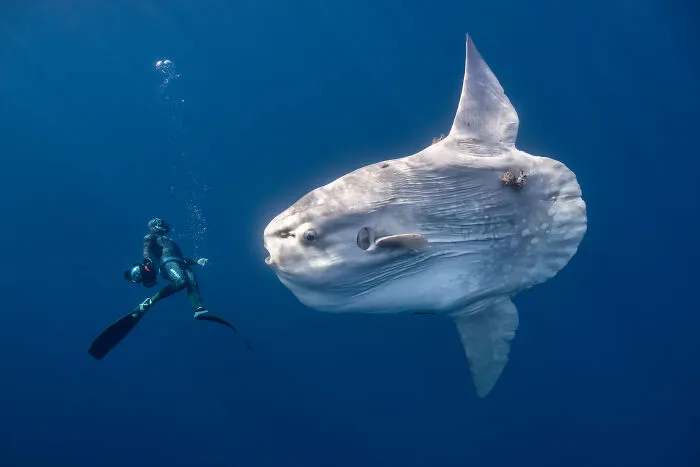
Location: Baja Peninsula, Mexico
Description: A giant oceanic sunfish (Mola mola) glides through the clear waters of Mexico's Baja Peninsula. Encountered during the final hour of a 2025 sardine run expedition, the unusually pale fish approaches the freedivers on its own, while soft sunlight gives it a moon-like glow. The unexpected meeting is a reminder that the ocean's most memorable moments often happen when least expected.
Description: A giant oceanic sunfish (Mola mola) glides through the clear waters of Mexico's Baja Peninsula. Encountered during the final hour of a 2025 sardine run expedition, the unusually pale fish approaches the freedivers on its own, while soft sunlight gives it a moon-like glow. The unexpected meeting is a reminder that the ocean's most memorable moments often happen when least expected.
Report
11points
#17 Wildlife Photographer Of The Year, 3rd Place - Ariel Mei Gliboff
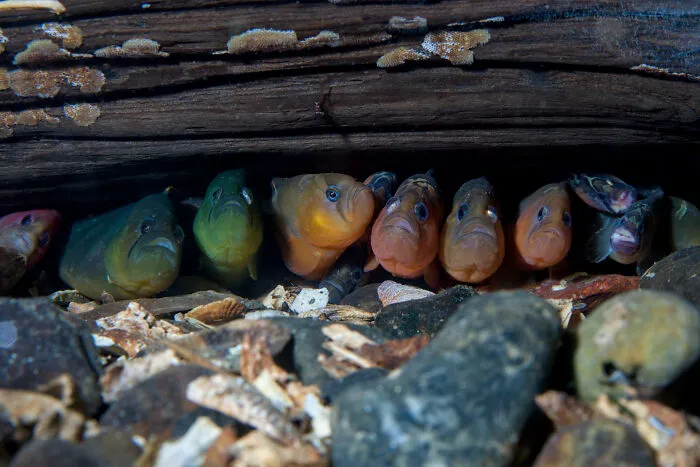
Location: Washington, USA
Description: A group of 11 gunnels gathers in a colorful cluster beneath the waters of Seattle. Although gunnels are a common species in the region, finding so many together in a tightly packed group with such varied colors is unusual. Their bright patterns stand out against the darker waters typical of Pacific Northwest
diving. This image highlights the unexpected beauty found in familiar species.
Description: A group of 11 gunnels gathers in a colorful cluster beneath the waters of Seattle. Although gunnels are a common species in the region, finding so many together in a tightly packed group with such varied colors is unusual. Their bright patterns stand out against the darker waters typical of Pacific Northwest
diving. This image highlights the unexpected beauty found in familiar species.
Report
10points
#18 Wildlife Photographer Of The Year, Finalist - Matty Smith
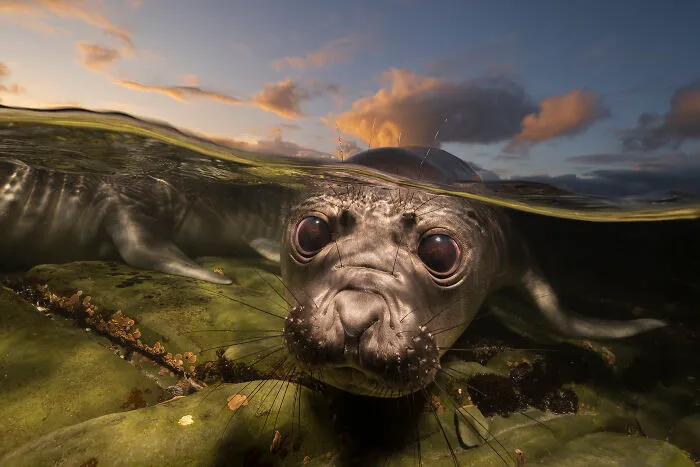
Location: Sealion Island, Falkland Islands
Description: Southern elephant seal pups explore shallow rock pools on Sea Lion Island in the Falkland Islands, testing their first movements in the water after being weaned by their mothers. These young seals must quickly learn to swim and survive independently. As they climb over one another and investigate their surroundings, this scene captures a key moment in their journey from land-bound pups to ocean explorers.
Description: Southern elephant seal pups explore shallow rock pools on Sea Lion Island in the Falkland Islands, testing their first movements in the water after being weaned by their mothers. These young seals must quickly learn to swim and survive independently. As they climb over one another and investigate their surroundings, this scene captures a key moment in their journey from land-bound pups to ocean explorers.
Report
10points
#19 Female Fifty Fathoms Award - Jenny Stock
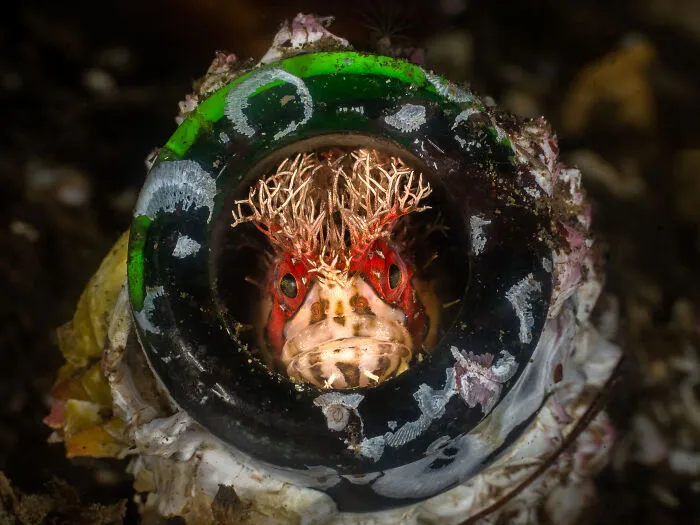
Location: Canada
Description: A mosshead warbonnet shelters inside a discarded glass bottle during a night dive in God's Pocket Bay, Canada. These fish normally hide in rocky crevices, but the bottle's narrow opening provides protection from predators. Some have been recorded living in bottles for up to a year. The bottles were once used by sailors and fishermen, who discarded them during the 1800s. Today, they have become unexpected shelters for marine life.
Description: A mosshead warbonnet shelters inside a discarded glass bottle during a night dive in God's Pocket Bay, Canada. These fish normally hide in rocky crevices, but the bottle's narrow opening provides protection from predators. Some have been recorded living in bottles for up to a year. The bottles were once used by sailors and fishermen, who discarded them during the 1800s. Today, they have become unexpected shelters for marine life.
Report
10points
#20 Female Fifty Fathoms Award - Jenny Stock
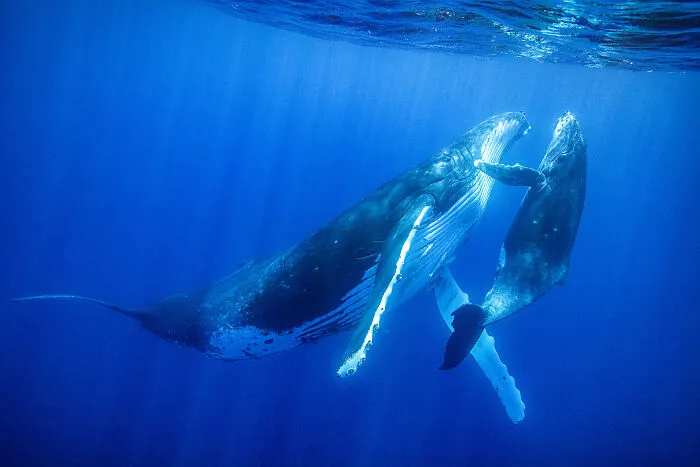
Location: Tonga
Description: A mother humpback whale and her calf glide through Tonga's warm, sheltered waters. The calf stays close to its mother at first, then becomes curious, swimming in playful circles and approaching the camera. The mother remains calm and watchful, guiding her young when it comes too close. Tonga's protected waters are an important nursery, where pregnant humpbacks give birth and calves grow stronger before beginning their long journey south towards Antarctica. This encounter captures the quiet bond between mother and calf.
Description: A mother humpback whale and her calf glide through Tonga's warm, sheltered waters. The calf stays close to its mother at first, then becomes curious, swimming in playful circles and approaching the camera. The mother remains calm and watchful, guiding her young when it comes too close. Tonga's protected waters are an important nursery, where pregnant humpbacks give birth and calves grow stronger before beginning their long journey south towards Antarctica. This encounter captures the quiet bond between mother and calf.
Report
10points