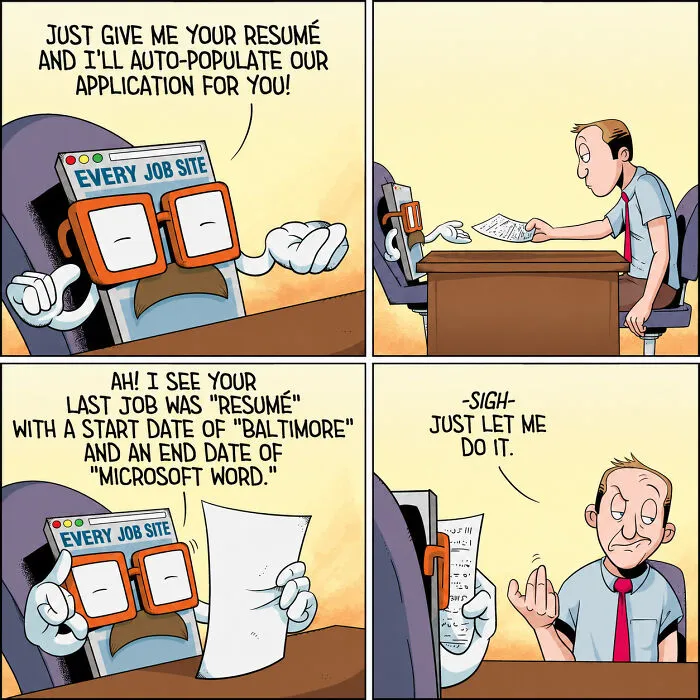








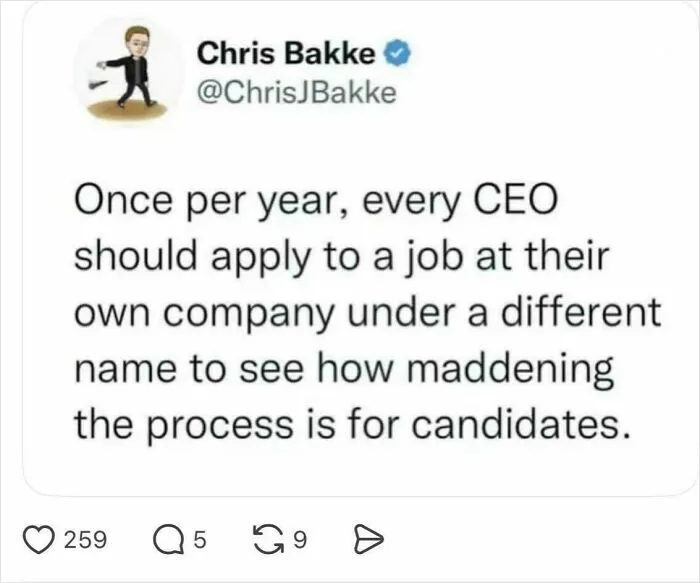
#3 Reads Like A Rant At First, But It's Actually A Solid Point About How Backwards This Is

For all that the job market seems like its own particular brand of hell, recent statistics seem to paint a more complex picture of what the US job market actually looks like. For instance, while some might assume that companies are simply laying people off left and right, new data from outplacement firm Challenger, Gray & Christmas showed that this isn’t the case.
In fact, planned job cuts in the first eight months of 2026 were at their lowest level in four years. As Julia Fanzeres writes for Bloomberg, “Companies announced 529,914 job cuts so far this year, the lowest year-to-date total since 2022 when post-pandemic labor demand was still intense.”

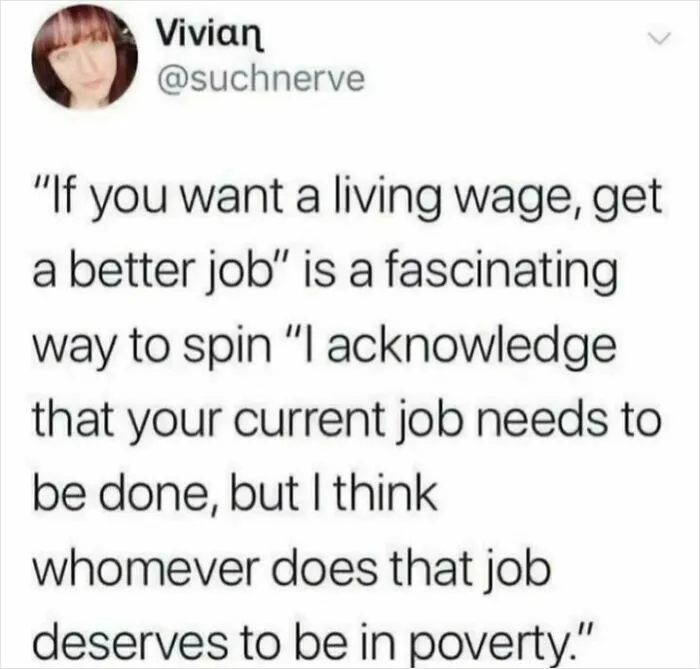

At the same time, Fanzeres reports, companies’ hiring plans were at their highest level since 2023. But before you go getting your hopes up too high—or blaming yourself for not landing a job yet—there does seem to be a catch. As Andy Challenger, the chief revenue officer of Challenger, Gray & Christmas, says, “While companies are making plans to hire more workers than last year, according to our numbers, it doesn’t appear those positions are being filled quickly.”
In other words, those hiring plans aren’t necessarily translating into people actually getting hired in any hurry. As such, Fanzeres writes, “Many economists continue to characterize the US job market still in a ‘low-hire, low-fire’ environment that has prevailed over the last few years.”



Recent job-opening figures, as reported by Paul Wiseman for ABC News, illustrate just how baffling the whole situation is. The Labor Department recently reported that in July, US employers had 7.27 million job openings, up slightly from a revised 7.18 million in June. Yet gross hiring fell from 5.3 million to 5.1 million over the same period.
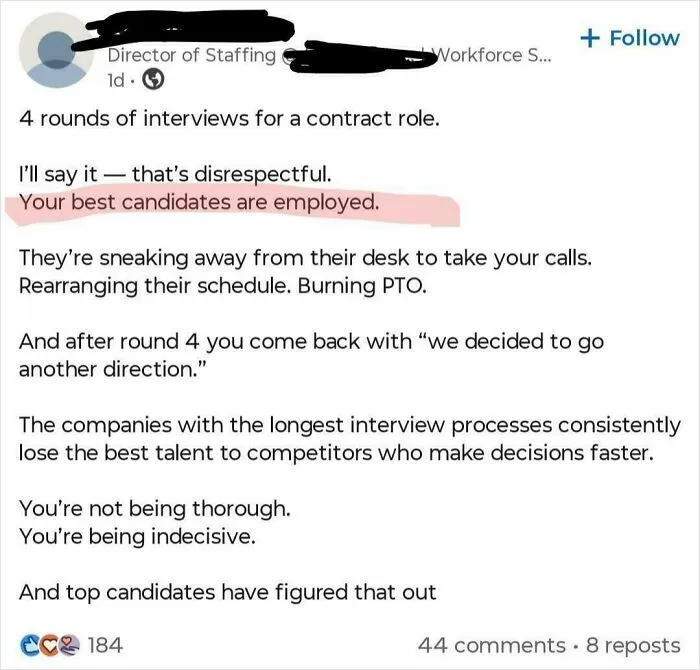
So it’s not that there aren’t any jobs out there; it’s getting from “we’re hiring” to “you’re hired” that’s the problem—something anyone who’s endured the limbo of countless interview rounds only to find out weeks later that their application was unsuccessful can probably vouch for.


Alongside the drop-off in layoffs and hiring, the Bureau of Labor Statistics’ Job Openings and Labor Turnover Survey (JOLTS) also showed that the number of people quitting their jobs fell. On its face, this might sound positive. But this isn’t to suggest that people are simply content at their current places of work. Rather, as Wiseman says, it’s “a sign of confidence in their prospects.” (ICYMI, that confidence is in short supply. And frankly, is that even that surprising?)

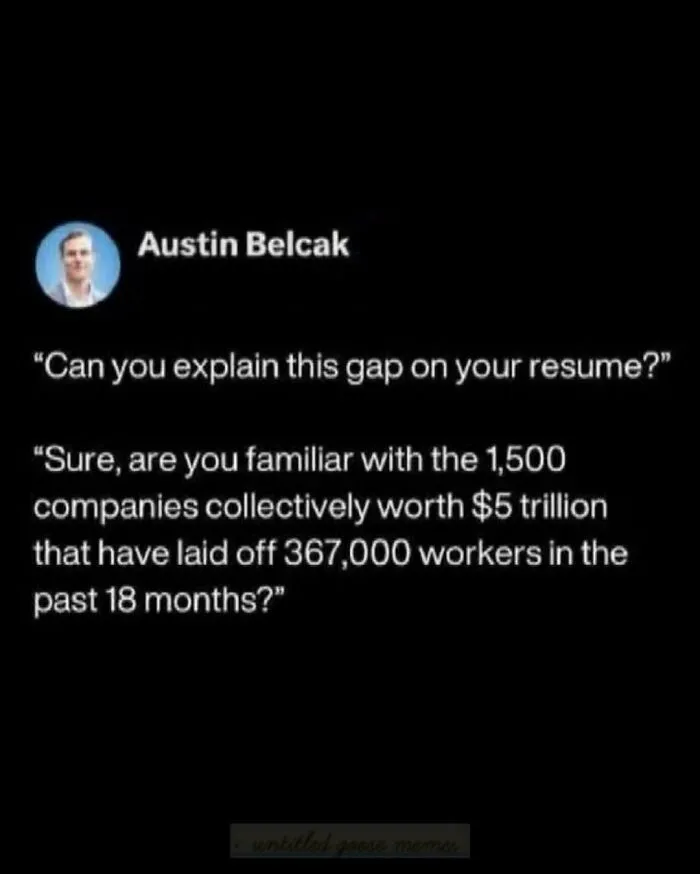
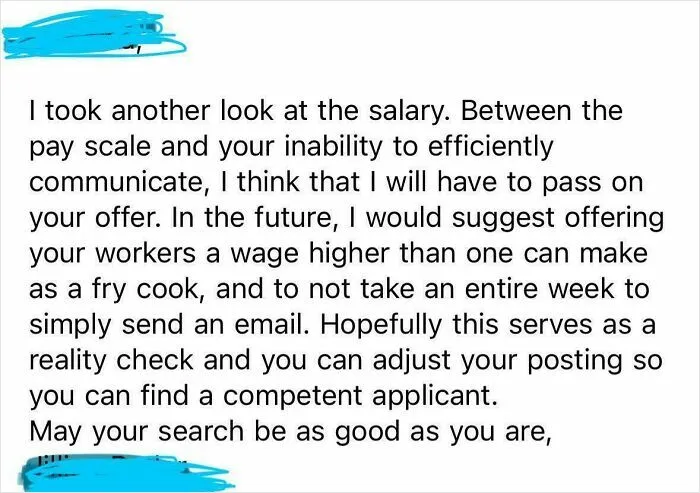
While “workers are finding few opportunities to leave their current jobs for better pay,” as Diccon Hyatt writes for Investopedia, there’s a real cost to that lack of mobility. As Nela Richardson, ADP’s chief economist, explains, “one of the ways that workers outrun too-high inflation is by switching jobs.” She adds, “If the premium for the opportunity to job-switch isn’t present, it’s going to be harder for workers overall to keep up with higher inflation.”
So while the labor market might look “stable” on paper, it might in fact be better described as “stagnant”—those with jobs may feel stuck in them, fewer positions are made available through normal turnover, and it becomes harder for people to get a foot in the door.

#17 Convince Me There's Actually A Job Where I Can Get Enough Vacation To Not Burn Out. Or Should I Move To Europe?

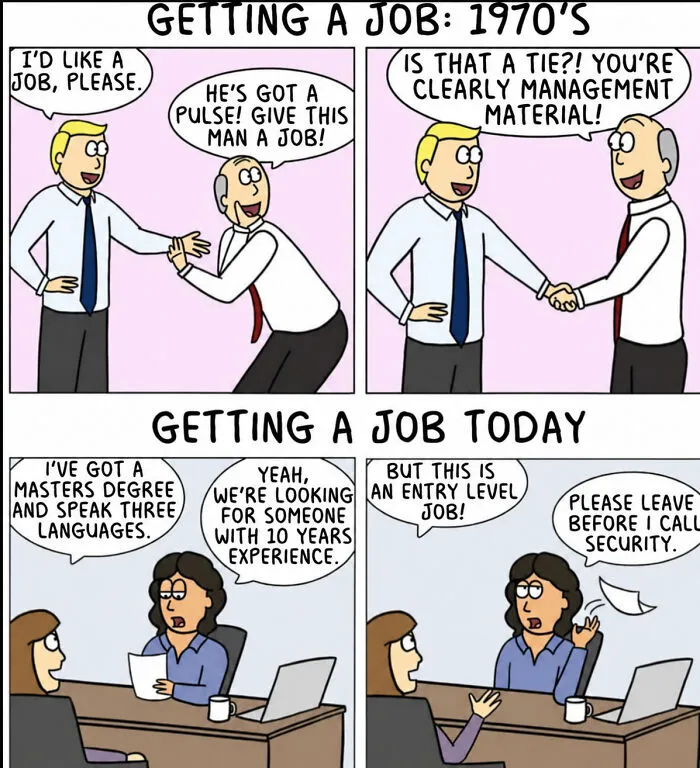
And perhaps that’s why the modern job search can feel like such a special kind of punishment. The numbers might tell us the labor market is broadly stable—hardly booming but rather “ambling along,” according to Wiseman—but they don’t capture the indignities of applying for a job, waiting for a response, sitting through multiple interviews, and discovering that the position you spent weeks pursuing has quietly disappeared. And all while having to account for the growing gap in your résumé. Those are the moments that make the whole thing feel a little less like a straightforward search for employment and a whole lot more like a uniquely modern form of purgatory.