










There are a lot of myths about women being natural mothers and having maternal instincts. Men don’t get subjected to the same scrutiny when it comes to being fathers, but they do go through hormonal, neurological, and behavioral changes once they become parents.
Research shows that a man’s testosterone levels drop when his baby is born. A 2011 study found that new fathers showed a 26% drop in testosterone levels in the morning and a 34% drop in the evening. What’s more, the researchers found that fathers who spend the most time with their babies had the lowest testosterone levels.


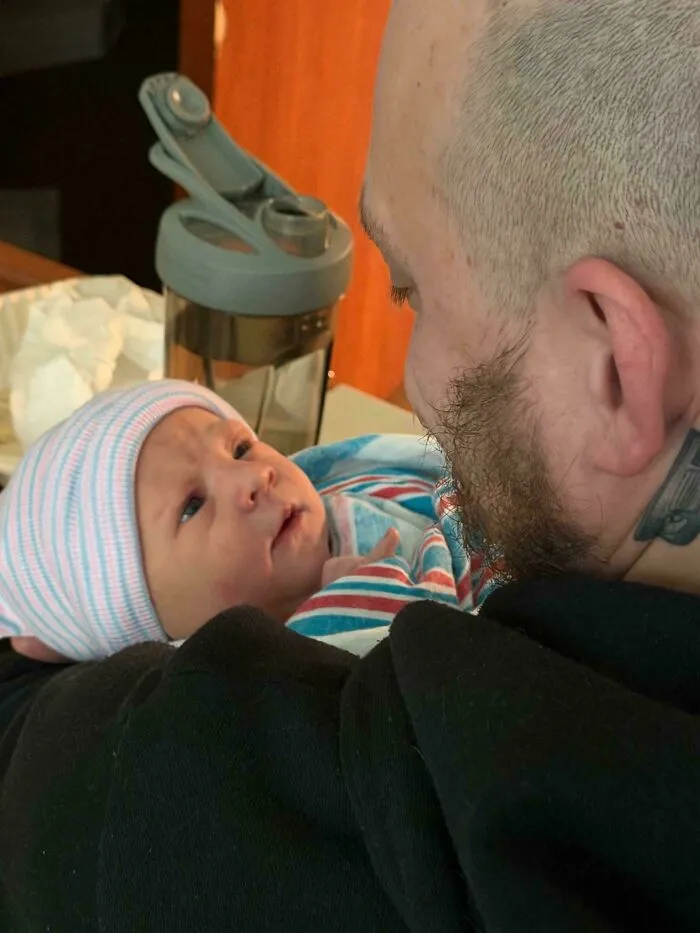
Experts explain this shift as biologically necessary. Instead of focusing on mating and competition, men’s bodies adapt to become caregivers and nurturers. “The drop in testosterone seems to be a biological adjustment that helps men shift their priorities when children come along,” co-author of the study Christopher Kuzawa explained.
Interestingly, this shift happens before the baby is even born. Recent research shows that men experience drops in testosterone and vasopressin (a hormone that regulates pair-bonding, territorial defense, and loyalty) as early as four months after conception. So, the whole “men become fathers after they meet the baby” myth might be completely inaccurate.

#9 My Daughter Made Me A "Public Shaming" Shirt To Quit Smoking And I Cant Believe It Actually Worked

Having a dad matters, and having a present, loving dad helps a child grow into an intelligent, emotionally mature, self-actualized adult. The extent to which fathers engage with their children also affects their education. Research shows that children whose fathers read, play, sing, and draw with them do better in primary school, for example.
“If fathers actively engage in childcare too, it significantly increases the likelihood of children getting better grades in primary school,” Dr. Helen Norman, lead author of the research at the University of Leeds, explained. This is why encouraging and supporting fathers to share childcare with the mother, from an early stage in the child’s life, is critical.”


#12 My Little Boy Is Turning 2 Tomorrow

Of all the kinds of interactions dads have with their kids, reading to them might be the most beneficial. A 2015 Harvard study showed that dads interact with kids differently during reading. While their moms usually ask teacher-like questions, such as “How many apples do you see?”, dads engage in more imaginative discussions. Elisabeth Duursma, the study's lead researcher, said that when dads start reading to kids at age two, children (especially daughters) benefit academically.



More moms read to their kids than dads, but fathers usually spend more time doing physical activities with kids. When playing with their children, dads often engage in play-fighting and roughhousing. Research shows that this type of play with fathers can be really beneficial for kids. According to a 2022 study, rough-and-tumble play helps reduce aggression and helps children learn self-regulation.
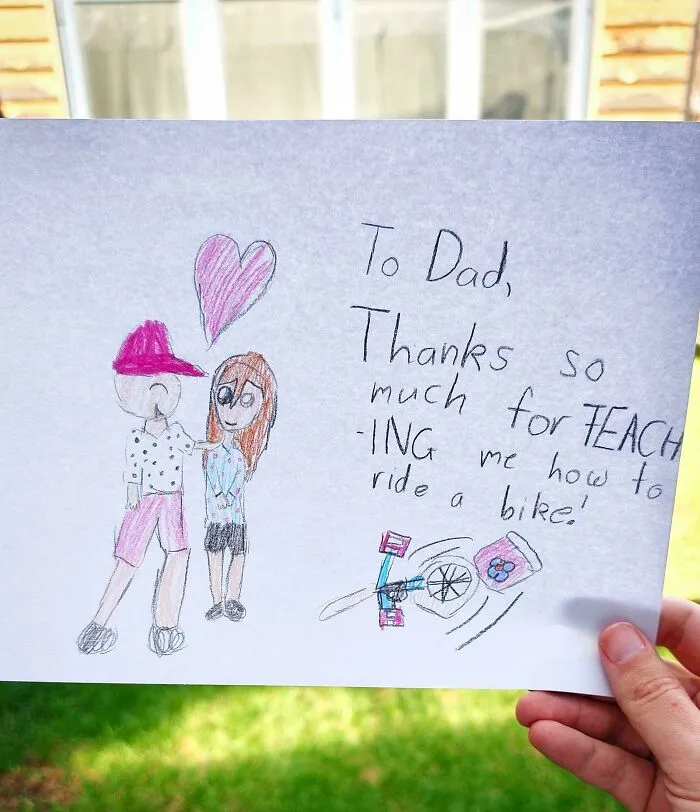
#16 Taught My 6 Year Old Daughter To Ride A Bike Today. As If That Wasn't Special Enough, After We Got Home She Presented Me With This


No matter how rewarding, fatherhood can take its toll on a person. A 2024 study found that men who are fathers tend to have worse heart health than their non-father peers. Lead author of the study, Dr. John James Parker, explained that “the added responsibility of childcare and the stress of transitioning to fatherhood may make it difficult for men to maintain a healthy lifestyle, such as a healthy diet and exercise.”