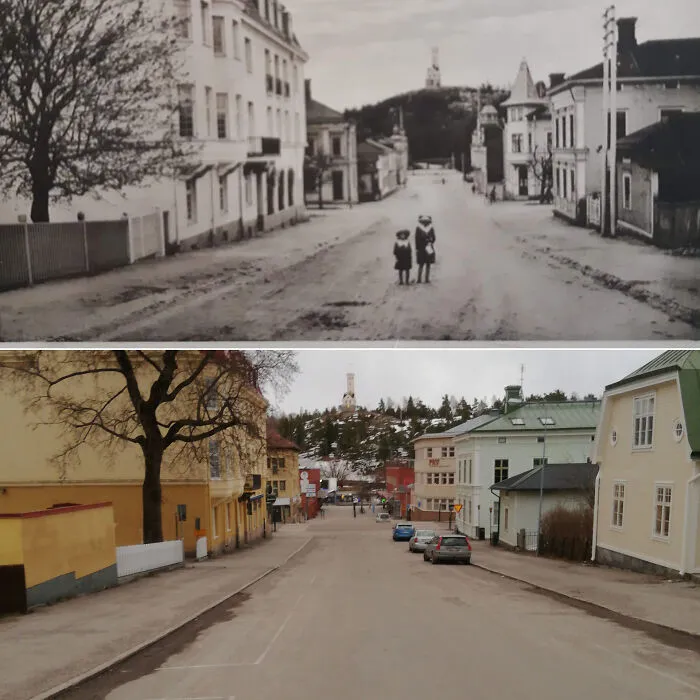






#2 I Rescued The Cat Off The Street. Photos Before And After. One Year Difference. :)

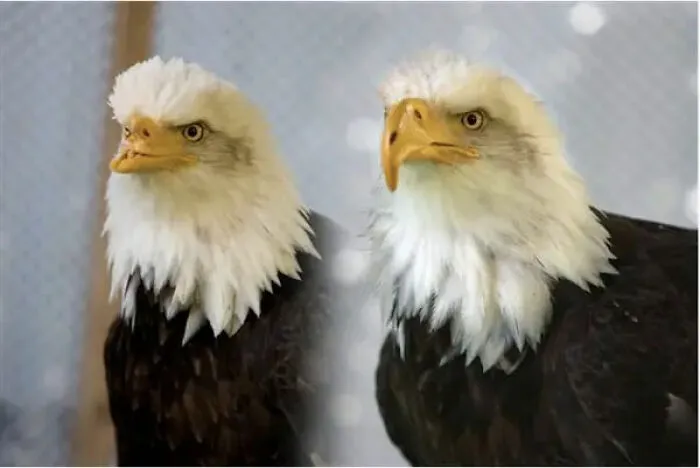
#3 A Bald Eagle Who'd Had His Beak Shot Off By A Poacher Before And After Receiving A Prosthetic Beak
Before-and-after photographs hold a unique power to tell unforgettable stories. By placing two vastly different realities side by side, they compress years, decades, or even centuries into a single glance.
For example, the dramatic restoration of a 1,000-year-old Viking axe. In the “before” image, the weapon appears to be nothing more than a heavily corroded lump of iron buried in the earth. It is severely rusted, its surface completely choked by thick flakes of orange and brown oxidation.
The “after” image completely rewrites that narrative. Once expert conservators peeled back the layers of rust, they unveiled a breathtaking work of art. Intricate, silver-inlaid geometric designs suddenly emerged across the neck and blade of the weapon. The contrast is jarring. In an instant, the story shifts from a crude and brutal tool of war to a high-status symbol of royal craftsmanship.
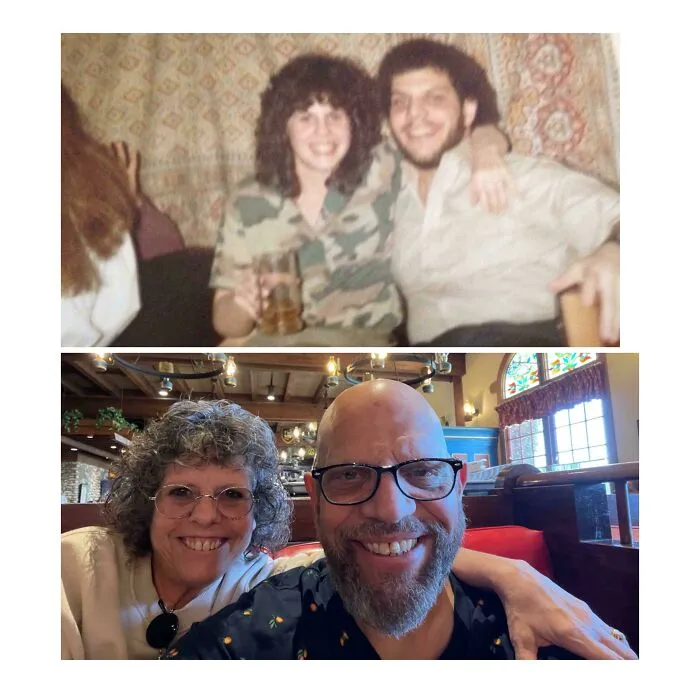
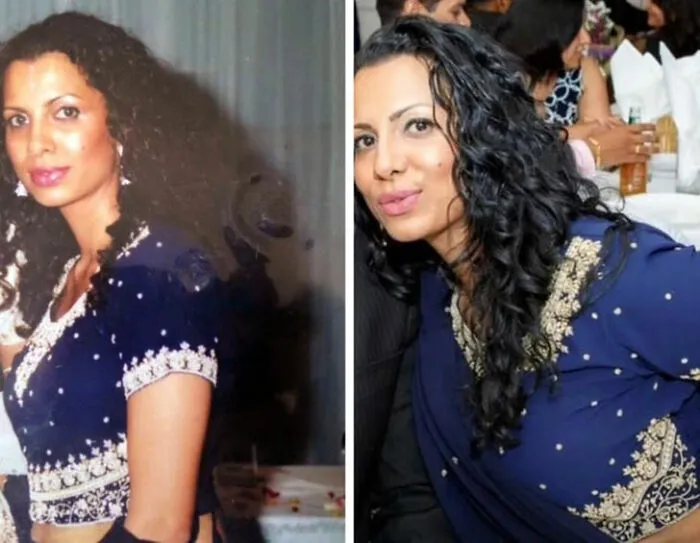
#5 Me And My Wife (Then Girlfriend) In College In 1981 And A Few Months Ago. Married 42 Years

A dramatic transformation can also feel like quite a win.
When you look at a house overgrown with weeds or peeling paint, your brain subconsciously registers a gap between reality and potential. That gap creates a mild, uncomfortable tension — a cognitive itch that demands to be scratched. The moment you imagine what that house could look like with fresh timber and a coat of paint, your dopamine pathway lights up.
This mechanism is why the process of transforming something feels so compelling. Every small milestone along the way — clearing away the debris, sanding down a rough wooden edge, or seeing the first wall painted — delivers a burst of dopamine. It makes you happy, tells your brain that the effort is paying off and keeps you hooked on the progress.
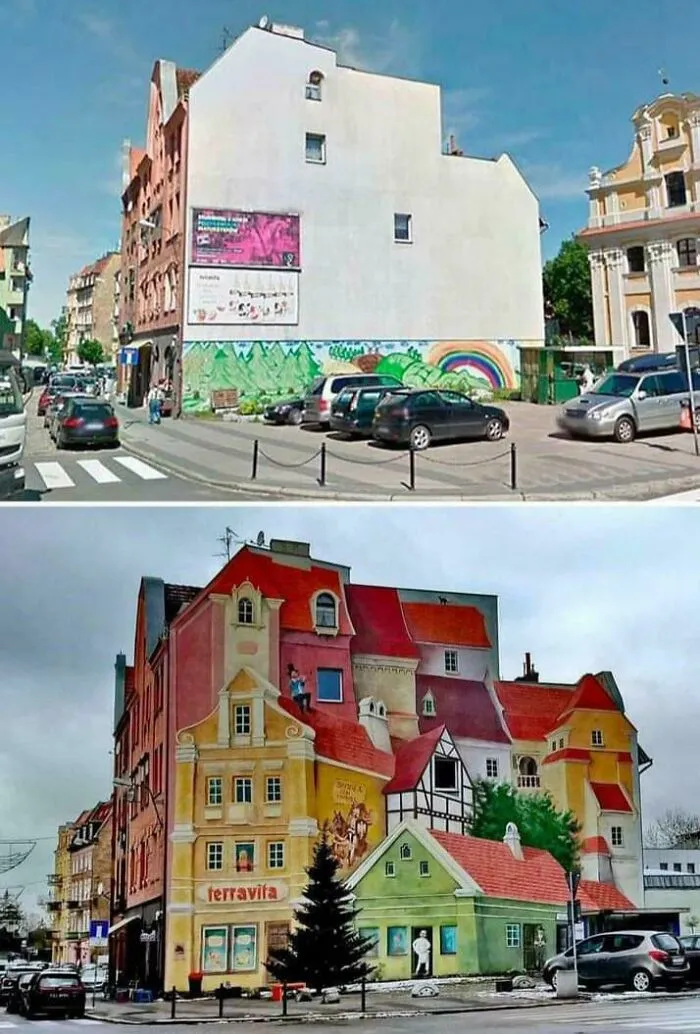


In a world where progress is often slow and invisible, side-by-side comparison photos offer us with an immediate resolution. They provide a narrative arc condensed into a single glance — a beginning and a conclusion. It is visual storytelling at its best.
Not every meaningful shift requires months of labor or a massive budget, though. Some of the most compelling visual narratives happen in the span of just a few seconds.
For example, a stark comparison of a parched, dry patch of skin instantly smoothed and revitalized by simple hydration speaks volumes about the impact of basic maintenance. These micro-transformations also act as reminders that the most dramatic improvements can sometimes come from the simplest acts of care.



While weight loss before-and-after photos face plenty of well-deserved criticism, experts acknowledge that they can still be deeply motivating for some people.
“Transformation photos don’t just celebrate the outcome; they applaud the perceived personal qualities behind it — discipline, control, willpower. In a society that prizes individual achievement, weight loss becomes a metaphor for personal success. The ‘after’ photo is viewed as proof that someone ‘took control’ of their life and made it better,” says Sophie S. Whynacht, Ph.D., an assistant professor of Psychology at Dominican University of California.
However, people should not treat body size as a simple matter of effort, and ignore the complex biological, genetic, and social factors that shape how we look.
Experts warn that when we measure health and human value strictly by a scale or a snapshot, we risk creating a toxic culture of shame.
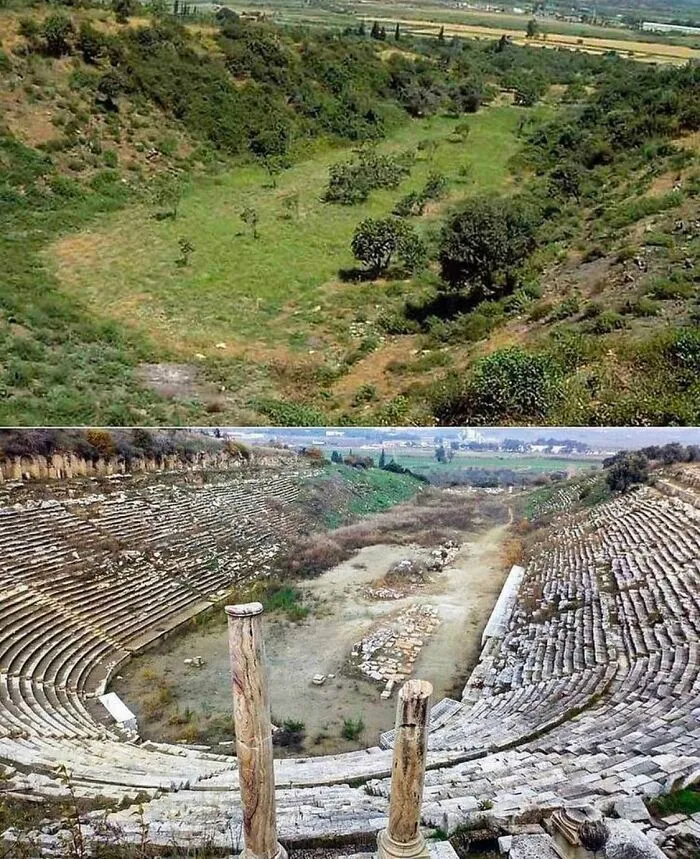
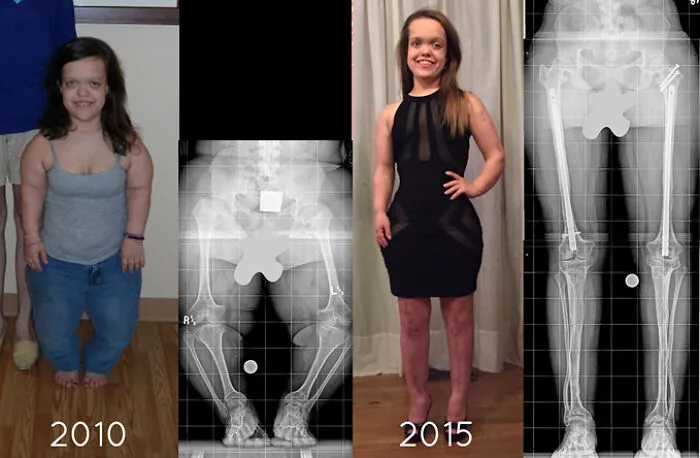
#14 A Patient With Achondroplasia (Dwarfism) Before & After One Arm Lengthening And Two Leg Lengthening Treatments. She Started At Her Mature Height Of 3’10” And Now Is 4’11, And She Gained 4 Inches Of Arm Length
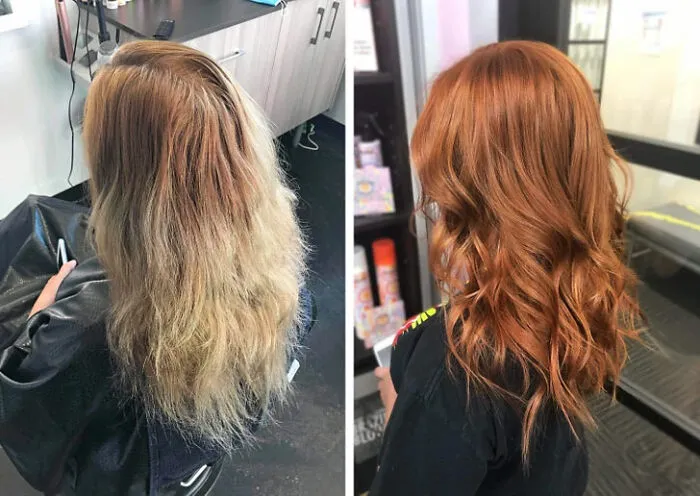
Photography serves as an undeniable historical record. On a daily basis, aging is not that prominent to us in the mirror. Side-by-side comparison photos act as tangible proof of living. They capture the subtle softening of jawlines, gray hair, laughter lines, and a shared history.
On the other hand, some of the pics in this list also highlight massive shifts in technology and culture.
For example, a photo shows the original iPhone that treated its single camera as a tiny, flush afterthought tucked quietly into the corner of a smooth aluminum back. The “after” photo shows how in modern smartphones, the entire device is structurally designed around its massive camera bump. The oversized lenses now dictate the phone’s thickness, its internal layout, and its overall look.
The comparison shows how a feature that was once an extra luxury became the main reason we buy the device today.
Some transformations also offer a powerful dose of hope, proving that some broken items may not be ready for the trash just yet.
We live in a culture that tosses things out the second they show wear. Mending what you already own not only helps save money, but also helps the environment. A ripped pair of jeans fixed with a simple thread-and-needle stitch, a boot sole re-attached with cobbler’s glue, or a chipped mug sealed with resin turns scrap back into something useful.
These quick repairs directly challenge throwaway culture. Patching a torn jacket or gluing a broken strap also keeps waste out of landfills and cuts down on impulse buying.
#19 My Ears Before, And After Getting Them Reconstructed (Almost 3 Years Healed)