





#1
EDIT: Also, one patient having a colonoscopy left a post-it note folded in half between her b**t cheeks. The gastroenterologist unfolded it and read it aloud: "We've been trying to reach you about your car's extended warranty.".
#2

When they took the bandages off her eyes, she looked at the surgeon and quipped "if I'd known you were this handsome, I would have done this YEARS ago!".
#3

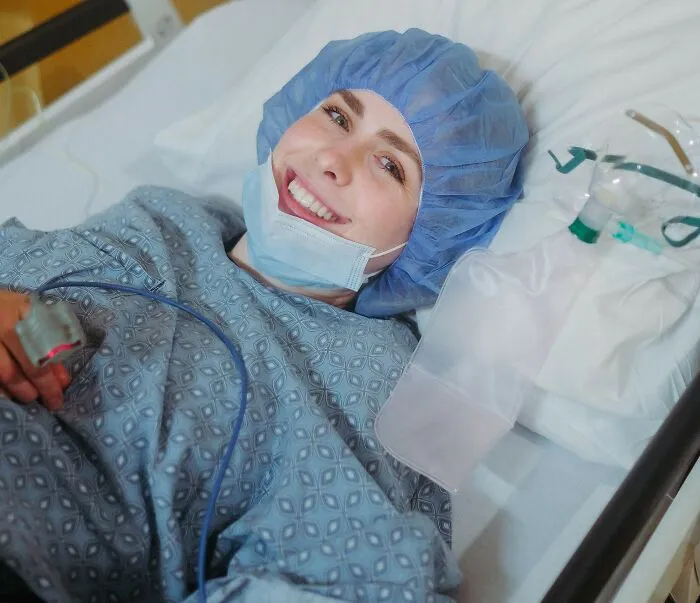
Two types of anesthesia can bring about this “delirious” state in patients: general anesthesia and sedation. Research indicates that every day, about 60,000 people nationwide have surgery under general anesthesia. Basically, it’s a combination of medications that makes surgery more bearable for patients and doctors alike.
It reduces pain and knocks people unconscious so they don’t move. General anesthesia affects the entire body. It’s usually used for major surgeries and invasive procedures for the brain, chest, or abdomen.
#4

#5
#6

While it’s supposed to make people unconscious, a study has found that 1 in 10 people under planned general anesthesia may be “conscious.” However, researchers are working to identify how anesthetics might fail to induce unconsciousness.
On the other hand, the purpose of sedative anesthesia is to make patients feel so relaxed that they might take a nap but wake up if they need to say something or respond to people. Cleveland Clinic states that this “twilight sleep” is often induced before minor surgical procedures such as wisdom teeth removal, cardiac catheterization, and some colonoscopies.
Even though people aren’t fully unconscious, there's a high chance they may not remember the surgery or procedure.
#7

Going to sleep? Nothing strange. Usually they are too nervous or sedated to say anything.
waking up? Nothing strange. Usually they are too sleepy to say anything.
Edit: In my 10 plus years of practicing anesthesia, I have never seen any of my patients behaving hysterically or comically, like those in TikTok. What am I doing wrong?
#8

#9
According to the experts at Medscape, emergence delirium (ED) and emergence agitation (EA) are abnormal mental states that develop as a result of anesthesia administration during the transition from unconsciousness to complete wakefulness. That explains why people end up saying the wackiest things when they are under anesthesia.
It is a relatively common side effect in certain people, such as individuals over 60 years old. But not everyone experiences this. Experts point out that the estimated incidence of ED is 4-31% overall but can be as high as 50-80% in children.
#10

“Mr. Dad, stop spitting at the nurse!”
He felt so bad that he sent her flowers as an apology once he was finally fully aware of himself. It never happened again, but definitely one of the weirder reactions.
#11

#12
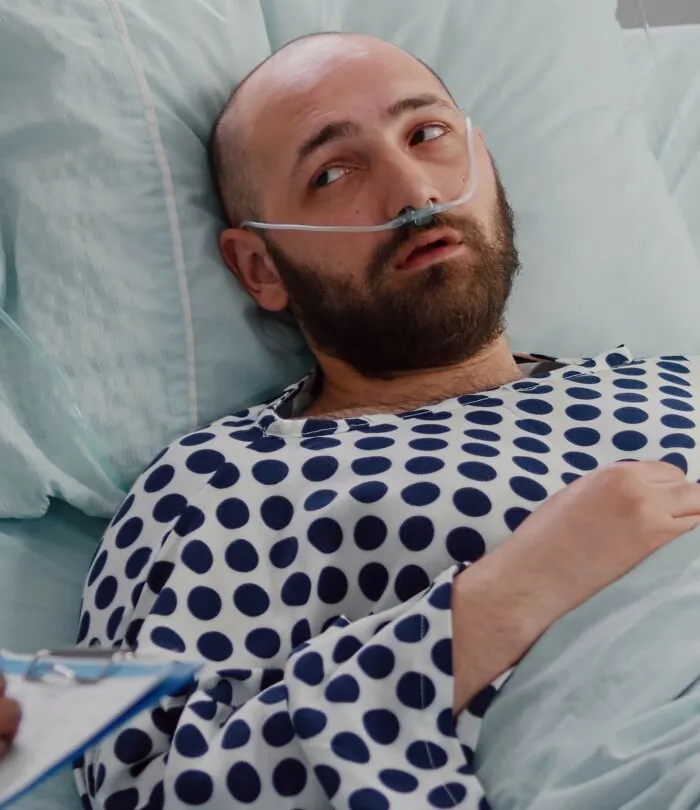
From endless weeping to blurting out something ridiculous, or even just being ecstatic, the effects of sedation differ for everyone. The Royal College of Anaesthetists emphasizes that some people feel agitated, while others become quiet and very sleepy.
Symptoms tend to worsen in the evening and at night. These symptoms include feeling confused, not recognizing family, being incoherent, hallucinating, or experiencing emotional changes such as tearfulness, anxiety, anger, or aggression.
#13

She thought her husband was getting frisky with her.
#14
#15
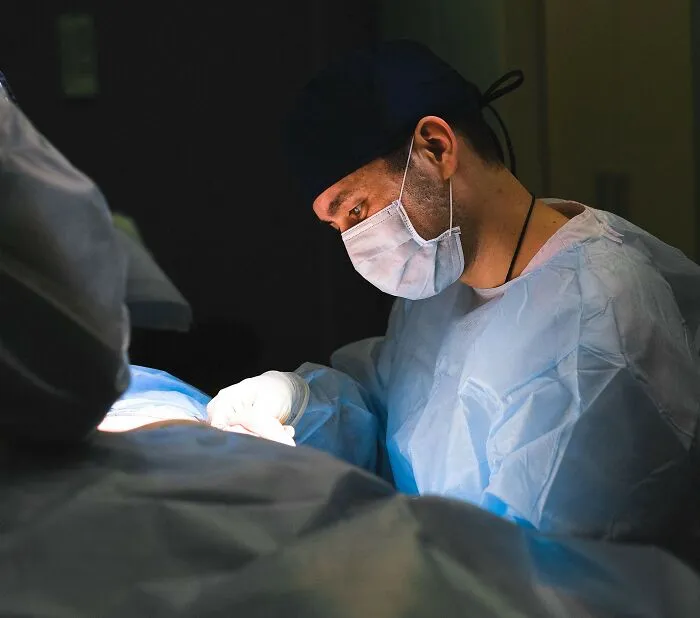
"You can come back. We need your help."
"OMG is he okay?!"
"Well, yes, but he keeps telling us all of his medical stats instead of BREATHING. We need him to remember to breathe or we'll have to re-intubate him. Can you come and see if you can make him keep breathing?!"
"*laughing* Yeah, that sounds like him. I'm on it."
I did get him to remember to breathe. Took about an hour to get it consistent. I was quite proud lol.
Looking at what happens to our brain during anesthesia sheds light on the delirium stage that follows. While people often believe it’s just “deep sleep,” experts say there’s more to it. Dr. Emery Brown, an anesthesiologist, statistician, and neuroscientist holding endowed professorships at Harvard Medical School and MIT, studies how anesthetics work in the brain.
He explains, “Anesthetic medications cause brain circuits to change their oscillation patterns in particular ways. This prevents neurons in different brain regions from communicating with each other. The result is a loss of consciousness or an unnatural state like a ‘reversible coma,’ that differs from sleep.”
#16

They both looked at me as I slipped off to dreamland and I said 'Yeah, they dilate...hahahhahhaha..ZZZZZZZ".
#17
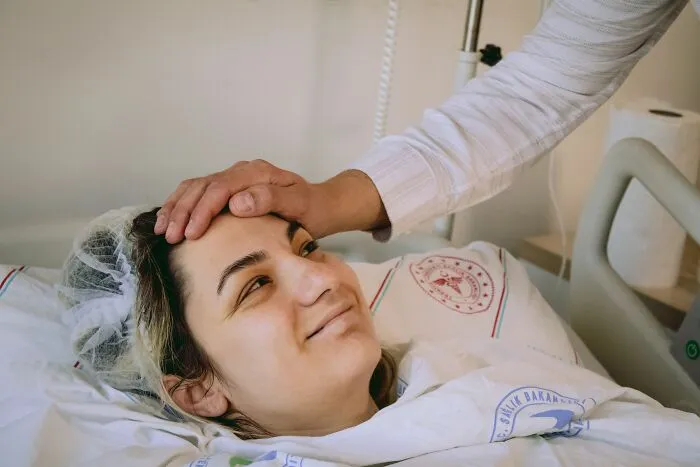
I have no memory of any of this. This was all told to me by the nurses and my dad. 😆.
#18

However, a new study done in 2026 questions how we describe being under anesthesia. Janna Helfrich, MD, an assistant professor of anesthesiology and the study’s lead author, clarified that the old dichotomy that it’s either sleep or coma is not true.
“It’s actually both sleep and coma, and can be similar to both states at the same time, depending on where you look. And yet, there is also an element which is just anesthesia uniquely,” she adds.
#19
#20
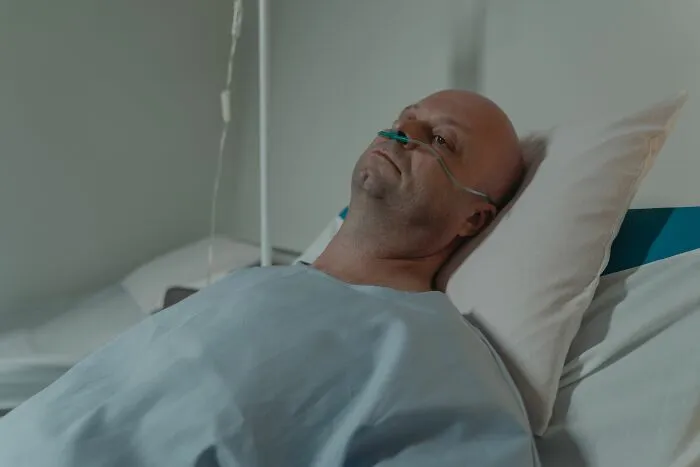
I had just had my leg amputated.