



#1
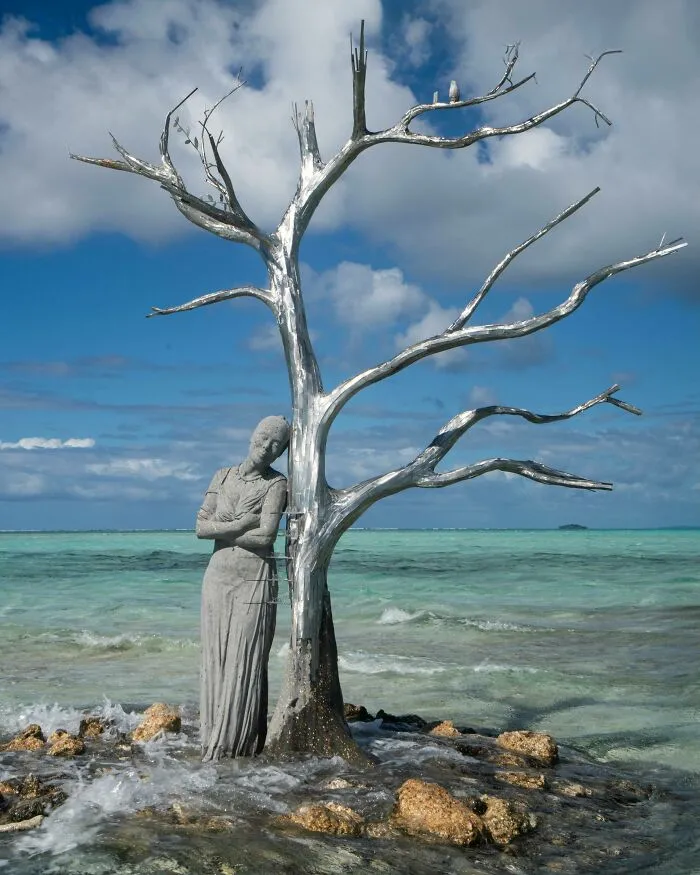
The Solomon Siren tells the story of climate activist Gladys Habu Bartlett, whose ancestral island of Kale in the Solomon Islands has disappeared beneath rising seas. Modelled on Gladys, the sculpture stands as a memorial to a lost landscape and a powerful reminder of the communities already living with the impacts of climate change.
Inscribed with dates marking the island’s disappearance and future sea-level projections, the work transforms climate data into a deeply human story. Installed in the intertidal zone, it is designed to become part of the environment itself, providing habitat for seabirds and marine life as it evolves over time.
Like the mythical sirens that warned of hidden dangers, The Solomon Siren is a quiet but urgent call to remember what has been lost—and to consider the coastlines around the world that may follow.
Creating an underwater sculpture begins long before a finished figure reaches the seafloor. Taylor often starts by life-casting people from the local community, using their bodies as the basis for full-scale sculptures. From plaster positives, molds are made and filled with a specially formulated pH-neutral, marine-grade cement. The material is designed to be durable in seawater while providing a rough, chemically stable surface where coral larvae and other organisms can attach. Depending on the project, the sculptures may also incorporate materials such as marine-grade stainless steel, basalt, aggregates, or low-carbon geopolymer cement.
The engineering is just as important as the sculpting. A figure that looks relatively simple above water can become a formidable structural problem when it has to withstand waves, currents, storms, and hurricanes. Taylor has developed ways of reinforcing delicate forms without relying heavily on conventional metal armatures, including fiberglass and basalt reinforcement. Large works must also be designed around their eventual weight, center of gravity, anchoring systems, transportation, and the practicalities of lowering them safely into the sea. For particularly ambitious installations, marine engineers, dive technicians, cranes, barges, and commercial divers become part of the creative process.
#3
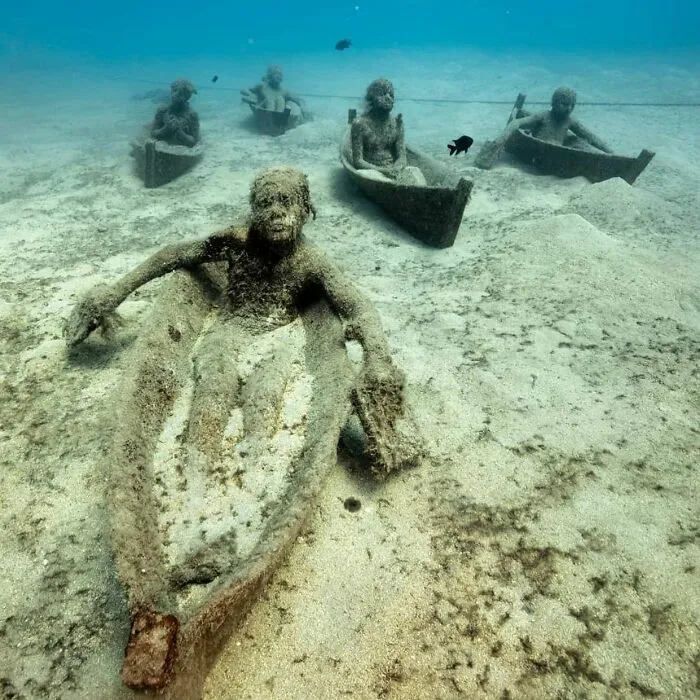
The sculpture's destination is considered from the beginning. The British sculptor studies the seabed, water depth, visibility, currents, existing marine life, sunlight, and the angle from which divers or snorkelers are likely to encounter the work. Placement can even be timed around coral spawning, allowing newly released larvae to settle on the sculptures before other organisms have fully colonized the surface. In some locations, the works are deliberately positioned on sandy patches or damaged reef areas, creating new hard substrate where marine organisms can establish themselves.
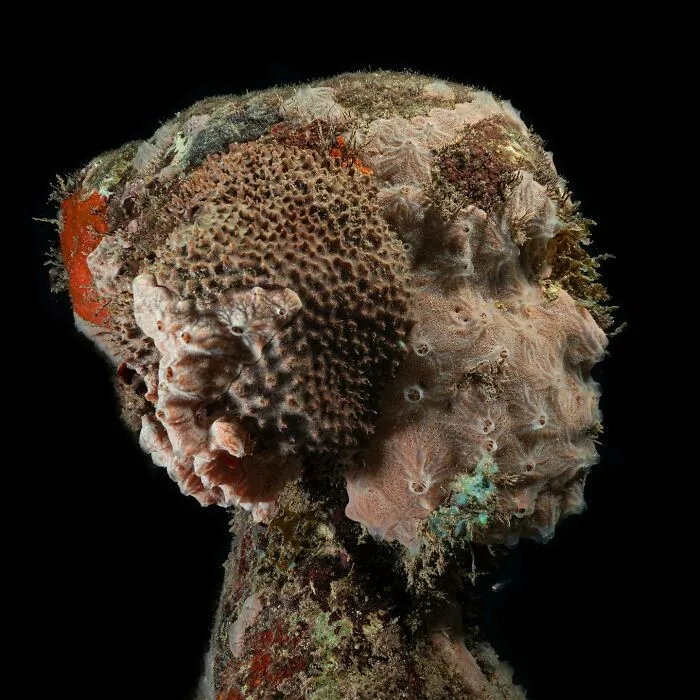
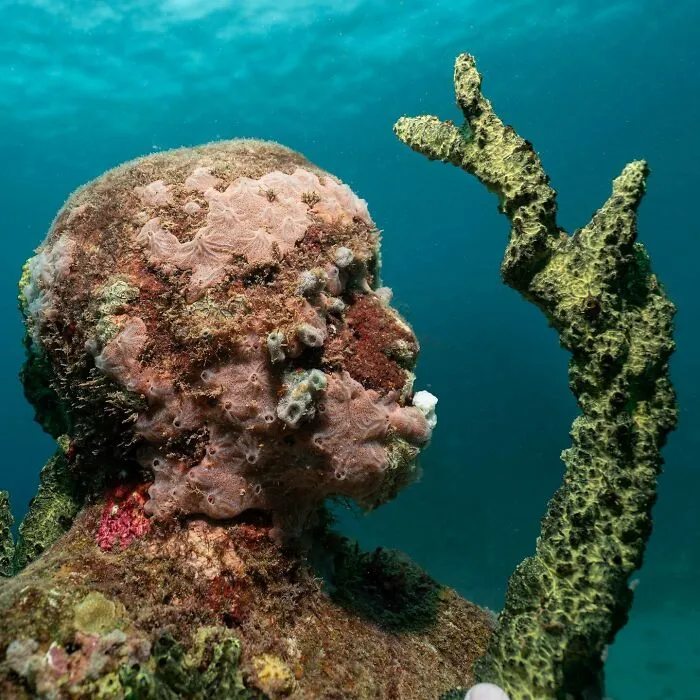
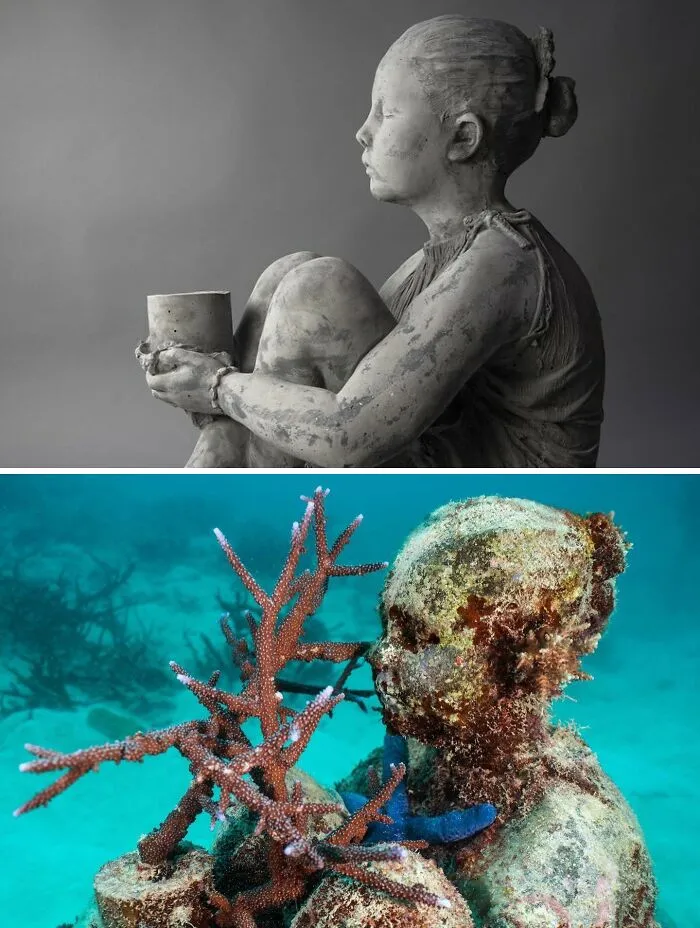
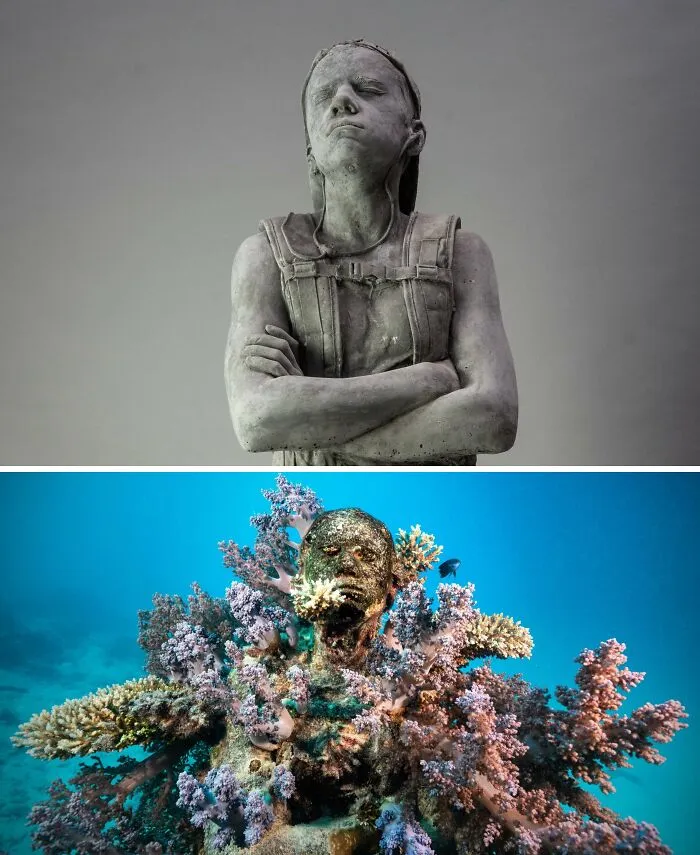
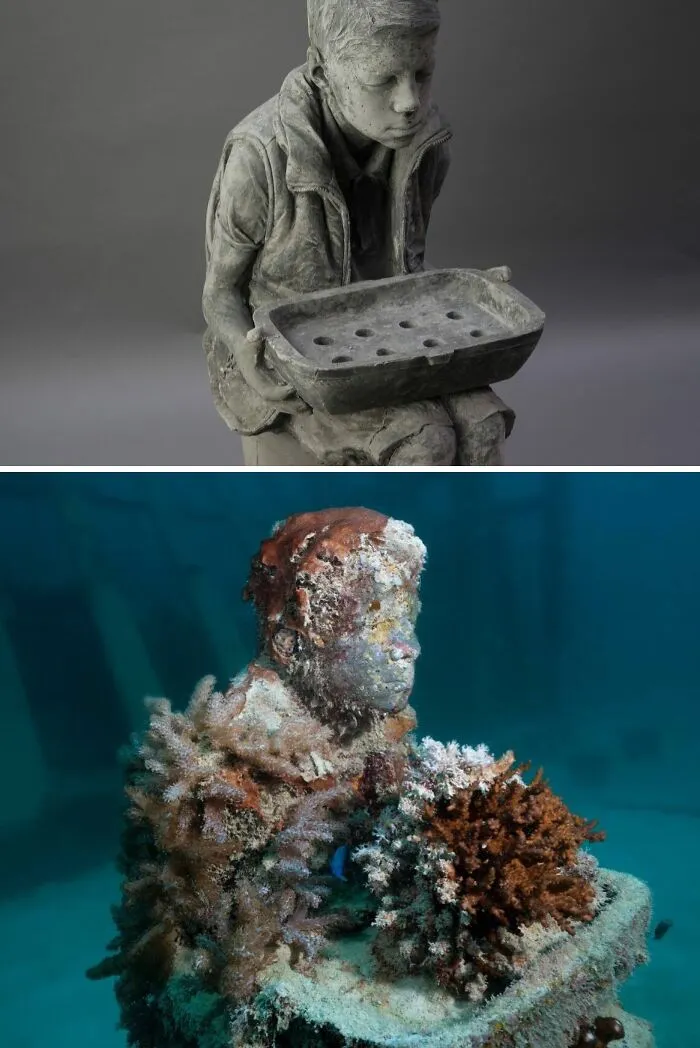
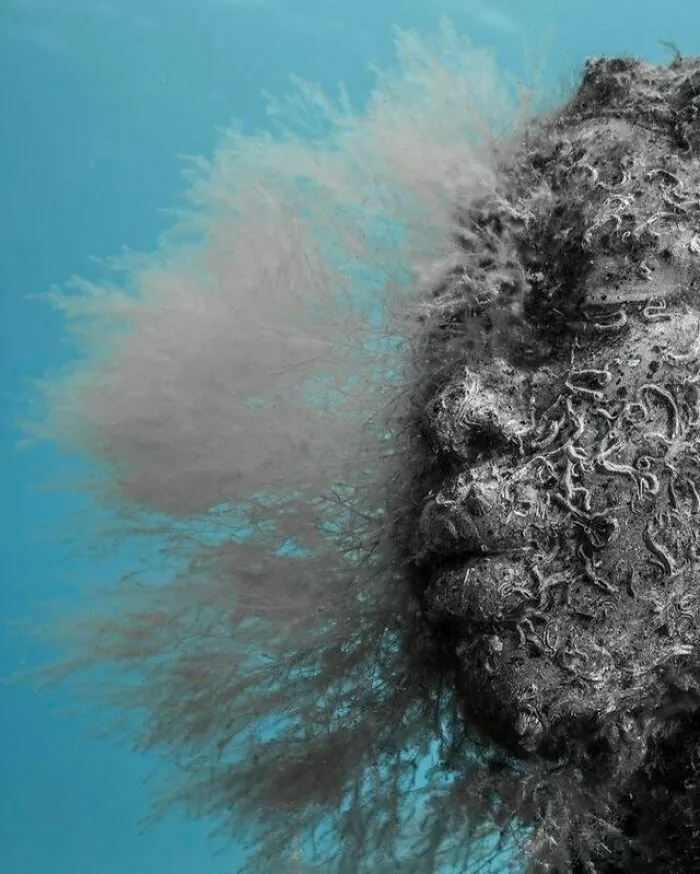
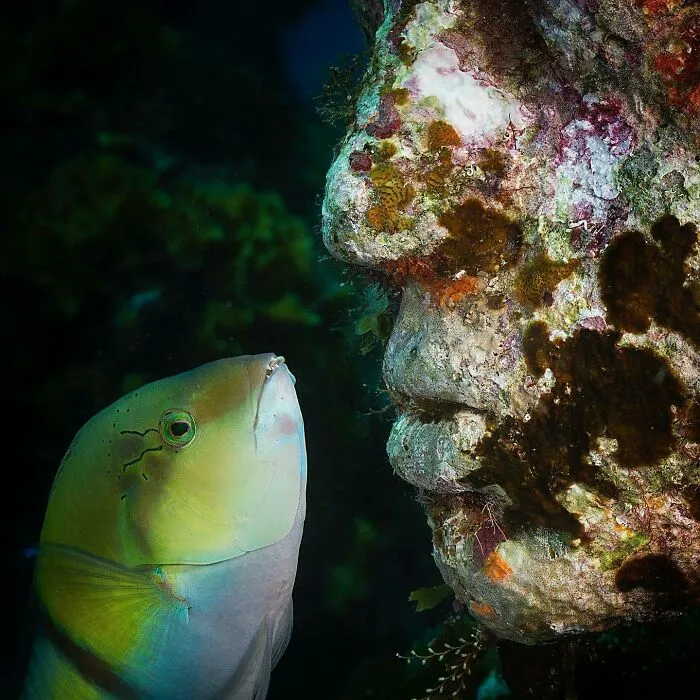
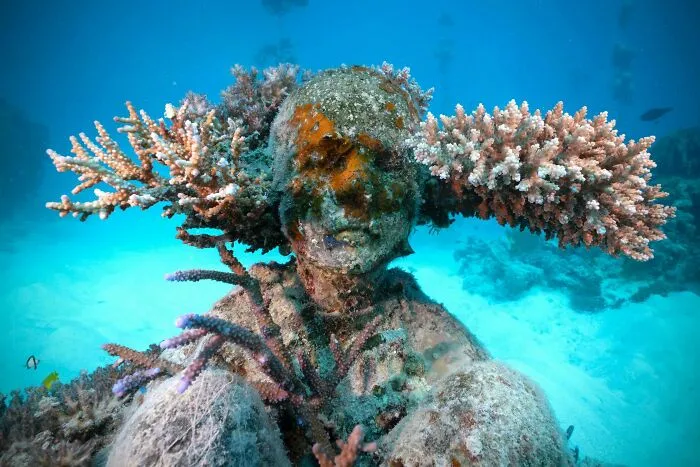
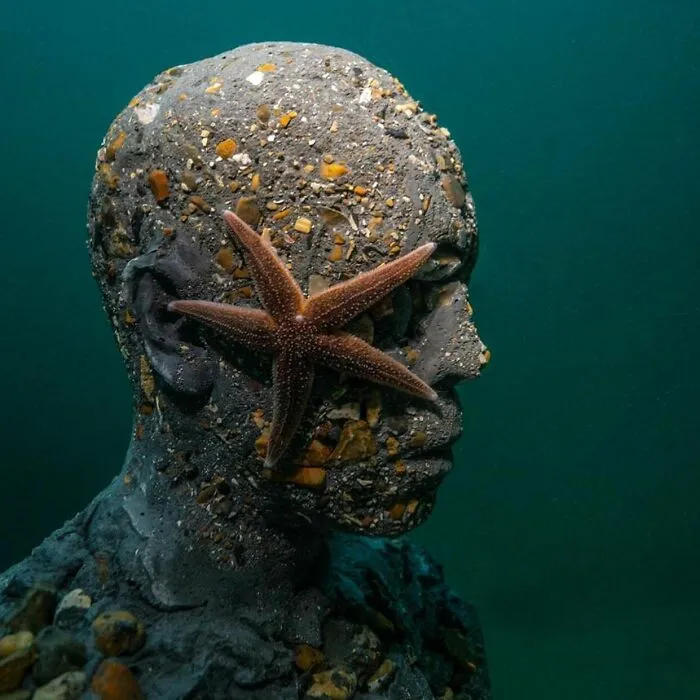
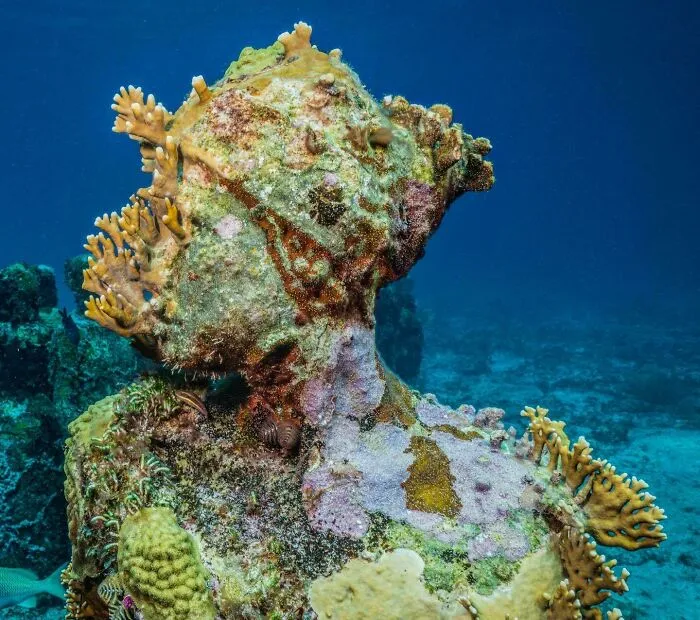
Once underwater, however, the artist's control begins to diminish. A newly installed sculpture may initially look stark and almost unnaturally clean. Then algae begin coating the surface, followed by invertebrates, corals, sponges, fish, and other organisms. Small cavities and deliberately textured areas provide shelter and attachment points, while larger structures can create shaded spaces and passageways for marine animals. Over time, the distinction between artwork and reef becomes increasingly difficult to draw.
#7
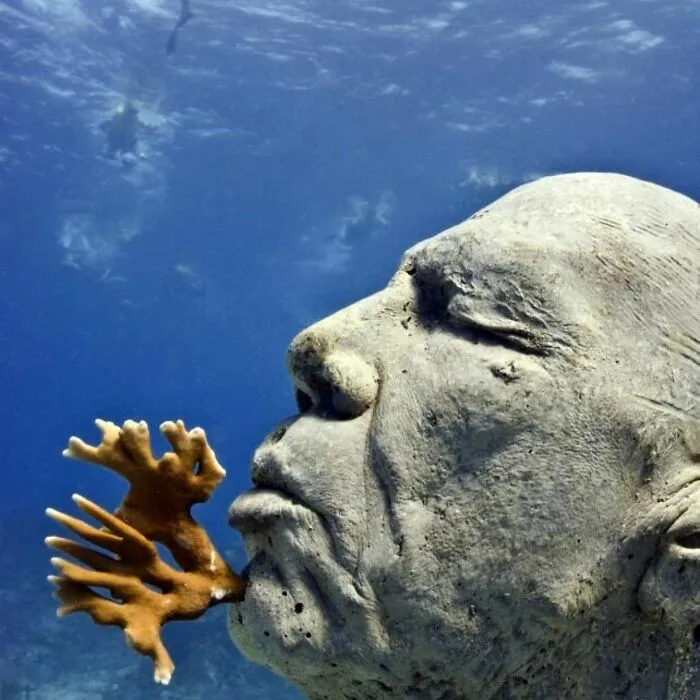
What makes the process particularly unusual is that completion is effectively handed over to nature. The same sculpture can look dramatically different from one year to the next as coral grows, algae spreads, marine animals move in, and changing light and water conditions alter how its forms are perceived. Taylor has described his works as never feeling completely finished because they remain in a continual process of transformation.
That also changes the role of the viewer. On land, a sculpture is usually experienced as a fixed object: you walk around it, study its surface, and eventually leave. Underwater, the experience is less predictable. Visibility changes with tides and weather, sunlight is filtered through the water column, colors shift with depth, and fish and other organisms become part of the composition. No two visits necessarily produce the same image. The sculpture becomes not just something to look at, but a place where art, geology, biology, and time are constantly interacting.
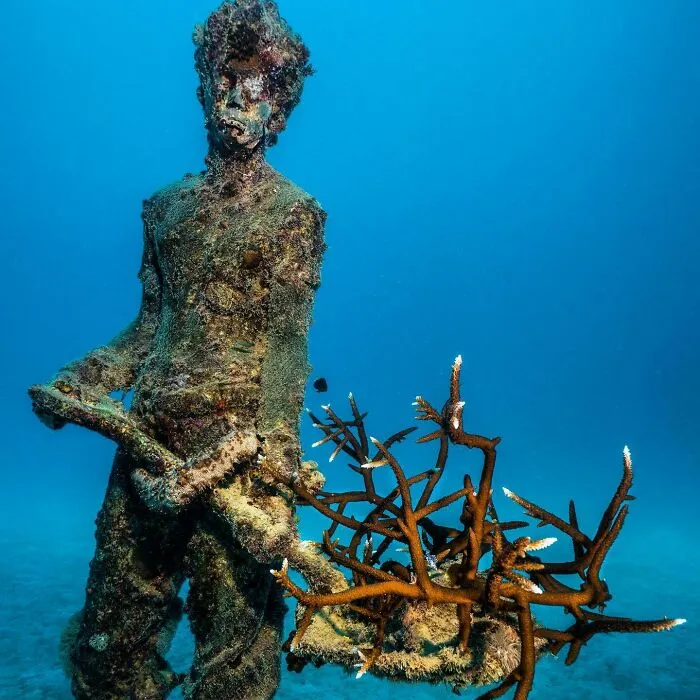
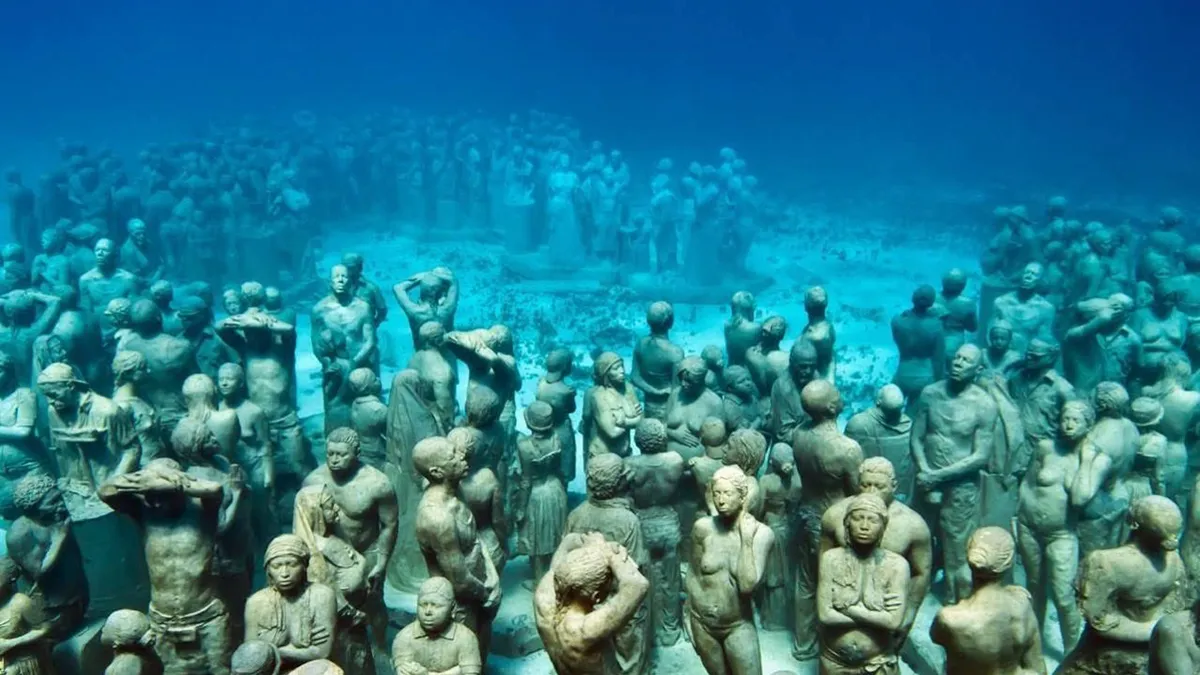
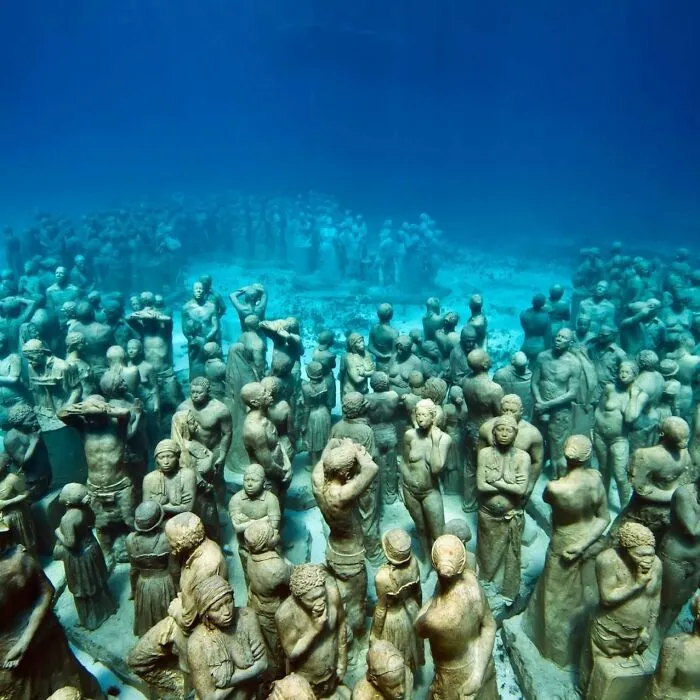
What makes Taylor’s body of work especially unusual is just how different his underwater museums can be. Ocean Atlas in the Bahamas stands five meters tall and weighs more than 60 tons, making it the largest single figurative sculpture ever placed underwater; because of its size, it had to be assembled on the seafloor rather than lowered into place as one piece. In Lanzarote, his Museo Atlántico contains more than 300 life-size figures arranged across a previously barren 50-by-50-meter area, including The Raft of Lampedusa, modeled on a real refugee who reached the island as a teenager. And in Australia, Ocean Sentinels turns eight marine scientists and conservationists into hybrid human-and-sea forms, with each figure surrounded by shapes representing their particular area of expertise.
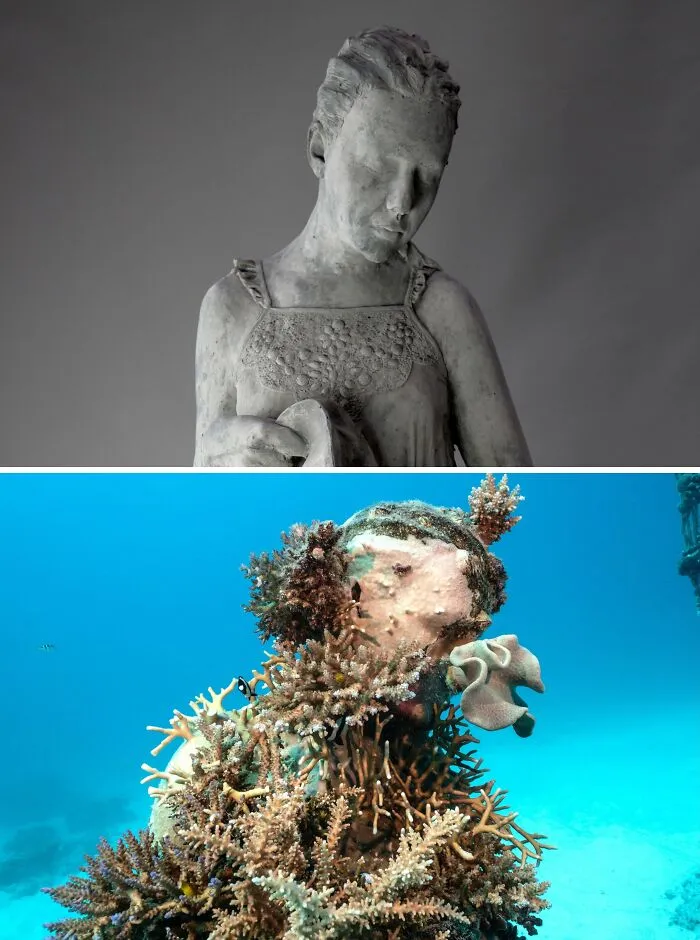
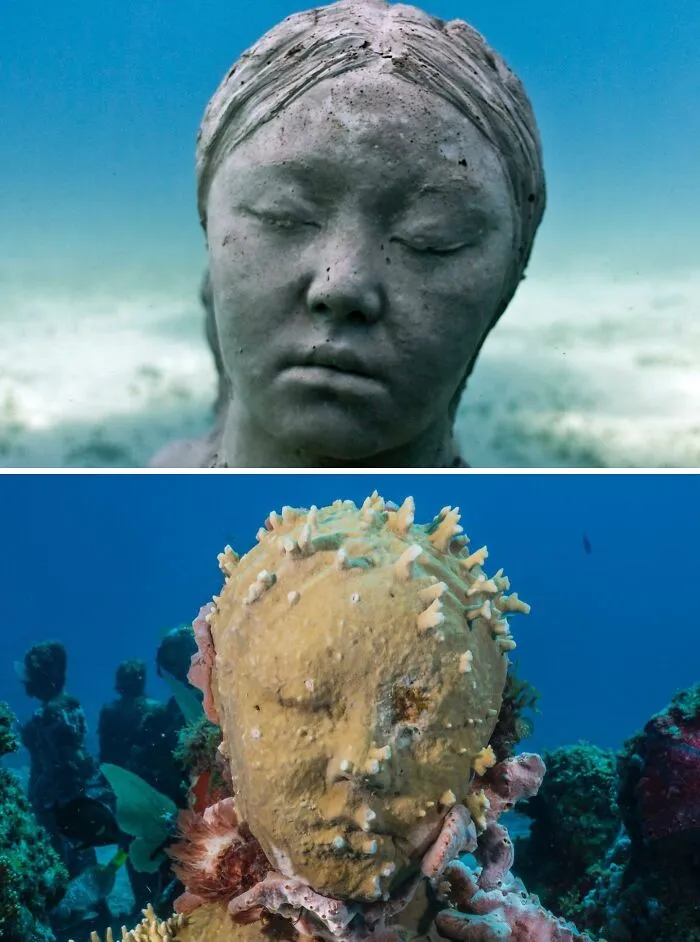
Some of the stories behind the sculptures are even stranger. In Mexico, The Listener was created using casts of the ears of local schoolchildren and contains a NOAA-designed hydrophone that records sounds from the reef. In the Maldives, Coralarium was designed as a six-meter-tall, 180-ton tidal gallery that exists partly above and partly below the water—and in 2018, all 30 of its sculptures were removed by the Maldivian government after being deemed religiously objectionable. More recently, Taylor's A World Adrift in Carriacou uses 30 miniature-looking boats carrying local schoolchildren to represent climate refugees, with temperature data printed on the sails and rigging designed to function as nurseries for coral and sponges.
At this point, calling Taylor’s creations simply “underwater sculptures” feels almost inadequate: they are museums, habitats, memorials, scientific tools, political statements, and constantly changing records of the places where they are installed.
#16
#18
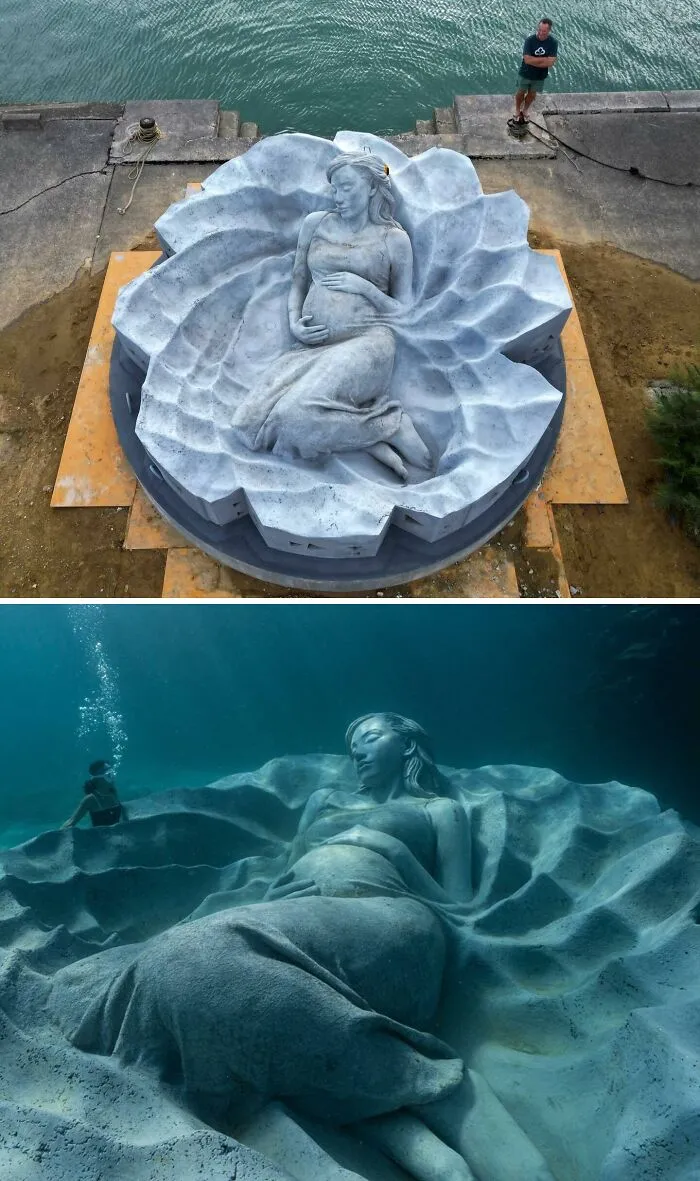
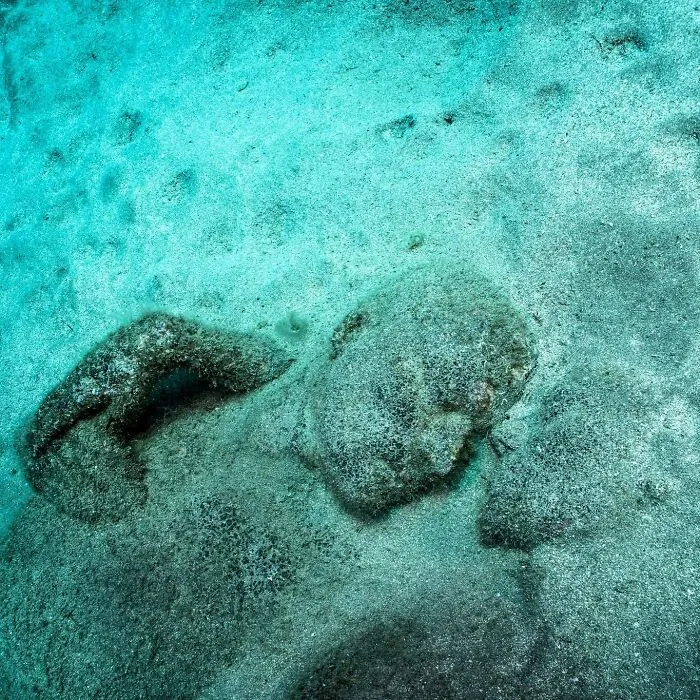
Set close to shore and embedded within the fringing reef, the sculpture is perforated with openings around its edges to invite marine life inside, transforming it into both artwork and habitat. Its gently swirling contours echo the intricate sand circles crafted by the Japanese white-spotted pufferfish (Torquigener albomaculosus), native to these waters and the rising peaks and valleys of the nearby mountain range.
In recent years, many of Japan’s younger generations have left the islands for larger cities. This work seeks to inspire renewed cultural interest and deeper connection among local youth — a new gateway to the sea. Ocean Gaia envisions the sea as a vast maternal force that breathes, renews, and heals. Drawing from the myth of Gaia, the primordial mother, the work reflects on the ocean as origin and consciousness, the source from which all life emerged. It speaks to interconnection and reverence, a reminder that the ocean is not apart from us, but an entity on which we are entirely dependent.
It is hoped that when visited, the piece evokes a deep, instinctive memory of being held within water — a quiet meditation on creation, fertility, and the ocean as the original womb of life.