




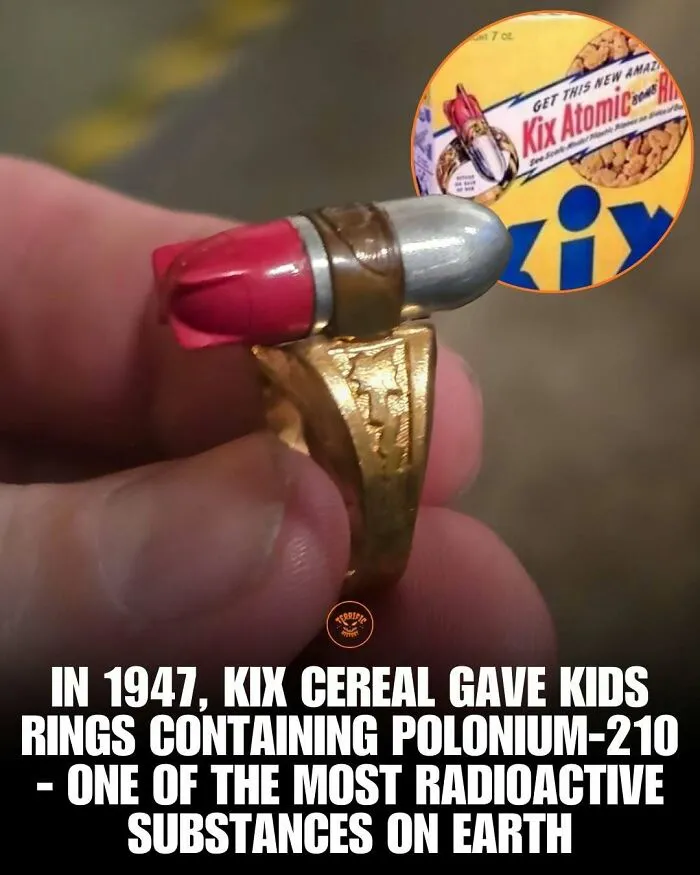
In 1947, Kix cereal ran a promotion that feels unthinkable today: rings for kids that contained polonium-210, one of the most radioactive substances on Earth.
In post-war America, anything labeled “atomic” was fashionable and futuristic. Leaning into that craze, Kix offered a novelty prize called the Atomic B**b Ring. For 15 cents and a cereal box-top, children received a ring fitted with a tiny device known as a spinthariscope, which allowed them to see faint flashes of light created by radioactive decay.
Here’s the astonishing part: the ring used polonium-210, one of the most toxic elements known to science. The quantity was extremely small and sealed inside the device, and because alpha radiation cannot penetrate human skin, it was considered safe at the time.
By modern standards, the idea sounds outrageous. But in the 1940s, radioactivity wasn’t widely feared — it symbolized scientific progress, innovation, and the promise of the future.
Cereal boxes, children, and radioactive elements — just another day of marketing in the Atomic Age.