




It all began with an ordinary toothache. Nothing unusual, just enough pain to reach for an over-the-counter numbing gel that most people wouldn’t think twice about.
But by the next day, something was clearly wrong.
She felt exhausted, short of breath, and her body felt strange in a way she couldn’t explain.
And then came the color.
Her skin began to take on a bluish tint.
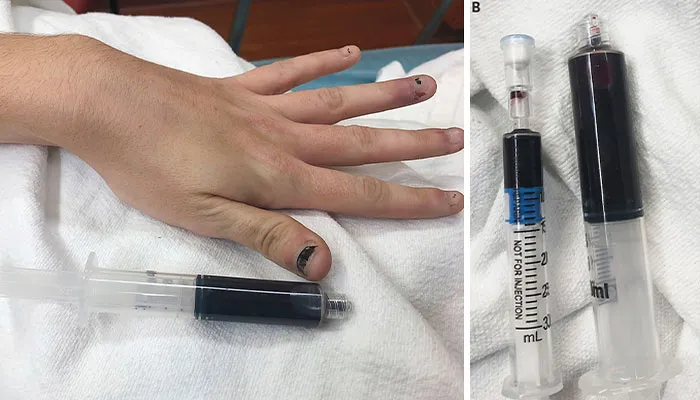
When the 25-year-old arrived at the emergency department, doctors immediately noticed it. She looked cyanotic, a medical term used when the body isn’t getting enough oxygen.
But what made this case stranger was that her oxygen levels appeared normal.
Doctors realized something wasn’t adding up. It took them a while to realize that the answer came from what she had used the night before: large amounts of benzocaine, a common numbing agent found in over-the-counter toothache treatments.
Doctors quickly identified the condition as methemoglobinemia, a rare reaction where hemoglobin (the molecule responsible for carrying oxygen in the blood) is altered in a way that prevents it from releasing oxygen to the body’s tissues.
So even though oxygen was present, it couldn’t be used, and her blood wasn’t functioning the way it should.
The usual bright red color of her blood turned into a deep, unusual blue. It’s the kind of condition most doctors only read about in textbooks.
Fortunately, in this case, the treatment was as specific as the diagnosis.
She was given methylene blue, an antidote that helps restore hemoglobin’s ability to release oxygen properly.
Within hours, the reversal began.
After two doses and an overnight stay, her condition stabilized, and the color slowly returned to normal.
What started as a simple attempt to numb pain had triggered a reaction few people would ever expect, because sometimes, even the most familiar remedies can lead to the rarest outcomes.
But by the next day, something was clearly wrong.
She felt exhausted, short of breath, and her body felt strange in a way she couldn’t explain.
And then came the color.
Her skin began to take on a bluish tint.
When the 25-year-old arrived at the emergency department, doctors immediately noticed it. She looked cyanotic, a medical term used when the body isn’t getting enough oxygen.
But what made this case stranger was that her oxygen levels appeared normal.
Doctors realized something wasn’t adding up. It took them a while to realize that the answer came from what she had used the night before: large amounts of benzocaine, a common numbing agent found in over-the-counter toothache treatments.
Doctors quickly identified the condition as methemoglobinemia, a rare reaction where hemoglobin (the molecule responsible for carrying oxygen in the blood) is altered in a way that prevents it from releasing oxygen to the body’s tissues.
So even though oxygen was present, it couldn’t be used, and her blood wasn’t functioning the way it should.
The usual bright red color of her blood turned into a deep, unusual blue. It’s the kind of condition most doctors only read about in textbooks.
Fortunately, in this case, the treatment was as specific as the diagnosis.
She was given methylene blue, an antidote that helps restore hemoglobin’s ability to release oxygen properly.
Within hours, the reversal began.
After two doses and an overnight stay, her condition stabilized, and the color slowly returned to normal.
What started as a simple attempt to numb pain had triggered a reaction few people would ever expect, because sometimes, even the most familiar remedies can lead to the rarest outcomes.