




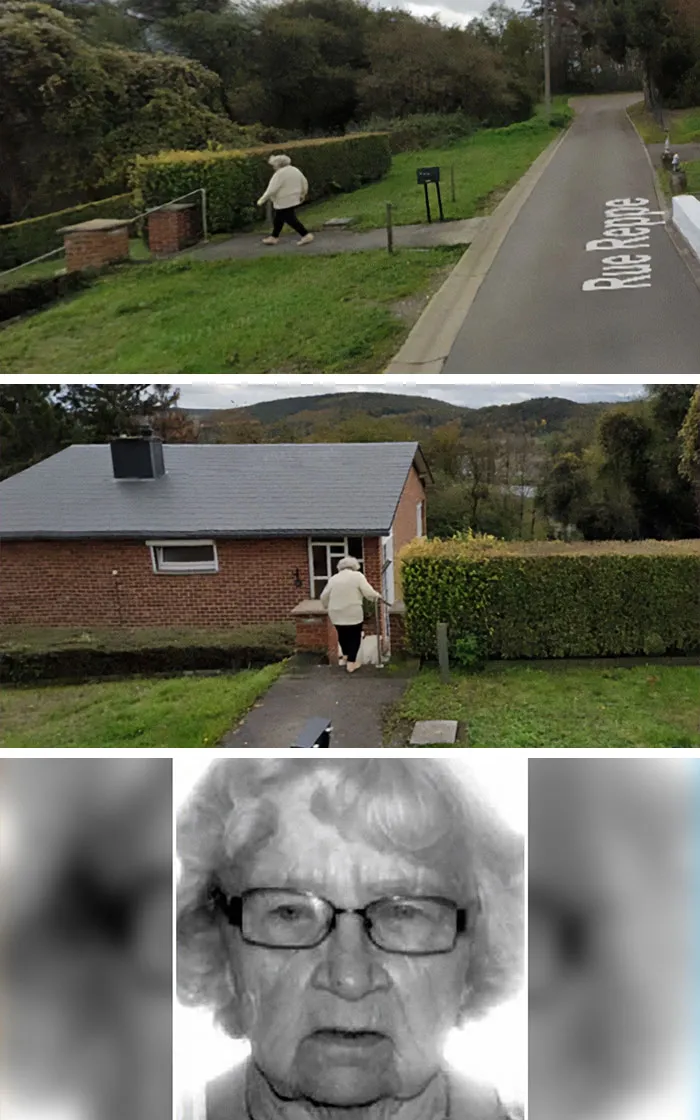
In November 2020, 83-year-old Paulette Landrieux, who was living with Alzheimer’s, vanished from her home in Andenne, Belgium, in a matter of minutes.
Her husband, Marcel, had stepped outside to hang laundry while she watched television. At some point, Paulette walked out of the house, passed right by him without him noticing, crossed the street, and disappeared. When he returned inside and realized she was gone, panic set in.
The neighborhood mobilized that same day, and police searched the surrounding area with dogs, focusing on nearby roads, wooded patches, and open land. Despite the scale of the effort, there was no trace of her.
As time passed, the case stalled. Months turned into years without a single solid lead explaining where she had gone after crossing the street.
The breakthrough came almost two years later, when a neighbor happened to be browsing Google Maps and clicked through Street View images of the area. In a photo taken on the very day Paulette vanished, captured by the passing Google Street Car, she appeared in the background walking along a nearby road.
That frozen frame provided investigators with a confirmed direction of travel.
Using the exact location visible in the Street View image, authorities concentrated their search along that route.
Not far from where she had been photographed, they found her skeletal remains inside dense, dry brush on a slope. Investigators concluded she likely slipped down the embankment, became tangled in brambles, and, unable to climb back out, passed away there.
Her husband, Marcel, had stepped outside to hang laundry while she watched television. At some point, Paulette walked out of the house, passed right by him without him noticing, crossed the street, and disappeared. When he returned inside and realized she was gone, panic set in.
The neighborhood mobilized that same day, and police searched the surrounding area with dogs, focusing on nearby roads, wooded patches, and open land. Despite the scale of the effort, there was no trace of her.
As time passed, the case stalled. Months turned into years without a single solid lead explaining where she had gone after crossing the street.
The breakthrough came almost two years later, when a neighbor happened to be browsing Google Maps and clicked through Street View images of the area. In a photo taken on the very day Paulette vanished, captured by the passing Google Street Car, she appeared in the background walking along a nearby road.
That frozen frame provided investigators with a confirmed direction of travel.
Using the exact location visible in the Street View image, authorities concentrated their search along that route.
Not far from where she had been photographed, they found her skeletal remains inside dense, dry brush on a slope. Investigators concluded she likely slipped down the embankment, became tangled in brambles, and, unable to climb back out, passed away there.