



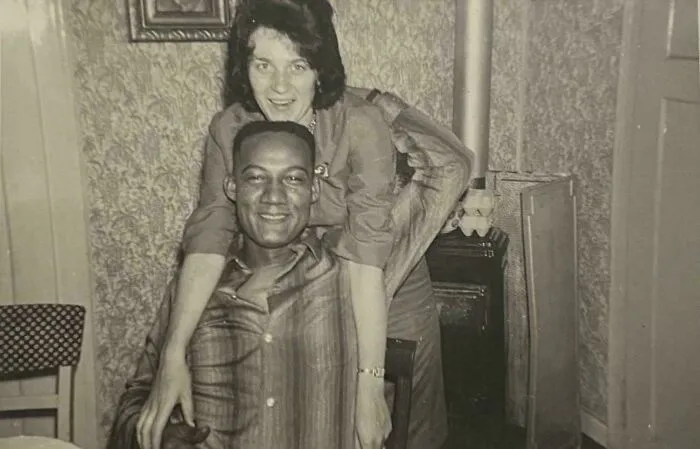
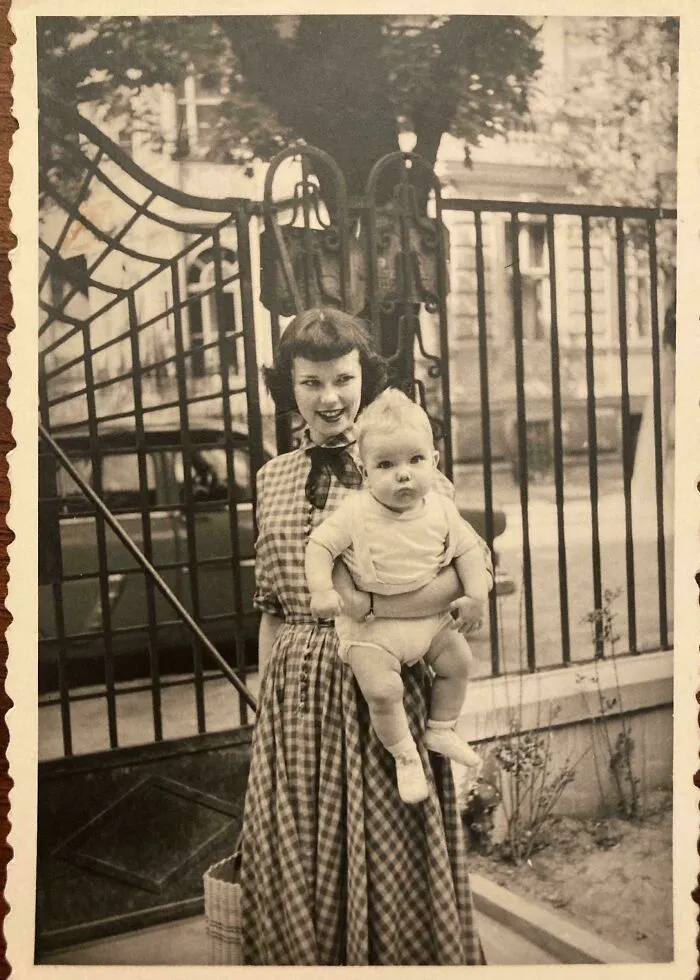
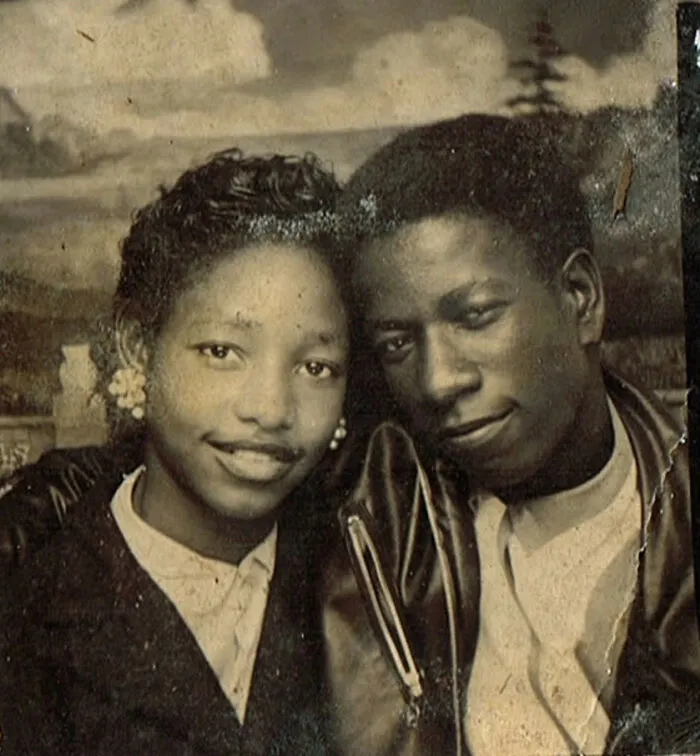
#1 Love Is Love. These Are My Grandparents In The Late 1950’s/Early 1960’s, Germany
These days, taking a photo barely takes any effort. We pull out our phones, open the camera app and snap away as many times as we like. According to research from UK photo printing chain Max Spielmann, more than 90% of photos are now taken with smartphones.
Around 1.8 trillion are captured on phones worldwide every year, which works out to roughly 4.7 billion a day. It’s hard to even wrap your head around that number. Just imagine how many cats, lunches and accidental pocket shots are hiding in there.
Getting to that point took a very long time. One of the ancestors of the modern camera was the camera obscura, a darkened room or box that let light through an opening and projected an image onto a surface inside.
Artists used versions of it centuries ago to help with drawing. The big problem was that the image couldn’t simply be saved. That required people to figure out how light could leave a permanent mark on a material.
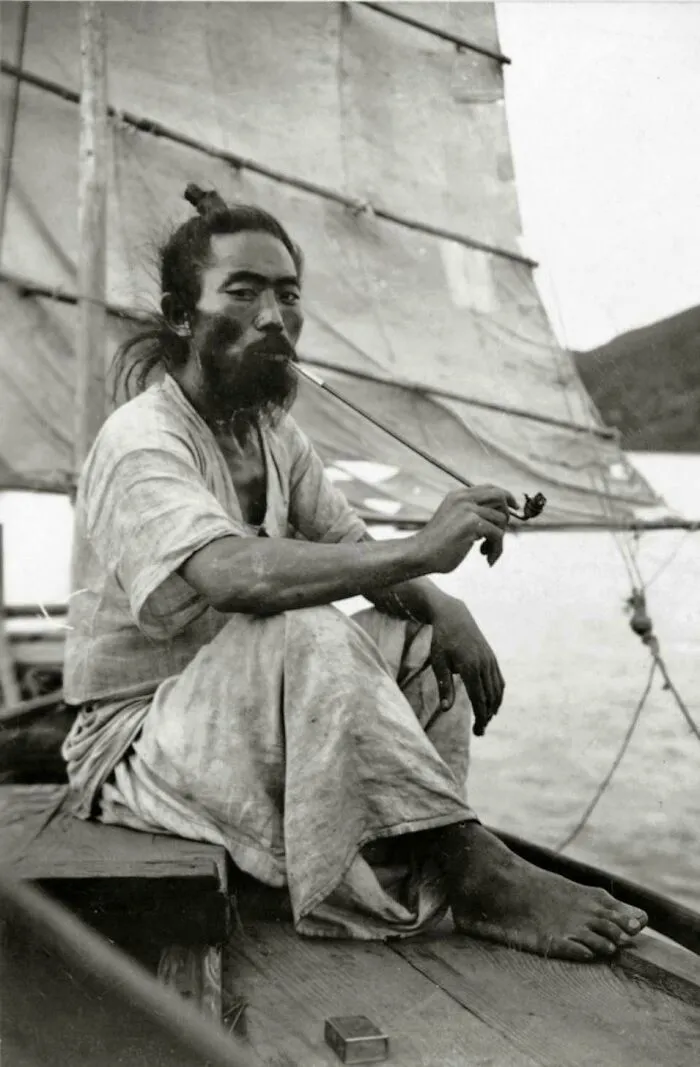
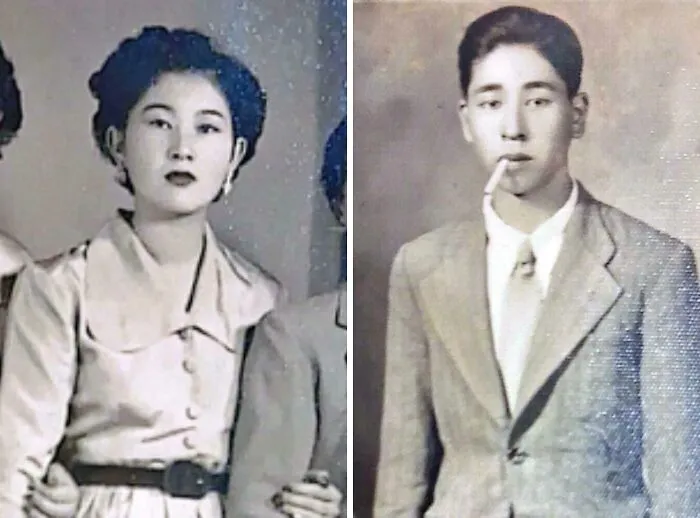
#9 Portrait Of A Fisherman, Korea Late 19th C
French inventor Nicéphore Niépce eventually managed to do just that. His 1827 heliograph, made with the help of a camera obscura, is considered the earliest surviving photograph produced in one.
Photography moved forward again in 1839, when Louis Daguerre’s daguerreotype process was announced publicly. It created highly detailed images on silver-coated copper plates and soon became popular for portraits. By 1850, New York City alone had more than 70 daguerreotype studios.
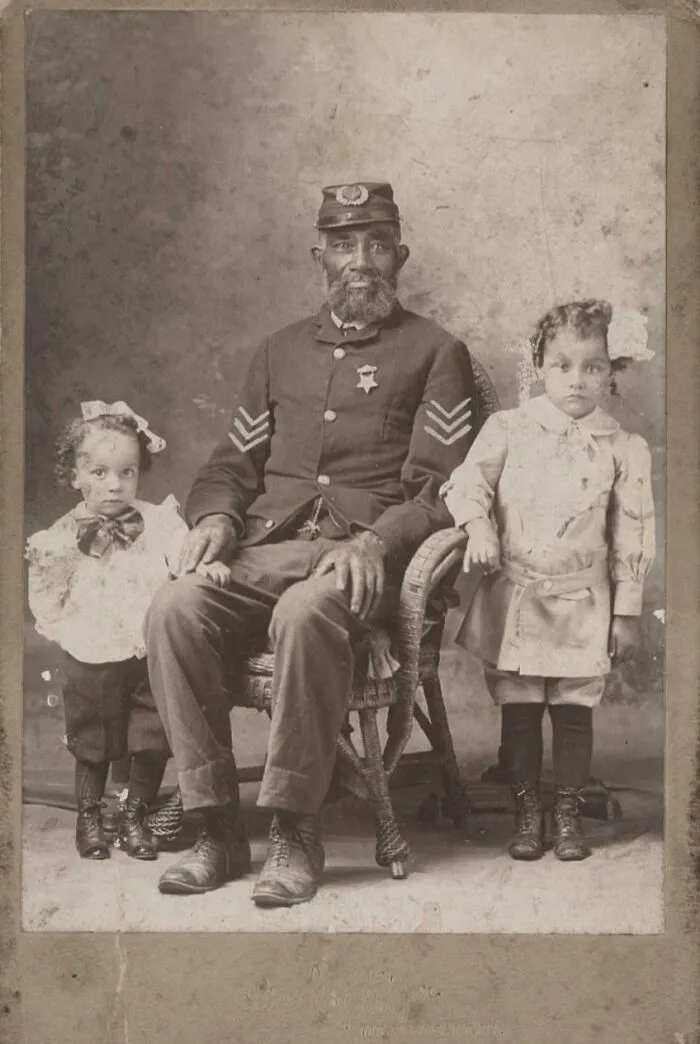
#10 Civil War Veteran Poses With His Grandchildren, Circa 1880. Cabinet Card
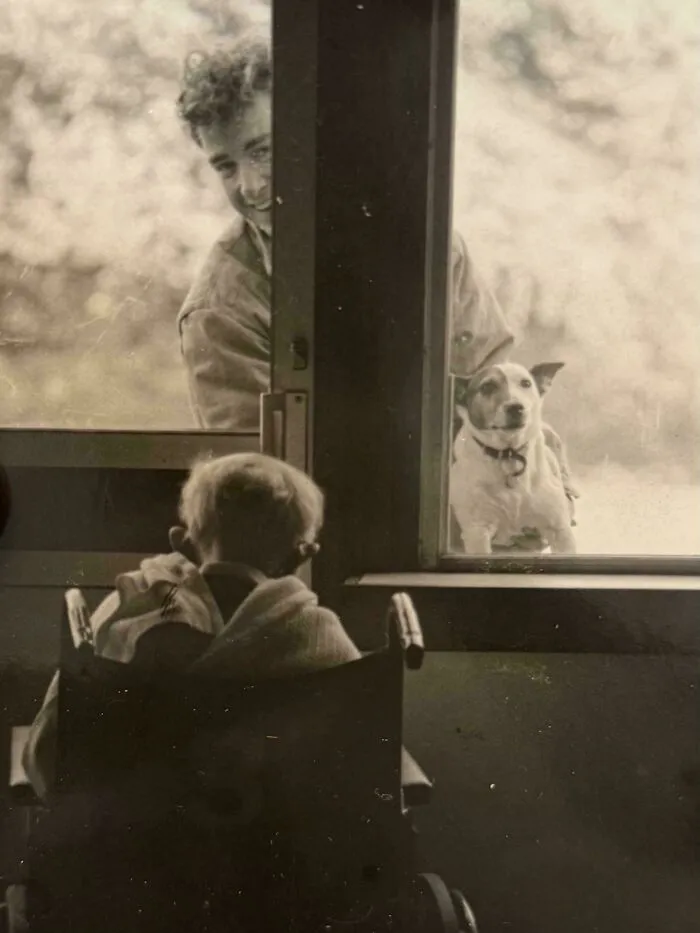
#11 My Dad Visiting His Grandad In His Final Days, He Wanted To See The Dog - My Favourite Family Photo
Photography gradually became much more practical for ordinary people. In 1888, George Eastman introduced the original Kodak camera, which came loaded with enough roll film for 100 exposures.
Once people finished the roll, they sent the entire camera back to Kodak, where the film was developed and the camera reloaded. Suddenly, taking pictures required far less technical knowledge, helping move photography beyond studios and into everyday hands.
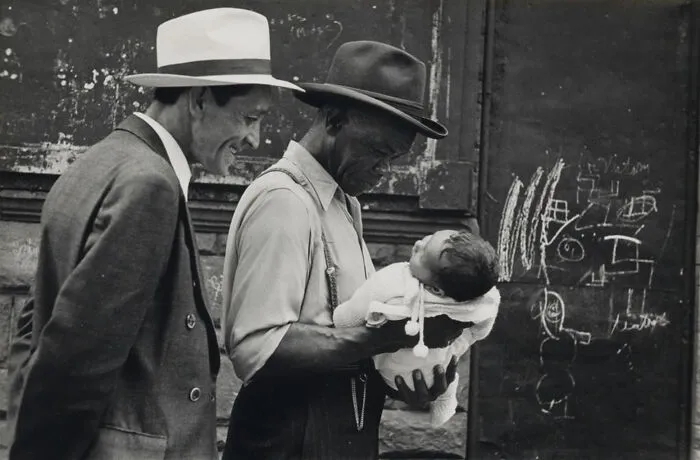
#13 2 Men Look With Bright Smiles At A Sleeping Baby, New York, 1940
Another huge step came with smaller cameras. In 1925, the Leica I made its public debut as the company’s first 35mm camera in serial production. Its compact size made it much easier for photographers to carry a camera around and capture spontaneous moments.
That helped make Leica a favorite for street photography and photojournalism, where photographers often wanted to catch people and places as they really looked instead of carefully setting up every shot.
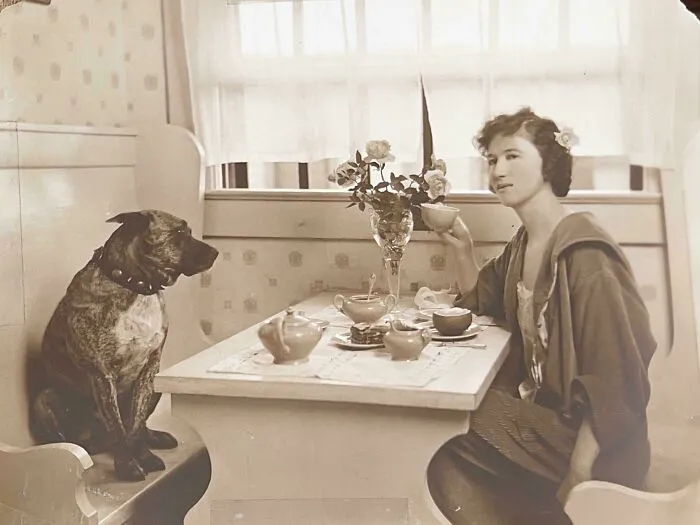
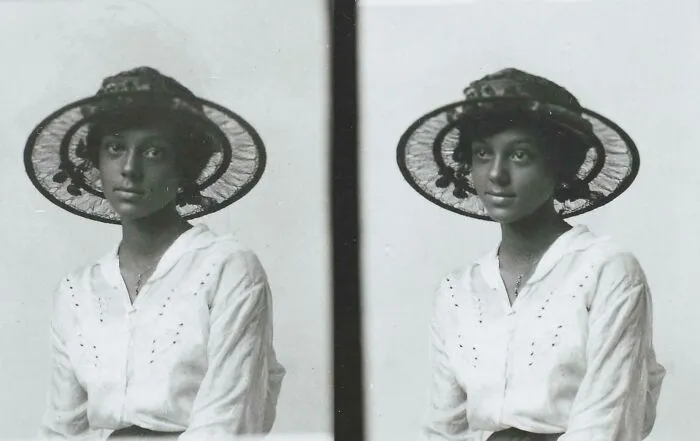
#18 Young Lady Posing For Her Double Shot, Junction City, Kansas, 1917. Glass Negative
Meanwhile, another big change came when photographers finally figured out how to capture images in color instead of just black and white. In 1907, the Lumière brothers introduced Autochrome, the first commercially viable color photography process.
The results were color transparencies on glass, and taking them was still a long way from the simple point-and-shoot experience we know today. Color photography continued improving over the following decades, eventually becoming a normal part of family albums rather than something unusual.