





#1
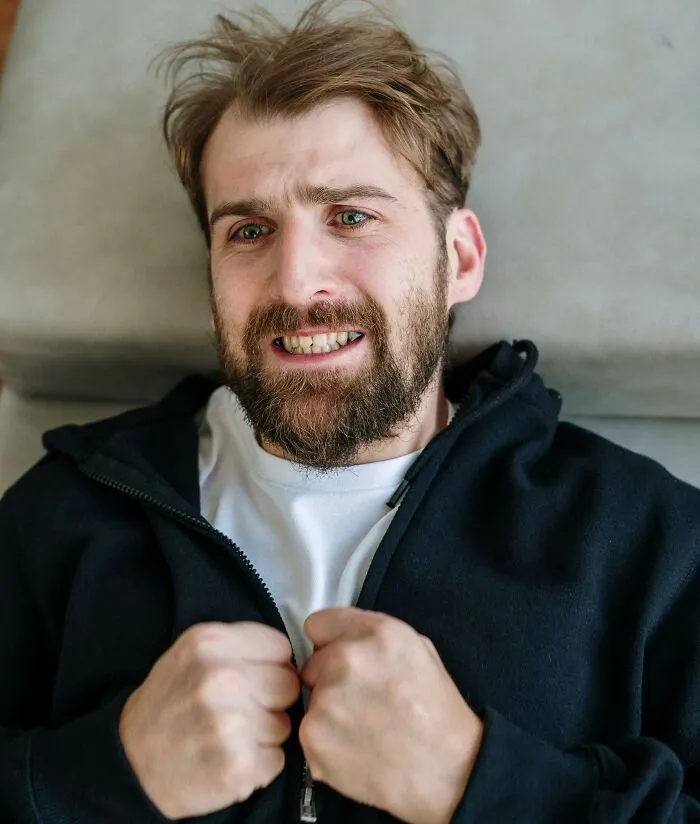
He was diagnosed early!!
By 6 he was labeled an acquisitive psychopath and anti-authoritarian personality disorder.
This was in the early 60s and the labels were very different but I can assure you there was something very wrong with him.
I can also assure you my parents were lovely. Our home was safe, clean, upper middle class, polite, kind and my parents were wonderful people who sent us both to private school. That private school expelled him.
He dropped out of the sky insane.
There was no early trauma.
He was born missing empathy.
I think just like you could be born missing a limb, you could be born missing an emotional capacity.
I don’t see the need to blame his upbringing.
Sometimes a person is just born missing something.
#2

#3

Honestly they usually don’t last that long in therapy. I wasn’t willing to completely validate every little thing she said either.
Sociopathy is an incredibly complex mental disorder, and it shouldn’t be confused with psychopathy. This is because experts say that sociopathy falls under the designation of “Antisocial Personality Disorder (ASPD),” the same category as psychopaths. And so people diagnosed with this disorder show signs of a lack of empathy, deceitfulness, and repeated disregard for laws.
Typically, though, they still have a lack of remorse, but may occasionally feel empathy and other emotions, even if they’re shallow or fleeting. They also tend to lie and deceive. But one thing that sets those with sociopathy apart is that they are not necessarily born with these qualities. Sociopathy has been found to stem mostly from nurture, including environmental trauma, childhood violence, or severe neglect.
#4

#5
#6

Couples therapy seemed pointless because it seemed to never occur to the therapists that he was intentionally trying to hurt others. He presented as a mild tempered person who kept fumbling and making mistakes.
The things that he did were often so covert only he knew the truth. Things like making up excuses to why I couldn't access my insurance info. so I would miss my appointment. I only figured it out because when confronted of course it was all an accident or a misunderstanding, and in the more obvious scenarios he just "lost his temper", but the bad things happening never seemed to stop or get better. He downplayed any emotional distress I had. He finally told me something was wrong with him but that was just the way he was so he wasn't going to change. I finally divorced him soon after even though I should have trusted my gut all along. But no, therapists did not seem to catch on.
But what actually sets them apart from psychopathy, which also falls under the ASPD umbrella? Well, for starters, psychopathy isn’t necessarily a disorder that someone develops. Instead, it is mainly nature rather than nurture. Most people with ASPD, specifically those exhibiting psychopathic traits, will likely show signs of it from an early age, as it is often associated with genetics or structural neurological differences.
And there are also plenty of traits that separate them from sociopathy. Mostly, they tend to be cold, calculating, and emotionally detached, as they are considered less capable of experiencing genuine empathy or forming emotional bonds with others. They can be dishonest without feeling guilt or anxiety. Instead, they may pretend to feel emotions, becoming skilled manipulators. All while a sociopath may still regret their actions.
#7

Within a few weeks of starting my job, I learned that one of my direct reports was notoriously difficult to work with. The first thing she told me about herself is that she’s brutally honest and people have a hard time with that. She demanded a higher title that she was under qualified for, demanded a higher salary she was not entitled to, and started crying to some of our highest-tier leaders when she didn’t get what she wanted. (Mind you, she barely knew these people.) When I tried to give her performance feedback, she got defensive and started to insult me with obvious lies. She always talked herself up and name-dropped, but nobody seemed to really like her. No amount of employer training, feedback, etc. had historically helped her change her behavior. She was smart, but seemed to constantly self-sabotage in her professional life with her behavior.
I basically learned the hard way that I’m not sure I’ll ever be able to work with someone else like that as a therapist.
#8

#9

#10

Another notable one I had, once I made them feel comfortable, let the mask down and let me know how much joy he took in making women feel uncomfortable and threatened. He took pleasure in their faces being mortified and scared for their lives.
A sign I get instantly is if they look me straight in the eyes and say some wild s**t, testing me. Typically though, these individuals are charismatic and funny, and will lower your defenses but will slip the second they don’t get their way. If you can be very validating, they will spill everything- they love to talk about how they f**k people over w a smile. They have a justification for everything. They also are super observant so they will make comments about my schedule they noticed or something personal, fishing always and testing boundaries. Notably do not care about boundaries. They will find loop holes in rules constantly.
But getting a formal ASPD diagnosis is actually quite rare. This antisocial disorder affects about 1% to 4% of the adult population. As for true psychopathy, that only applies to around 1% of the general adult population. Nonetheless, the stories indicate that, in most cases, people themselves may not even know they have ASPD, since many choose not to seek a diagnosis in the first place.
Curiously, studies also show that men are roughly 3 to 4 times more likely to meet the criteria for ASPD than women, and the traits are most prominent in early adulthood. And due to the disorder’s tendency to involve disregard for social and legal norms, it’s not entirely surprising that around 40% to 70% of incarcerated men actually meet the diagnostic criteria for ASPD.
#11

A *psychopath* is someone who tends to lack empathy and or guilt. They typically can’t form attachments and usually tend to be manipulative and dishonest, but can often times be deceptively charming. They’re the ones that usually remain calm under pressure and are more cold and calculating.
A *sociopath* tends to have poor impulse control and be far more violent or quick to anger. They’re more likely to have emotional outbursts and show erratic and impulsive behavior.
A big, sometimes debated, distinction is that psychopaths are born versus sociopaths that are usually created due to some environmental factors or trauma. I think a lot of people here are describing psychopaths.
#12

#13

I was working in corrections with a younger inmate. He was attractive, charming, smart… but not in the way you would expect a sociopath to be. He wasn’t overly solicitous or groom-y, which is always something you can feel QUICKLY with the conman type. He was mostly pretty normal.
Later I am talking with my supervisor about my cases, and when I start talking about this guy, I realize that I really like him… more than I would expect to like someone after 3 sessions, especially with the VERY little we had in common. His ability to be appropriately likable without making me feel creeped out is, in hindsight, quite frightening.
I also replayed moments where I would reflect emotions back to him. I would say: “Wow, that sounds really hard,” and he would repeat: “yeah, it was really hard.” On its face, it’s not totally weird, but what I see more often when I reflect an emotion back to someone is that they will expand on it: “yes, it was awful, it was so hard, I hated it, etc.” He told me a horrific story about his mother and when I said “that must have been terrible for you”, he responded simply “it was terrible for me.”
There’s a lot more to this that I won’t share, but he ended up being transferred to a different facility for pretty violent behavior. I’ll never forget seeing him on the news and not being able to explain my reaction to my husband.
Edit: a word
Edit 2: It’s been interesting to see how many people believe that sociopathy/ASPD can be picked up in one interaction, so I’ll say it here: this was one data point in a collection of data points that clarified a diagnosis. Getting to this point means that I considered other possible diagnoses, intellectual differences, neurodivergence, behavior, trauma history, motivations for therapy, even whether or not this guys just possessed a shorter emotional range. If anyone tries to sell you on one single move or behavior that always indicates something as complex as a personality disorder, they’re ill-informed at best and intentionally deceptive at worst.
#14
he told really obvious lies to test my reaction that were often gratuitously violent. he would s*******m in front of me for the same reason. I observed him to have sudden, cold, violent outbursts and he held very long grudges. speaking with him for extended periods of time triggered my fight or flight as his body language didn't quite match up with his words or the emotions he was mirroring. he was bored all the time. it felt like playing mental chess where the 'winner' exerted control over the other person. he was deeply invested in control. he had a strict moral code of his own creation that he adhered to. the only 'emotions' I ever observed him to experience were rage, boredom, curiosity, anger, and satisfaction in the sense that he seemed to enjoy playing with other people's perception of him, and he enjoyed scaring others.
While dealing with, diagnosing, and treating someone with ASPD isn’t exactly a foreign concept to many mental health professionals — especially those specializing in the disorder — it can still be an incredibly draining task. For starters, the realization usually comes much later after the consultations begin, as they can often fall victim to what Hervey Cleckley called “The Mask of Sanity.”
This concept, which he introduced in his 1941 book The Mask of Sanity, explains how people with ASPD may present themselves as incredibly charming and rational. They will likely mimic behaviors they’ve internalized for years in order to appear as mentally stable as possible. But normally, a small slip will actually reveal the absence of emotion behind the mask, as many of the stories in the thread mention.
#15

#16

There's no universal initial sign. Many antisocial individuals are very friendly and polite, others are arrogant and rude. Some at least pretend to have empathy, others don't try to hide their indifference.
The assessment is made by gathering multiple sources of information, as you can't rely solely on what they tell you.
#17

Thought it was reckless for her to become a therapist though. It's not really a settled science and being human with someone is going to be more potentially healing than treating them like a specimen.
All the other people I knew as sociopaths never straight up said so but had a very funhouse mirror vibe to them, and were like comically evil or irresponsible.
#18

Important to note: children can't be diagnosed with Antisocial Personality Disorder. As a non-therapist, I also wasn't privy to his entire chart. All I knew was his family was worried about his aggression, which was like 75% of the kids there, so I wasn't too worried.
Anyways, we get to talking and after about 10 minutes he reveals he had been torturing small animals and was eventually admitted after k*****g the family dog. Brother. I played it cool, but got out of that room so fast.
Just waiting to see that kid on the news some day.
#19

I never realized it until after we were broken up, but once I did it was completely obvious. He fit every meaning of the word. He completely lacked empathy, tried to mimic people to fit in, and could be very manipulative, yet somehow I was happy with the relationship and was upset to leave him; I suppose that’s the part where sociopaths are very like able people.
#20

Also, his smile. It's is objectively normal, but he only has ONE smile. The same for good news, or for great news, or for any reason at all. It's all the exact same smile, with no variation, ever. Like it's a tool he brings out and puts away when he's done with it.