



Resolving family drama has some tightrope-walking-like elements, it’s best to not shake things up too much, one has to really watch their step. It’s the sort of environment where one’s creativity can really shine.
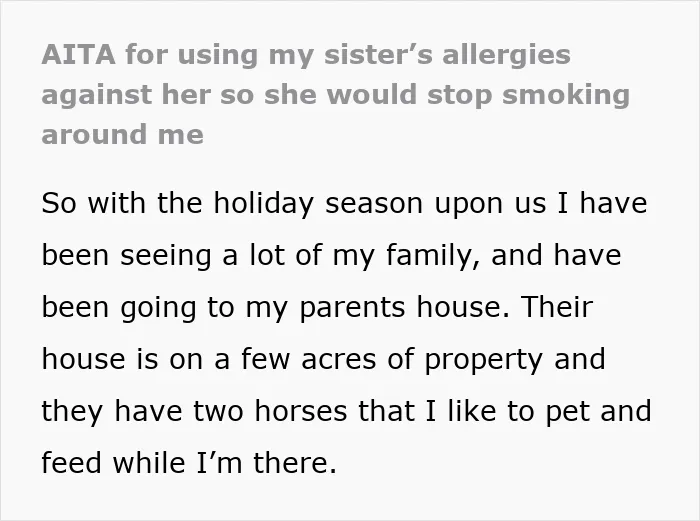
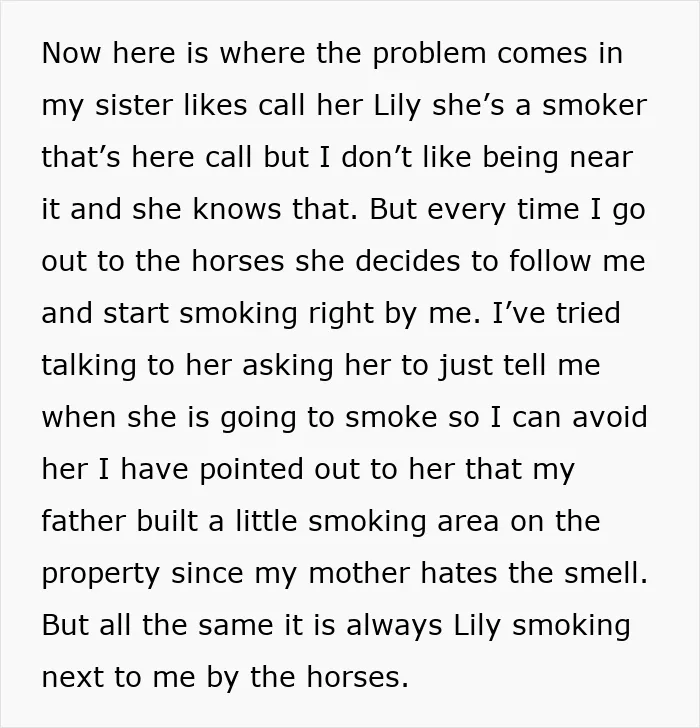
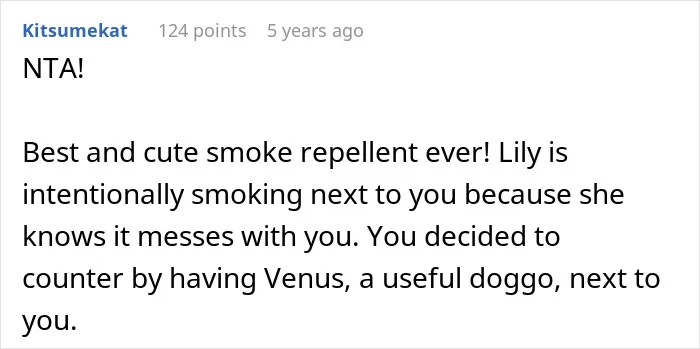
A netizen asked the internet if they were wrong for using their sister’s allergy towards dogs against her after she ignored requests to not smoke near them year after year. Despite the entire family telling her to stop, the sister still insisted she was right and bringing a dog was a direct attack towards her.
Some siblings seem like they are annoying on purpose

So one woman learned the hard way to stop smoking near folks who don’t like it
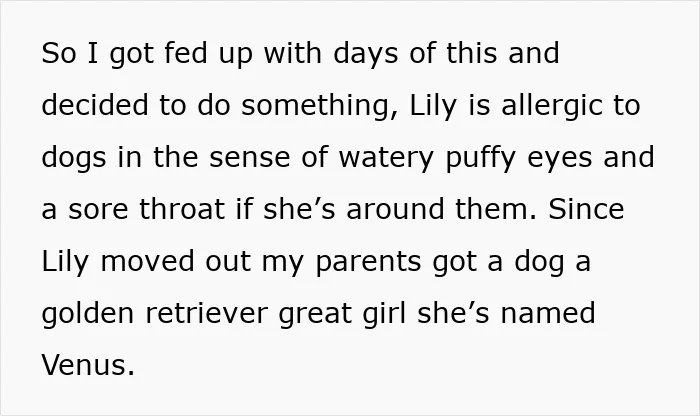
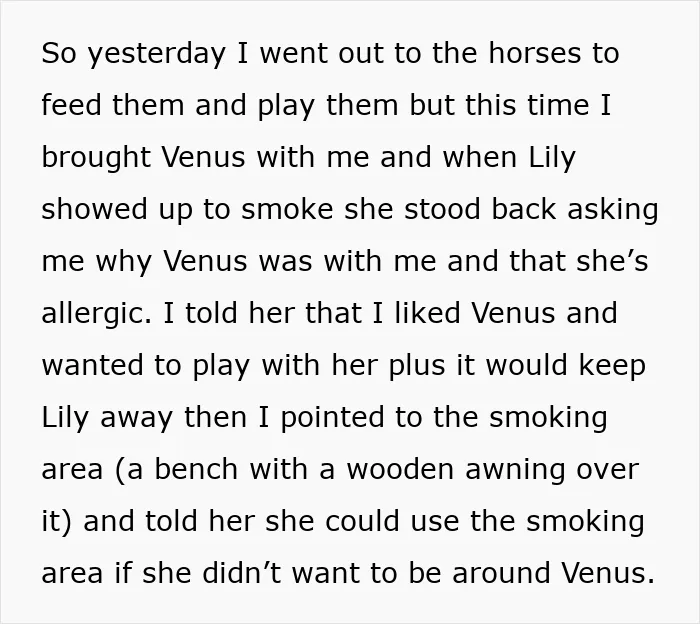

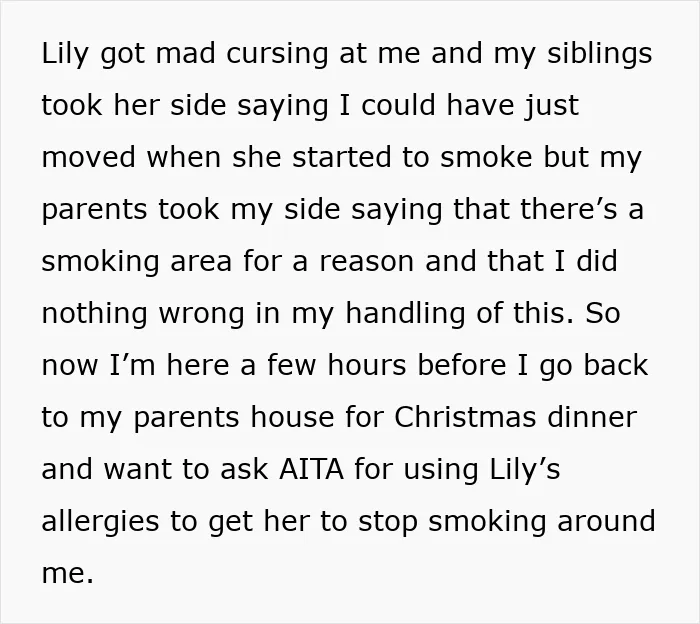

These posts sometimes make people reevaluate things
AITA threads love to dress conflicts up as good guys versus bad guys, but this one sits somewhere more interesting than that. The real question isn't whether Lily deserved it, it's whether bringing Venus along actually counts as revenge, or whether it's something else wearing revenge's clothes.
Real revenge, the kind researchers study, is aimed at making someone suffer because they made you suffer, and it tends to spiral rather than settle anything. Psychologists who study payback describe something called the magnitude gap, the pattern where the person getting even almost always believes their response was proportionate, while the person on the receiving end experiences it as excessive. That mismatch is exactly why revenge cycles keep escalating. Nobody agrees on what even looks like once feelings get involved.
What separates this from that pattern is the goal behind it. The dog wasn't brought over to make Lily suffer for its own sake, it was brought over so smoking next to the horses stopped being pleasant for her, which is a different aim entirely. People who write about the line between assertiveness and vindictiveness put it plainly, assertiveness is aimed at resolving a conflict while vindictiveness is aimed at someone else's pain. Venus changed the cost of a choice Lily was already free to make somewhere else on the property. Nothing was taken from her, and nothing humiliating happened.
There's also a difference between adding something unpleasant to a situation and simply withdrawing an accommodation you were never obligated to keep giving. Some boundary research frames the healthiest kind of consequence as removing something desirable rather than manufacturing something new and painful, a concept described on Change Direction. Nothing here was manufactured. Venus already lived at the house. What changed is that the sibling who usually absorbed the discomfort of the smoke stopped absorbing it.

This entire issue was avoidable
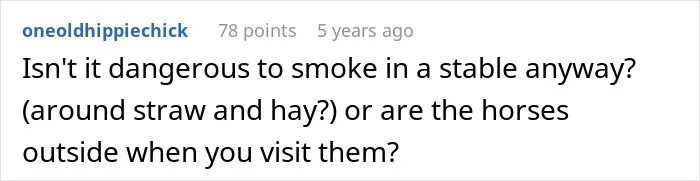
It matters too that a real alternative existed the whole time. Lily wasn't being smoked out of the only spot she was allowed to use, there was a designated smoking area with a bench and an awning built specifically to solve this problem. Choosing the horses instead was a choice, not a necessity, and that's part of why this plays more like a mirror than an ambush. Real revenge also tends to involve some secrecy or sabotage, and none of that shows up here. Everything happened out in the open, and the reasoning was stated on the spot rather than hidden.
The health angle deserves more weight than the siblings gave it when they argued that walking away was the simpler option. Secondhand smoke isn't a minor inconvenience with nothing behind it. The CDC states plainly that there is no safe level of exposure to secondhand smoke, and that even brief contact can affect the heart and lungs. Weighed against a dog allergy that causes watery eyes and a sore throat, the two discomforts aren't close to equivalent in severity, which makes the just move argument feel less neutral than it sounds, since it quietly assumes the person avoiding smoke owes the accommodation rather than the other way around.
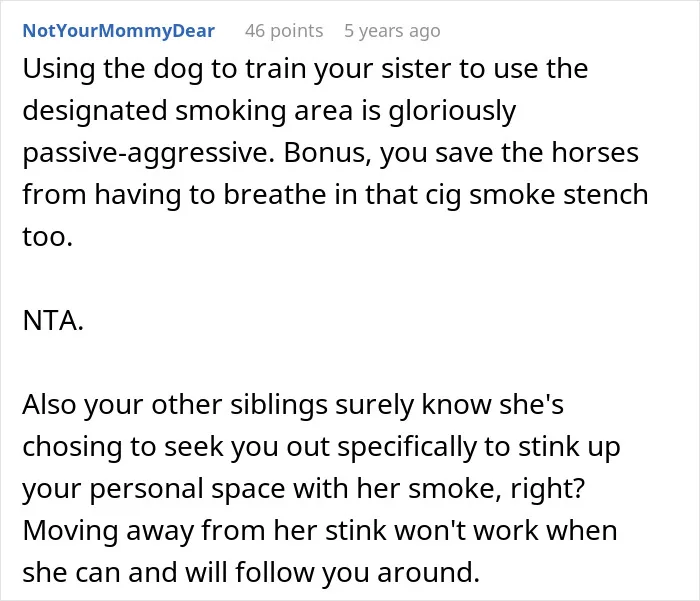
That expectation, that whoever is being affected should be the one to adjust, shows up constantly in family conflict, and it explains a good chunk of why this got framed as an attack instead of a response. Whoever pushes back second usually gets judged more harshly than whoever caused the problem first, even when the pushback is milder and easy to undo. The moment Lily is willing to use the smoking area, there's no more reason to bring the dog along. That reversibility, tied to a specific behavior rather than to Lily as a person, is what keeps this closer to a boundary than to revenge.
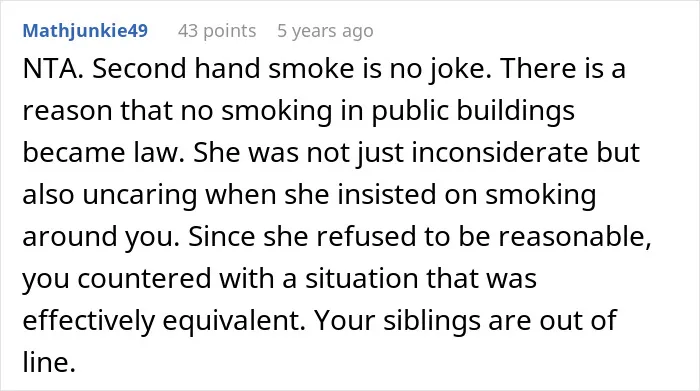
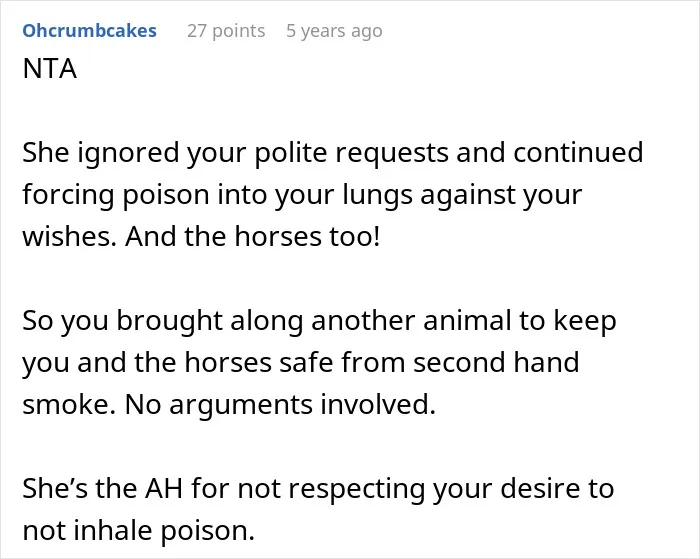
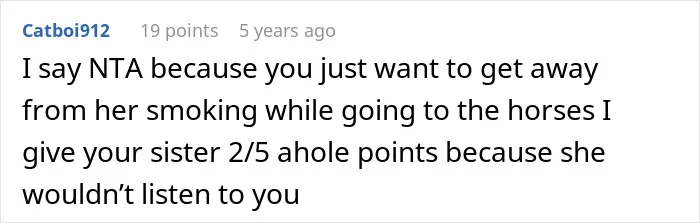
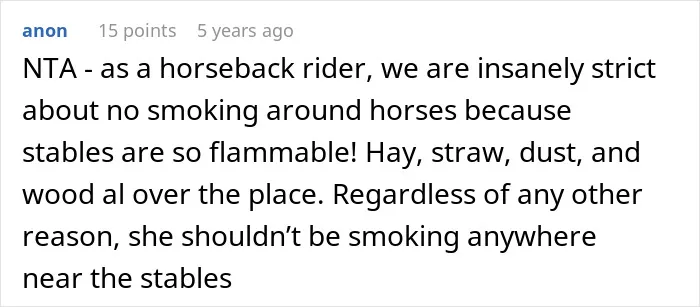
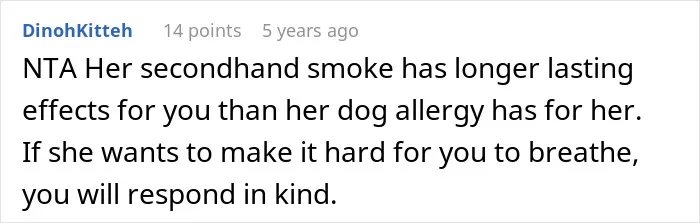
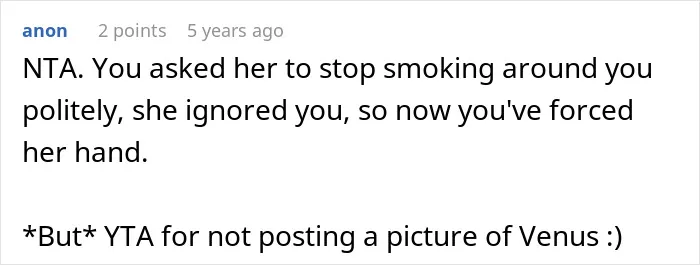
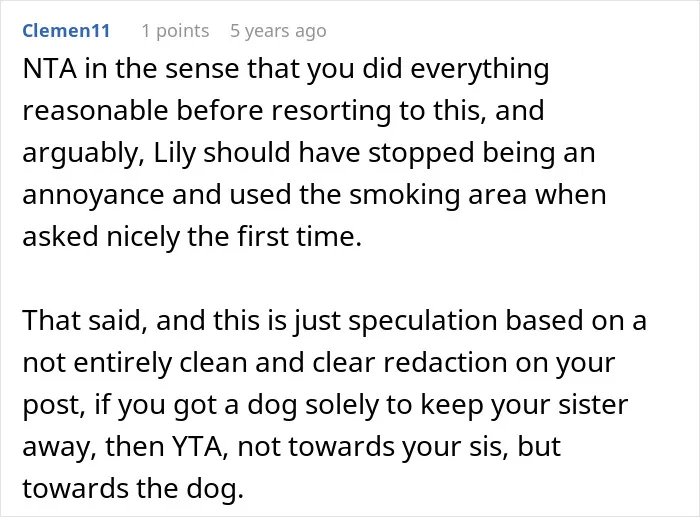
Most thought their response was reasonable
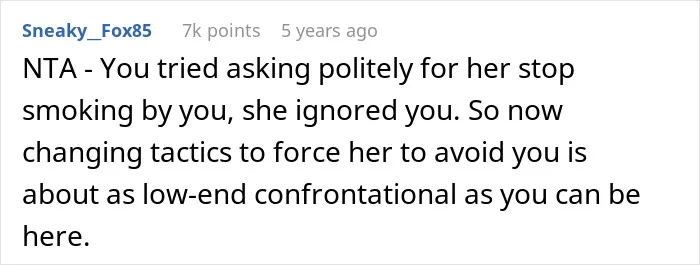
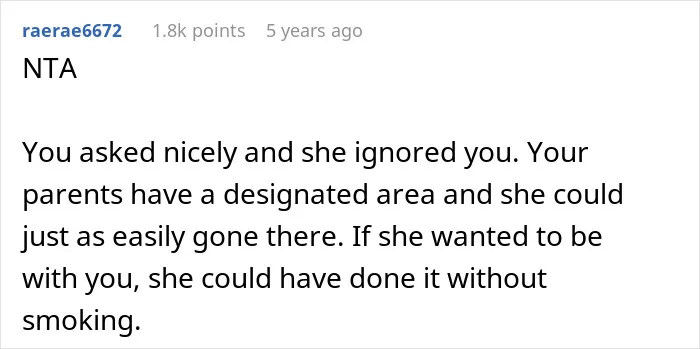
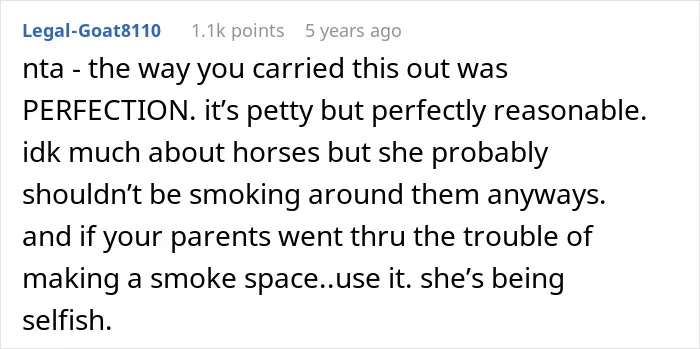
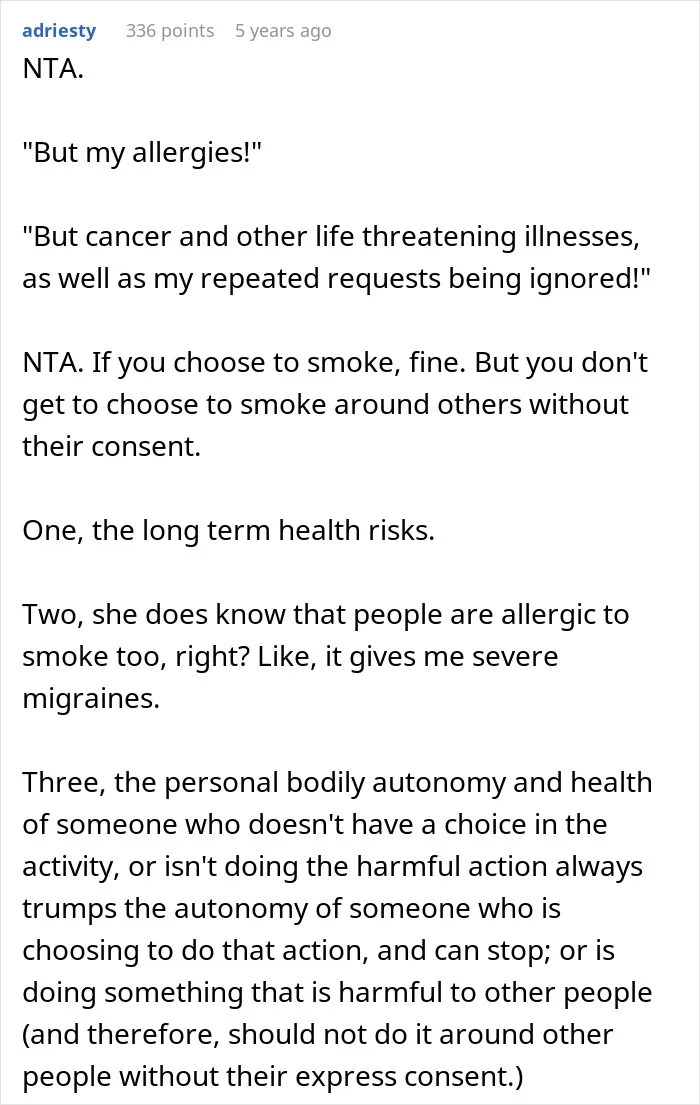
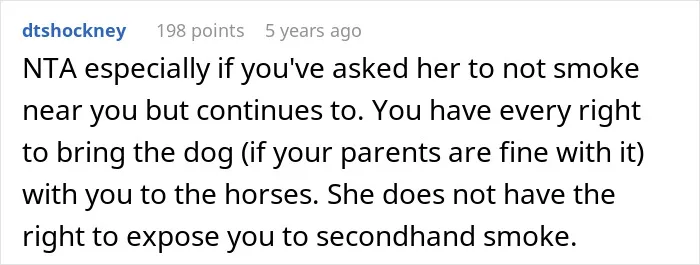

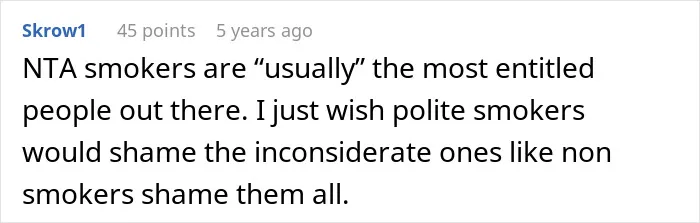





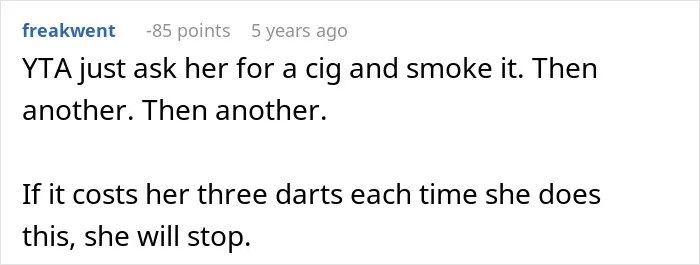
One netizen had a snarky suggestion