






Somewhere in the world, something is probably happening right now that would sound completely made up if someone told you about it. Nature is putting on extraordinary displays, and people are doing some pretty incredible things. The world is full of surprises, and discovering them makes us appreciate just how extraordinary life on this planet can be.
That's the kind of stuff celebrated in the Facebook group Weird, Fantastic, and Odd Things. It's a gathering place for pictures, videos, and stories featuring amazing discoveries from around the world.
We've picked out some particularly fascinating finds to share with you, Pandas. Get ready to see things you probably wouldn't have come across during your usual scroll. We hope a few of them put a smile on your face and leave you feeling a little more optimistic about the world around you!
#21
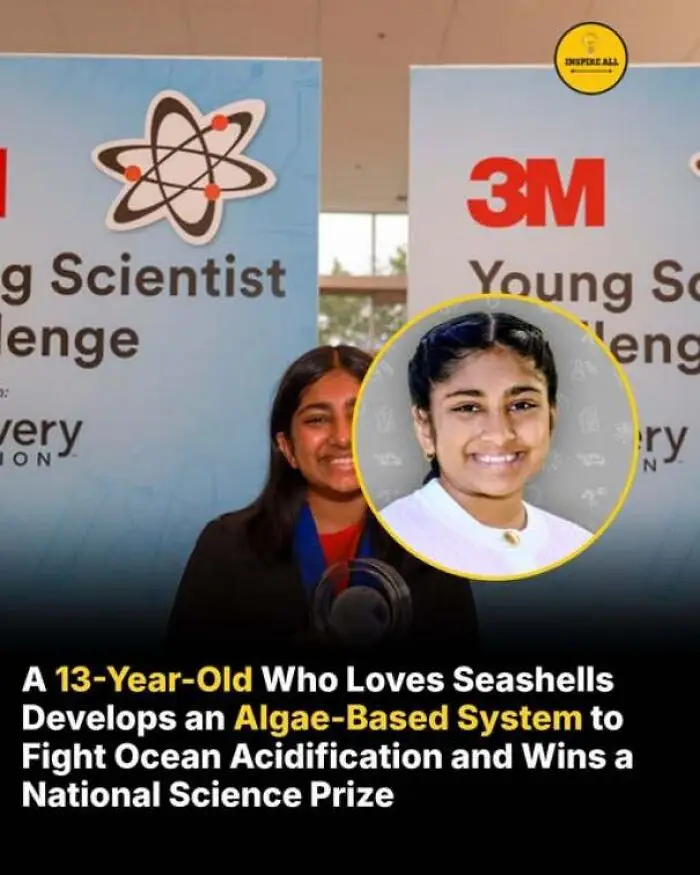
A 13-Year-Old Who Loves Seashells Develops an Algae-Based System to Fight Ocean Acidification and Wins a National Science Prize
Raji Doshi loved collecting seashells. Learning that changing ocean chemistry could harm shells and the creatures inside them gave that interest a new direction.
She began exploring a question: could algae and a natural mineral work together to help?
Her experimental system pairs algae with aragonite, a form of calcium carbonate, to investigate ways of reducing dissolved carbon dioxide and countering acidification.
With guidance from 3M mentor Deborah Isabelle, Raji developed experiments and a computer model to explore how much mineral the system should use.
In October 2026, she won the 3M Young Scientist Challenge and its $25,000 grand prize.
Here’s an intriguing detail: ocean water is still alkaline on average. Even a shift toward greater acidity can make it harder for marine creatures to build their shells.
Her project remains experimental, with more testing needed before wider coastal use. But a familiar childhood interest had become a reason to measure, investigate and keep asking questions.
Algae can absorb carbon dioxide. So why add a mineral to the mix?
Discover the science behind Raji’s idea, and what researchers still need to find out. Read More... [https://trendingamerican.com/raji-doshi-algae-aragonite.../](https://trendingamerican.com/raji-doshi-algae-aragonite-ocean-acidification-science-prize/?fbclid=IwZXh0bgNhZW0CMTAAcGRvZgNicmlkETE1WnhWQVF0MHNsd3dUaWxpc3J0YwZhcHBfaWQPNTE0NzcxNTY5MjI4MDYxAAEfov6yOhVB0FJsyBirrt8ztxWvQY0rQnjbIASSBDk-6VQGQVCXiaVTgjSvmXk_aem_WNfMfSspJhcWs9stfQN_4A).
Report
9points
The world is much bigger and more interesting than the little corner we get to experience every day. There are incredible things happening in places we've never visited, and people doing things we might never have thought possible.
Now, Pandas, which of these fascinating finds caught your attention the most? Tell us in the comments!
And if you've come across something wonderful or heartwarming in your own corner of the world, we'd love to hear about it, too. Let's give each other a few more reasons to believe there's still plenty of good in the world!
#22
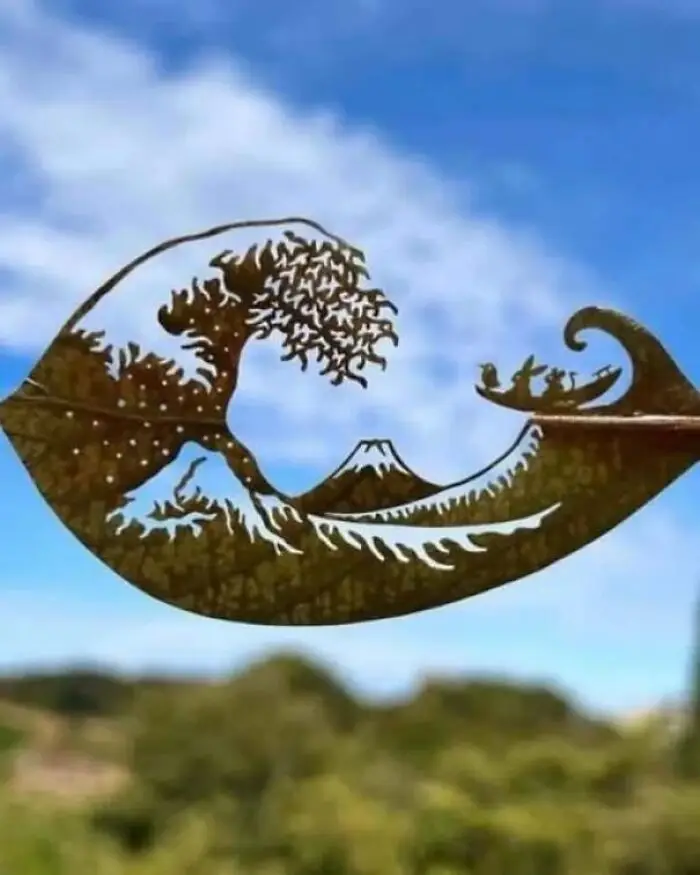
**Turning Ordinary Leaves into Extraordinary Art **
**The Story of Lito**
What most people see as an ordinary fallen leaf, Japanese artist Lito transforms into something truly extraordinary.
Born in 1986 in Japan's Kanagawa Prefecture, Lito is a self-taught leaf-cutting artist whose intricate creations have captured the imagination of people around the world.
His artistic journey began in 2020. After receiving an ADHD diagnosis as an adult, he decided to channel his intense concentration and attention to detail into something creative. He began experimenting with leaf-cutting art, developing his own unique style.
Soon, his delicate creations began attracting attention on social media. His work was featured on Japanese television, in newspapers and magazines, and eventually in media outlets around the world.
In 2021, he published his first collection, *Always Beside You: A Small, Gentle World*, sharing his imaginative creations with an even wider audience.
His journey continued to grow, and in 2024, a dedicated museum showcasing his art opened in Fukushima, Japan.
Using nothing more than carefully selected leaves and incredible precision, Lito creates tiny worlds filled with animals, stories and imagination.
His story is a beautiful reminder that sometimes our greatest strengths emerge when we discover a creative way to embrace the things that make us different.
Report
9points
#23
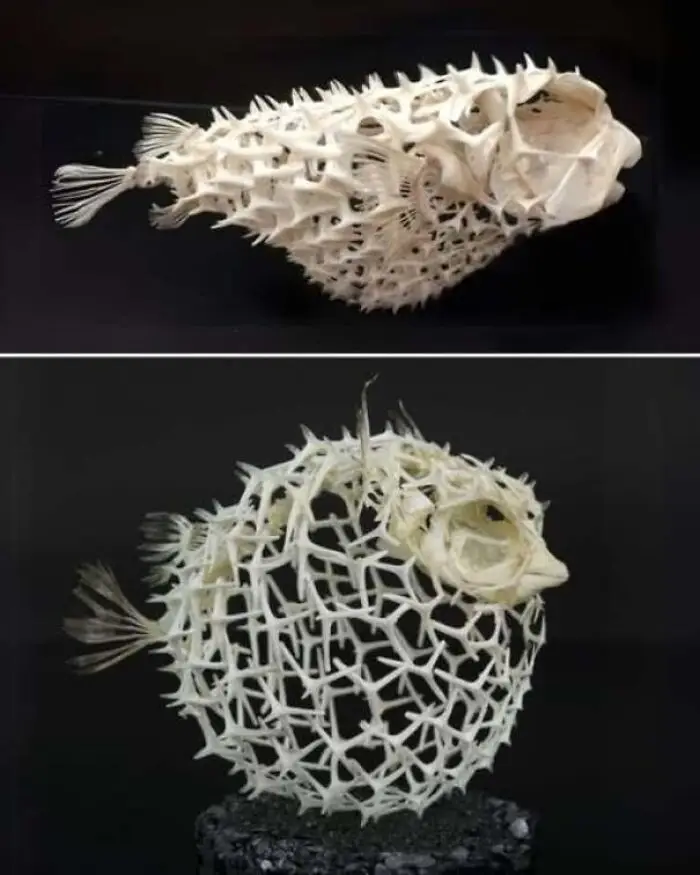
**THE INCREDIBLE SKELETON OF A PUFFERFISH!**
Nature has some truly remarkable designs, and the pufferfish is a perfect example!
Unlike most fish, pufferfish have a reduced skeleton that lacks ribs and pelvic bones. This unusual body structure helps them expand dramatically when danger approaches.
When threatened, a pufferfish rapidly gulps water into its expandable stomach, sometimes growing several times larger than its normal size. Its stretchy skin allows the body to swell, turning the little fish into a much harder target for predators to swallow.
And that’s not its only defense! Many pufferfish species also contain powerful toxins that can make them dangerous to eat.
From their unusual skeletons to their incredible defense mechanisms, pufferfish show just how creative evolution can be.
**Nature never stops surprising us!**
Did you know how a pufferfish inflates its body? Tell us in the comments!
duyngskeleton.
Report
9points
#24

Boy Who Left School at 10 Keeps Learning, Develops the Lightning Rod, Bifocals and a Better Stove, and Patents None of Them
Benjamin Franklin’s formal schooling ended when he was ten. At twelve, he became an apprentice in his brother’s print shop. His classroom years were over, but his learning continued through books, work and experiments.
His curiosity started early. At eleven, he made wooden swimming fins that he held in his hands. They helped him move faster through the water, but tired his wrists.
He kept testing ideas.
In 1742, he designed a fireplace that provided more useful warmth while producing less smoke. His electrical research helped him develop the lightning rod to protect buildings and the people inside.
When switching between reading glasses and distance glasses became inconvenient, he combined both types of lenses in one frame: bifocals.
His inventions tackled problems people faced every day. Yet Franklin chose not to patent them.
He believed that benefiting from other people’s discoveries gave him a reason to share his own.
The inventions are familiar. The thinking behind that decision is just as remarkable. What did Franklin believe people owed one another when they discovered something useful?
Read More... https://trendingamerican.com/benjamin-franklin-inventions-school-patents/.
Report
8points
#25
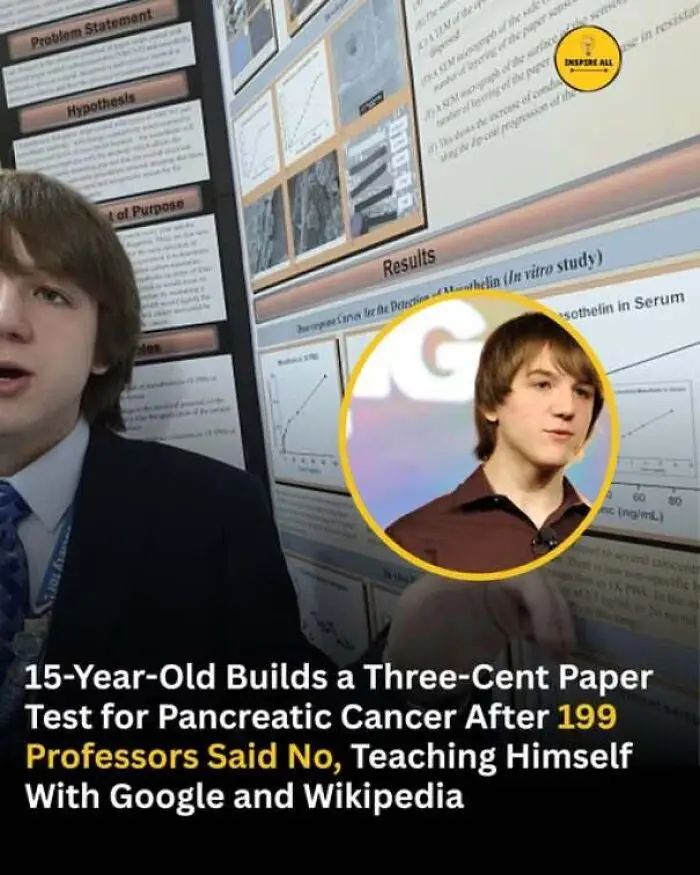
A 15-Year-Old Develops an Experimental Sensor for Pancreatic-Cancer Research and Wins a Major Science Prize
Jack Andraka wanted to investigate a disease that had affected someone close to his family.
He began reading about pancreatic cancer and exploring whether a paper-based sensor could help detect a protein associated with it.
His project combined paper, carbon nanotubes and antibodies, turning his research into something he could test.
In 2012, at 15, he won the top award at the Intel International Science and Engineering Fair, earning the $75,000 Gordon E. Moore Award.
One important detail: the sensor targeted a protein called mesothelin. Detecting that protein is different from proving that a test can reliably find cancer in patients.
His achievement was an award-winning research project, not a clinically validated screening test.
That distinction leaves plenty to appreciate: a teenager pursued a difficult question and developed an experiment that earned major recognition.
But how could a piece of paper detect a protein, and what would researchers need to prove before such a sensor could help patients?
Discover the science behind Jack’s project, and what the viral headlines leave out. Read More... https://trendingamerican.com/jack-andraka-2012-experimental-cancer-sensor/.
Report
8points
#26

A Potter Who Once Sold Tea Built a Clay Refrigerator That Cools Without Electricity
Before Mansukhbhai Prajapati became known for his inventions, he worked at a tea stall and later in a factory.
But clay, the material his family had worked with for generations, offered him another path.
After the 2001 Gujarat earthquake, he began exploring an idea: could he make a refrigerator that needed no electricity?
The result was Mitticool. It uses water and evaporation to cool the food stored inside, with performance depending on the surrounding temperature and humidity.
Getting there took years of experiments. One intriguing detail: he tested clay mixtures containing sand and sawdust to create the porous structure needed for cooling.
His journey shows what can happen when traditional skills meet a practical question.
But what did he see after the earthquake that made him think of building a refrigerator from clay?
An unexpected newspaper description helped spark the idea.
Report
8points

#28

**The White Cardinal **
**A Rare Wonder of Nature**
Imagine spotting a beautiful white cardinal among the familiar red birds! This extraordinary bird is a leucistic Northern Cardinal, a rare sight that captures the attention of bird lovers across North America.
It isn't a separate species. Its unusual white or pale feathers are caused by leucism, a genetic condition that reduces pigmentation in the feathers while typically leaving the eyes their natural dark color.
Despite its striking appearance, a leucistic cardinal behaves much like any other cardinal. It flies, sings, searches for food, and goes about its daily life just like its bright red relatives.
However, its lighter coloring may make it more noticeable to predators, potentially creating additional challenges in the wild.
Seeing one is a truly special experience. A beautiful reminder that nature never stops surprising us with its incredible variety.
**Have you ever seen a white cardinal in the wild?**.
Report
8points
#29
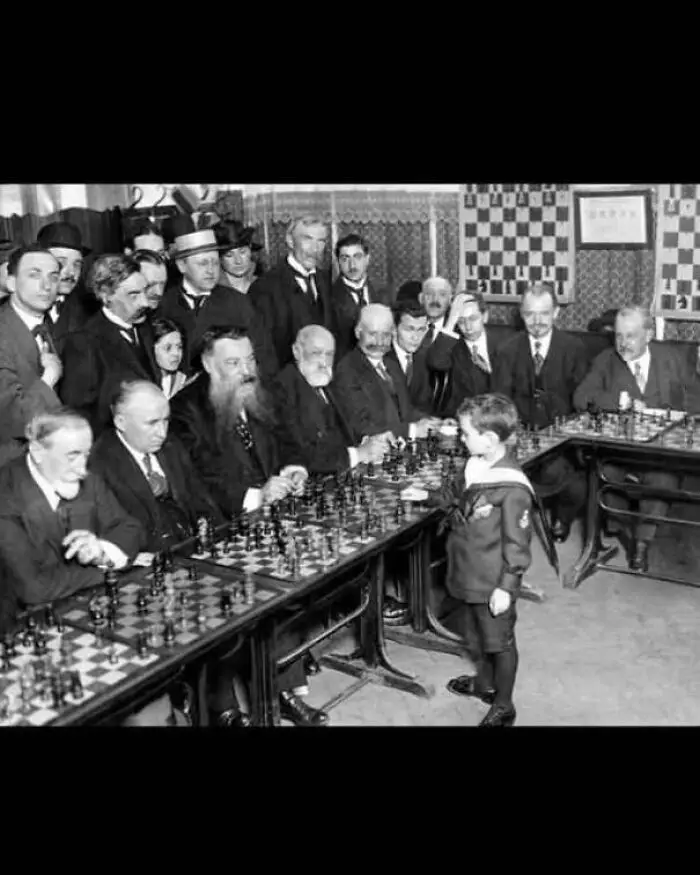
**HE WAS JUST A LITTLE BOY… BUT THE CHESS MASTERS WERE ALREADY TAKING HIM SERIOUSLY.**
In 1920, an extraordinary young chess player amazed audiences in Europe.
His name was Samuel Reshevsky, and he was only about eight or nine years old.
While most children his age were busy playing ordinary childhood games, Samuel was facing grown men across multiple chessboards at the same time.
He would walk from board to board, studying each position, making his moves, and challenging experienced adult players.
And the most astonishing part?
He had already become famous for his chess abilities before reaching his teenage years.
Born in Poland in 1911, Samuel learned to play chess at around four years old. By the time he was a young child, he was defeating adult opponents and performing simultaneous exhibitions that attracted enormous attention.
That remarkable childhood talent was only the beginning.
Samuel eventually moved to the United States, where he became one of the country's strongest chess players. He won the U.S. Chess Championship multiple times and competed against legendary players, including Bobby Fischer.
His career continued for decades, proving that the little boy who once amazed European audiences was no passing sensation.
Looking at that famous photograph today, it's difficult not to be amazed.
A small child standing among rows of adult opponents, relying not on physical strength or size, but on concentration, memory, patience, and extraordinary strategic ability.
**Sometimes, greatness doesn't wait until adulthood to reveal itself.**
What amazes you more about this story: that Samuel mastered chess at such a young age, or that he went on to become one of America's greatest chess players?
Report
8points
#30
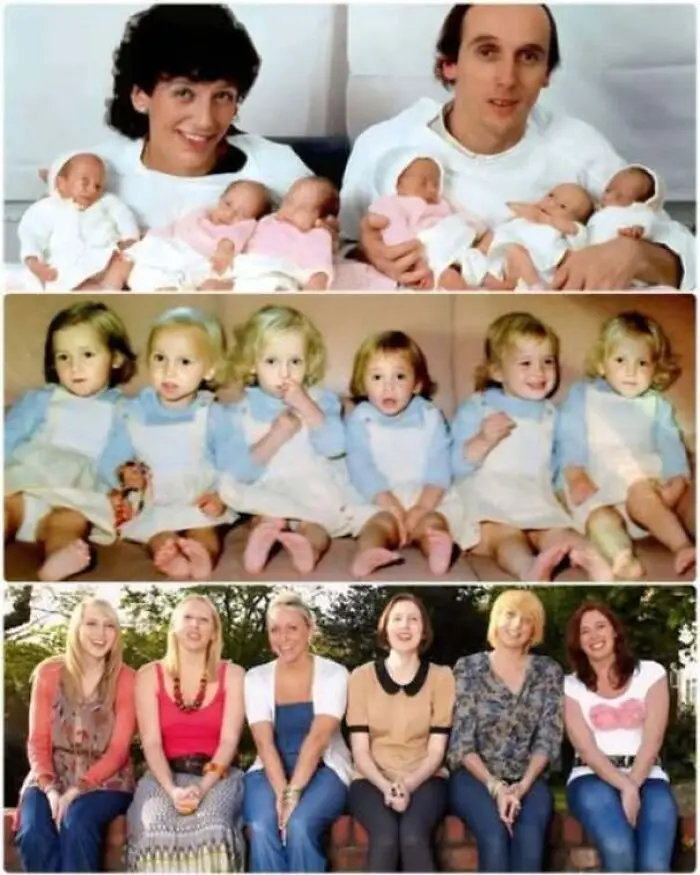
**SIX BABY GIRLS, ONE EXTRAORDINARY FAMILY **
**MEET THE WALTON SISTERS MORE THAN 40 YEARS LATER!**
In 1983, Janet and Graham Walton experienced a moment that changed their lives forever. After years of hoping to become parents, they welcomed not one baby, but **six little girls at once!**
Hannah, Ruth, Lucy, Kate, Jennie, and Sarah became the world's first known surviving all-female sextuplets, making headlines around the globe.
Imagine bringing six newborns home at the same time! Six little personalities, six hungry babies, countless nappies, sleepless nights, and a household that was never going to be quiet again.
Raising one baby can be life-changing. Raising six together requires extraordinary patience, teamwork, and dedication.
As the girls grew, they shared the everyday experiences of childhood while navigating the unusual attention that came with being part of such a famous family.
More than four decades have now passed since their remarkable birth. The six sisters have grown up, built their own lives, and moved beyond the headlines that first introduced them to the world.
Their story is a reminder that behind every extraordinary headline is a real family, facing ordinary challenges, celebrating milestones, and creating memories together.
For Janet and Graham, the six tiny babies who once filled their home with cries and laughter became six daughters whose lives would always be connected by a truly unique beginning.
**Six daughters. One family. A lifetime of shared memories.**
What do you think would be the biggest challenge of raising six babies at the same time the sleepless nights, feeding everyone, or keeping up with six growing personalities?
Report
8points
#31
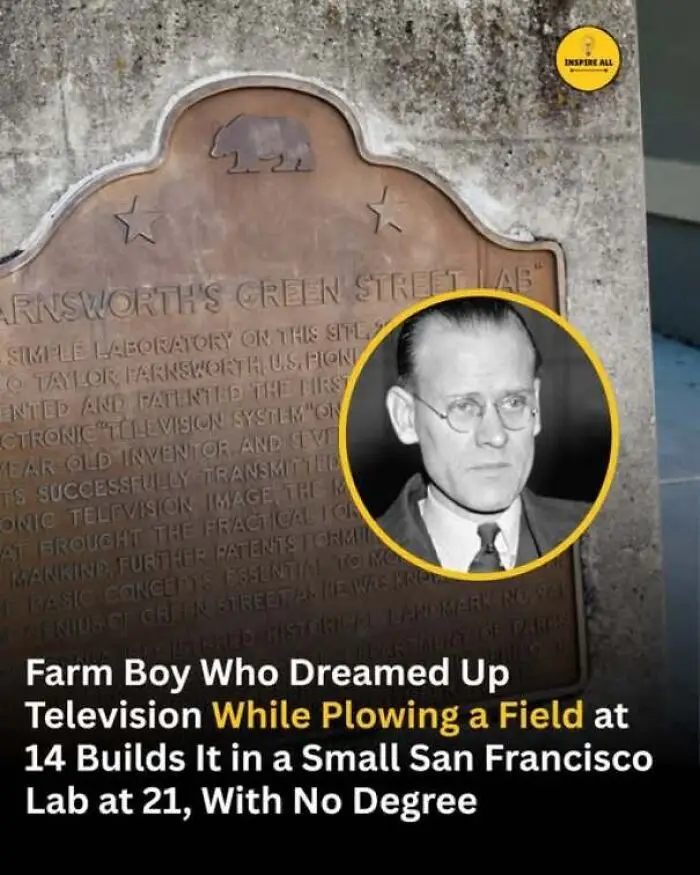
A Farm Boy Gets an Idea While Plowing a Field at 14, Then Helps Build Electronic Television at 21
Philo Farnsworth saw something in the rows of a field that reached far beyond farming.
According to the account preserved by his wife, the straight furrows suggested a way to scan a picture: one line at a time.
In 1922, he explained his idea to his high-school chemistry teacher.
Turning it into a working system took years of experiments and help from others. His wife, Pem, contributed to the laboratory work, while her brother learned glassblowing to make the tubes they needed.
On September 7, 1927, their San Francisco team transmitted an electronic image from one room to another.
It was a single straight line.
That modest image marked a major step in the development of electronic television.
One remarkable detail: an experimental image-dissector tube Farnsworth made in 1927 survives in the Smithsonian’s collection.
His story connects a teenage observation with the patient work of building something that could prove it.
But how could rows in a field suggest a way to send a picture through wires?
Discover the idea behind that first simple image, and the people who helped bring it to life.
Read More... [https://trendingamerican.com/philo-farnsworth-electronic.../](https://trendingamerican.com/philo-farnsworth-electronic-television-farm-boy/?fbclid=IwZXh0bgNhZW0CMTAAcGRvZgNicmlkETFvRFRMN3duUW5lSWFYNjc3c3J0YwZhcHBfaWQPNTE0NzcxNTY5MjI4MDYxAAEfbcOrIMWzwVAPFP_qQ7rFk1Iq5uwBGvUTZ3-_1DvUyGBwwr-l43eBSDkjWb0_aem_H_becvSlFshO3xKeI_JA0g).
Report
7points
#32
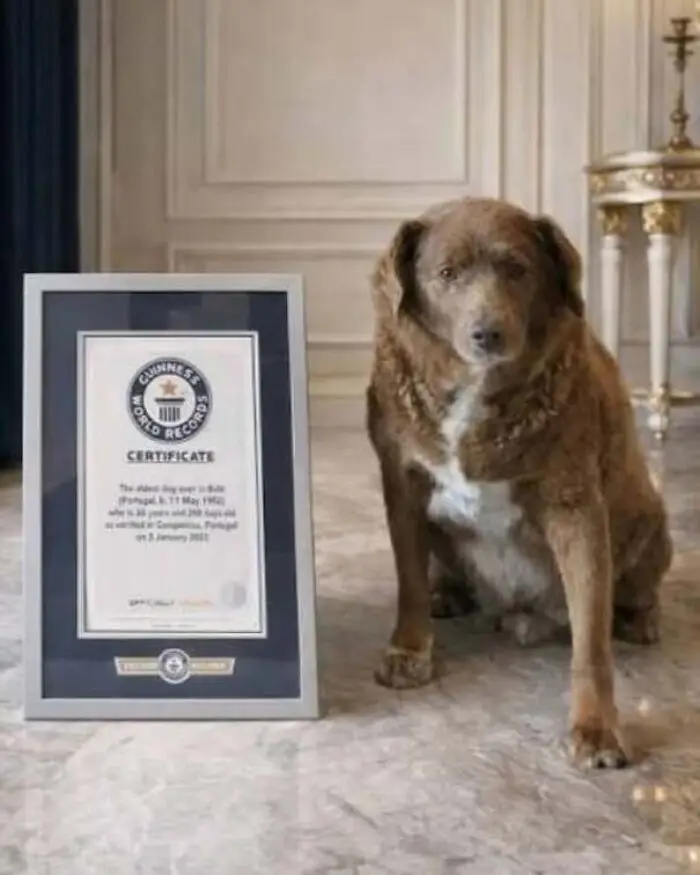
**BOBI’S STORY REMINDS US THAT A DOG’S GREATEST LEGACY IS LOVE.**
In a quiet village in Portugal, a dog named Bobi spent his life surrounded by the people and familiar places he called home.
When he passed away in October 2023, his family reported that he was 31 years old. His extraordinary age brought worldwide attention, and he was initially recognized by Guinness World Records as the oldest dog ever.
Later, Guinness withdrew the title because there wasn't enough conclusive evidence to verify his exact age.
But beyond the headlines and the record, there was a dog who had been part of a family’s life for decades.
Think about all the ordinary moments that make a life together so special: the familiar footsteps, the excited greetings, the quiet afternoons, and the simple comfort of having a loyal companion nearby.
For the people who love a dog, those moments become precious memories.
Bobi’s story reminds us that a dog's worth cannot be measured by age alone. It is found in the companionship they offer, the happiness they bring into our homes, and the love that stays with us long after they are gone.
They may be only one chapter of our lives, but to them, we are their whole world.
**What do you think makes a dog's life truly special: the number of years they live or the love they leave behind?**.
Report
7points
#33

Before humans developed binoculars and zoom lenses, nature had already perfected them.
Eagles are among the most visually gifted hunters in the animal kingdom. Their eyesight is estimated to be 4–8 times sharper than ours, often described as around 20/5 which means an eagle can see tiny details at 20 ft that a human would only resolve at 5 ft.
This incredible clarity is built into their anatomy:
Cone‑packed retinas: Eagles have a vastly higher density of photoreceptor cells in their eyes than humans, giving them razor sharp focus and rich detail.
Two “zoom lenses”: Each eye has two foveae one tuned for sharp forward vision and one for detailed side vision enabling them to scan wide landscapes without losing focus.
Tetrachromatic color vision: With four types of cone cells, eagles perceive a broader spectrum of color including ultraviolet light, which helps them spot subtle clues like ultraviolet‑reflecting urine trails from their prey.
Put it all together and you get a bird that can spot prey, like rabbits, from about two miles up in the sky, track movement with astounding precision, and strike with lethal accuracy.
No wonder “eagle eyed” has become shorthand for vision that sees what others miss in nature, in sport, and even in life.
Report
7points
#34
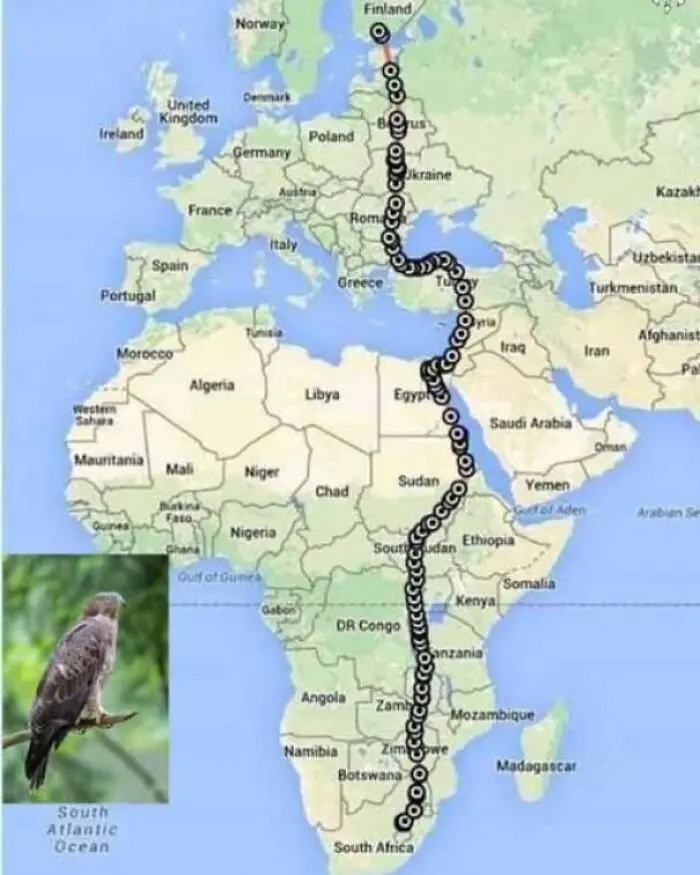
**10,000 KILOMETRES, 42 DAYS, AND AN INCREDIBLE JOURNEY ACROSS CONTINENTS!**
Imagine weighing less than a kilogram and making a journey from southern Africa all the way to northern Europe.
The European honey buzzard is a migratory bird known for travelling between Europe and Africa. In 2021, reports described a female that journeyed from Reitz, in South Africa’s Free State, to Finland in just 42 days.
The reported distance? More than **10,000 kilometres (6,200 miles)!**
What makes long-distance bird migration so remarkable is the way birds navigate across vast landscapes, changing weather conditions, and unfamiliar terrain.
Rivers, coastlines, mountains, and other geographical features can influence their routes. Wind conditions also play an important role, helping some birds travel farther while making other parts of the journey more challenging.
This journey was reported as an extraordinary example of migration, although a map frequently shared online as proof of the route was later found to depict a geological fault line rather than the bird's tracking data.
Even with that correction, the broader story of migratory birds travelling between continents remains extraordinary.
These small travellers remind us that the natural world is full of abilities that are easy to overlook until we stop and take a closer look.
**A tiny bird. An enormous journey. A remarkable reminder of nature's wonders.**
Were you aware that some birds migrate thousands of kilometres between Africa and Europe every year?
Report
7points
#35
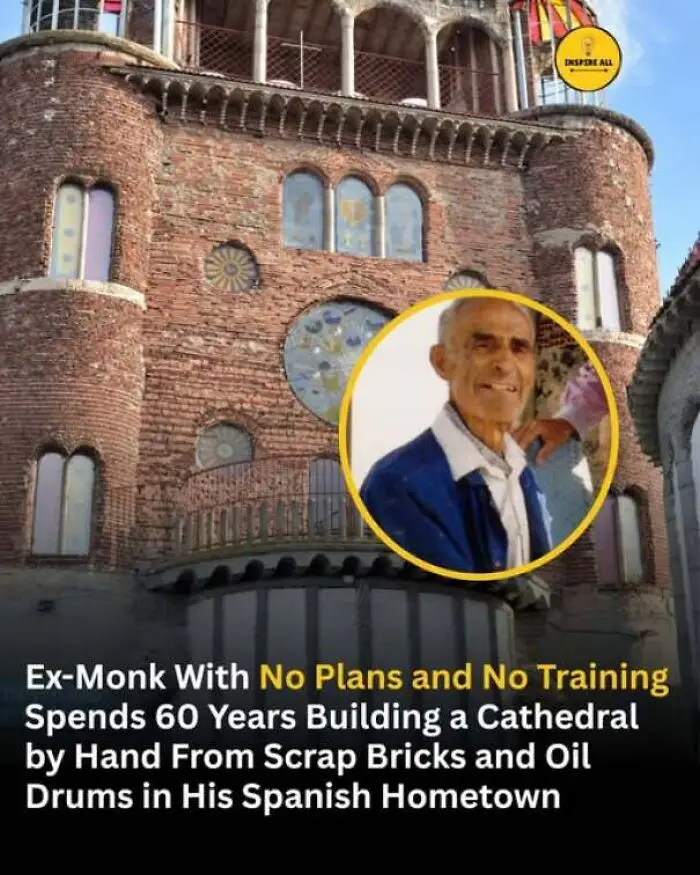
Former Monk With No Architectural Training Spends 60 Years Building a Cathedral-Scale Church From Reclaimed Materials
On October 12, 1961, Justo Gallego began building on family land in Mejorada del Campo, near Madrid.
He was thirty-six. He had no architectural training or previous building experience.
After tuberculosis forced him to leave monastic life, he made a promise: if he recovered, he would build a shrine honoring Our Lady of the Pillar.
That promise became six decades of work.
Using scrap, recycled materials and donated supplies, Gallego gradually raised a vast building with towers, a central dome and a crypt.
Here’s another remarkable detail: his schooling had been interrupted by the Spanish Civil War. Books about castles and cathedrals helped feed the imagination behind the building.
The project became popularly known as Justo’s Cathedral. Although he received help along the way, his personal commitment remained at its center.
He passed away in November 2021, aged ninety-six, without seeing it finished. The charity Mensajeros de la Paz took on the effort to continue his work.
He had spent sixty years turning a promise into something people could walk inside. But what happens when a project built around one man’s vision passes into other hands?
Report
6points
#36
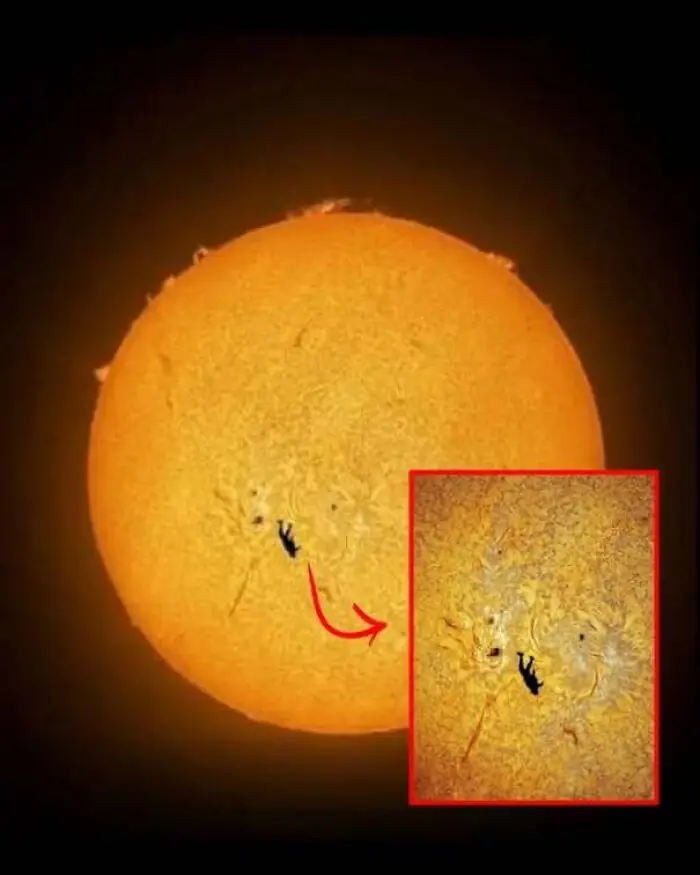
**THIS LOOKS LIKE AI… BUT A REAL SKYDIVER WAS PHOTOGRAPHED IN FRONT OF THE SUN!**
At first glance, this image looks almost impossible to believe. A tiny human silhouette appears to be falling across the Sun’s fiery surface!
But this incredible photograph has a real story behind it.
In November 2025, astrophotographer Andrew McCarthy teamed up with his friend Gabriel C. Brown, known online as BlackGryph0n, to create a shot called *The Fall of Icarus*.
Brown jumped from a small aircraft at approximately 3,500 feet while McCarthy waited on the ground with specialized telescopes, carefully tracking the Sun.
Getting the timing and alignment right was incredibly difficult. It took six attempts to position everything correctly, with precise coordination between the photographer, skydiver, and pilot.
McCarthy used hydrogen-alpha filters to reveal the Sun’s dramatic chromosphere, then combined the skydiver’s image with detailed solar photographs to create the final composition.
The result looks like something straight out of a science-fiction movie, yet it captures a real person performing a real jump.
It’s a breathtaking reminder of what can happen when science, creativity, patience, and a little daring come together.
**Would you have believed this photograph was real if you saw it without knowing the story behind it?**
And what’s the most unbelievable real photograph YOU have ever seen?
Report
6points
#37

Village Postman Spends 33 Years Building a Palace From Stones He Collected on His Rounds, Bringing Them Home in a Wheelbarrow
In April 1879, a 43-year-old French postman stumbled over an unusually shaped stone.
Ferdinand Cheval picked it up. That small discovery became the beginning of a project that would occupy the next 33 years of his life.
He had limited schooling and no architectural training. But as he walked his postal rounds through the countryside, he collected stones and brought them home.
Piece by piece, he built an extraordinary palace in his garden in Hauterives, France.
It grew into a world of towers, animals, giants and grotto-like spaces. His postal work supplied another unexpected source of inspiration: the postcards and illustrated publications that showed him places beyond his village.
By 1912, his Palais Idéal was complete.
Here’s an intriguing detail: despite its name, the palace was never intended to be a normal home. Cheval had spent decades building a place for his imagination.
In 1969, France recognized it as a historic monument.
One stone became a wheelbarrow full. Years became decades. A postman’s private project became something a country chose to preserve.
But what made that first stone so remarkable that he kept building for 33 years?
Read More... https://trendingamerican.com/ferdinand-cheval-postman-palais-ideal-stones/.
Report
5points
#38

An Alabama Property Developer Watched a Streetcar Driver Struggle in the Snow, Invented a Windshield Wiper, and Was Told It Had Little Commercial Value
In the early 1900s, Mary Anderson was visiting New York when she noticed a streetcar driver repeatedly stopping to clear snow and sleet from his window.
Back home in Birmingham, she designed a simple solution: a lever inside the vehicle that moved a rubber blade across the glass outside. The driver could clear the window without stepping into the weather.
She received her patent on November 10, 1903. But when she approached a Canadian firm in 1905, it declined. The company did not see enough commercial value in her idea.
Anderson’s background made the invention even more unexpected. Alongside managing property, she had operated a cattle ranch and vineyard in California.
Her wiper never entered production. Her patent expired in 1920. Two years later, Cadillac began installing windshield wipers as standard equipment.
Recognition finally came in 2011, when she entered the National Inventors Hall of Fame, 58 years after her d***h.
She had spotted a problem millions of drivers would eventually understand. So why was such a practical idea so difficult to sell?
Read More... https://trendingamerican.com/mary-anderson-1903-windshield-wiper-invention/.
Report
5points
#39
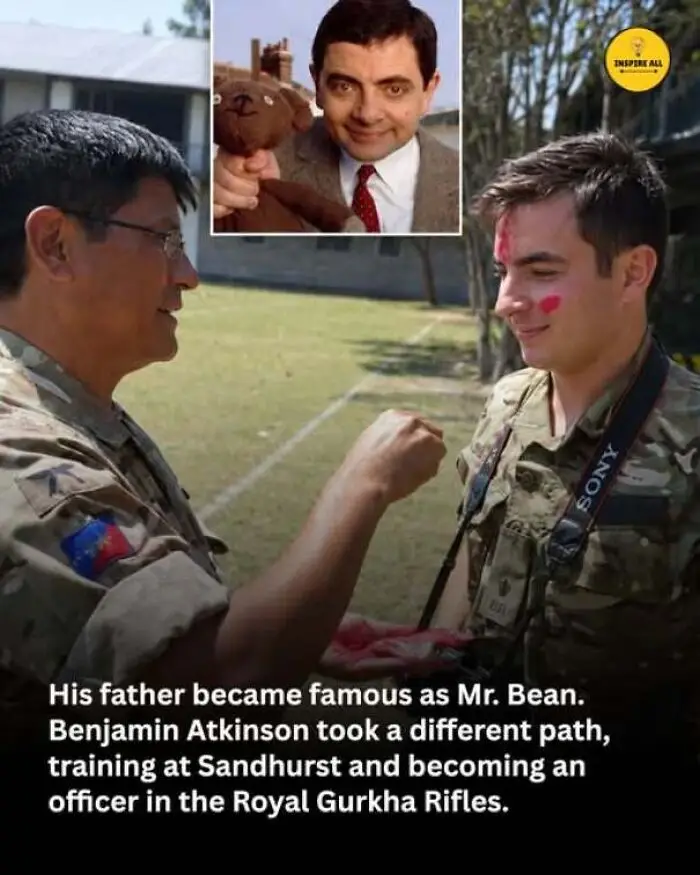
Millions know Rowan Atkinson as Mr. Bean. His son Benjamin built a career far from the television studio.
After studying at the University of Exeter, Ben trained at the Royal Military Academy Sandhurst and went on to serve with the Royal Gurkha Rifles in the British Army.
The role involved more than military training. Officers are expected to learn Nepali so they can communicate with the soldiers they lead.
In October 2019, reports described how Ben, then 26, had spent roughly three months in Nepal learning the language and becoming familiar with local culture and traditions.
A Gurkha Brigade Association newsletter praised how quickly he picked up Nepali, suggesting his previous experience studying Arabic and Spanish might have helped.
In his own account of joining the regiment, Ben described being warmly welcomed by his soldiers and learning from them during an exercise in New Zealand. He remembered building relationships with his platoon as a highlight of the experience.
His father’s career brought laughter to audiences around the world. Ben’s took him into military service, language learning, and leading a team.
A familiar surname can connect two people without defining the direction their lives must take.
Have you followed a family career path, or chosen something completely different?
Report
5points
#40

Arthur Benjamin doesn't need a calculator to amaze an audience.
Known as the "Mathemagician," this mathematics professor combines magic with mental arithmetic. He can square large numbers in his head and identify the weekday of someone's birth.
But the most surprising part comes afterward. He explains how his tricks work, showing that mathematics can be fascinating and fun.
Read his remarkable story: https://geeksaroundglobe.com/arthur-benjamin-the-mathemagician.
Report
5points
