



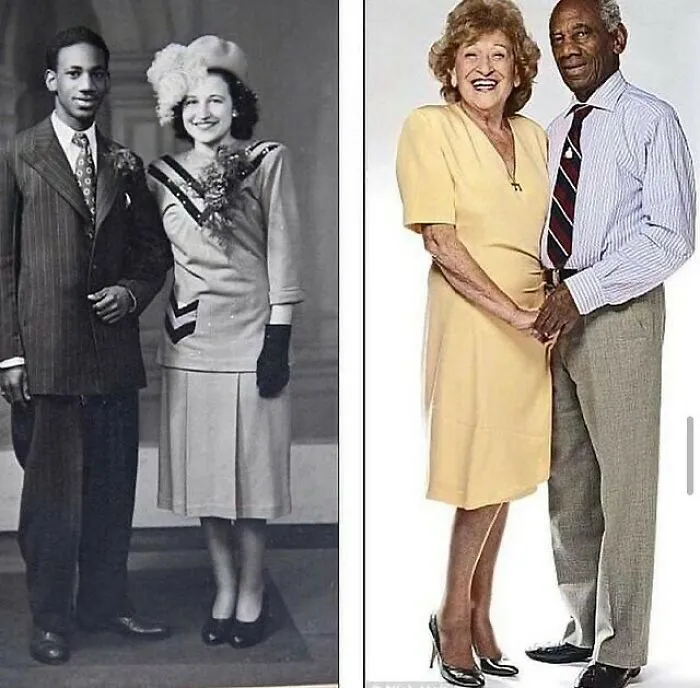
He was horrified that I could contemplate marrying a black man, and I soon learned that most people felt the same way. The first years of our marriage living in Birmingham were hell — I cried every day, and barely ate. No one would speak to us, we couldn’t find anywhere to live because no one would rent to a black man, and we had no money. People would point at us in the street. Then I gave birth to a stillborn son at eight months. It wasn’t related to the stress I was under but it broke my heart, and we never had any more children. Now it’s very hard to comprehend the prejudice we encountered, but you have to remember that there were hardly any black people in Britain in the Forties. I met Jake when he came over during the war from Trinidad, as part of the American forces stationed at the Burtonwood base near my home in Lancashire. We didn’t even know they spoke English, but Jake and I got chatting. He quoted Shakespeare to me, which I loved. Jake returned to Trinidad, but we carried on writing to each other, and a few years later he returned to the UK to get better paid work. 'No family came to our register office wedding in 1948... I do not regret marrying him for an instant, despite all the pain we have suffered' He asked me to marry him, quite out of the blue, when I was only 19. My father threw me out, and I left with only one small suitcase to my name. No family came to our register office wedding in 1948. But gradually life became easier. I got teaching jobs, ending up as a deputy head teacher. First Jake worked in a factory, then for the Post Office. Slowly we made friends together, but it was so hard. My father died when I was 30 and although we were reconciled by then, he never did approve of Jake. Today we have been married for 63 years, and are still very much in love. I do not regret marrying him for an instant, despite all the pain we have suffered.”