






#1

But the story doesn't end there. Two years later while filming in Vienna, author George Feifer visited the set. During a conversation with Hopkins, Feifer mentioned that he didn't even have a copy of his own book -- that he'd lent his last one (complete with his own annotations) to a friend who had lost it somewhere in London. Hopkins, puzzled, then fetched his copy, which also had notes in the margins. When he showed it to Feifer, the author confirmed that, amazingly, it was the same book.
#2

The short version:
-A girl is born without legs and put up for adoption.
-She gets adopted by a loving family and given the name Jennifer Bricker
-Despite having no legs, Jennifer grows up to develop a love for gymnastics
-Jennifer comes to idolize Olympic gymnast Dominique Moceanu
-Jennifer collects posters of Dominique and watches all of her events on TV religiously
-One day, Jennifer's parents come across Jennifer's old adoption papers
-Jennifer is the long lost sister of Dominique Moceanu.
#3
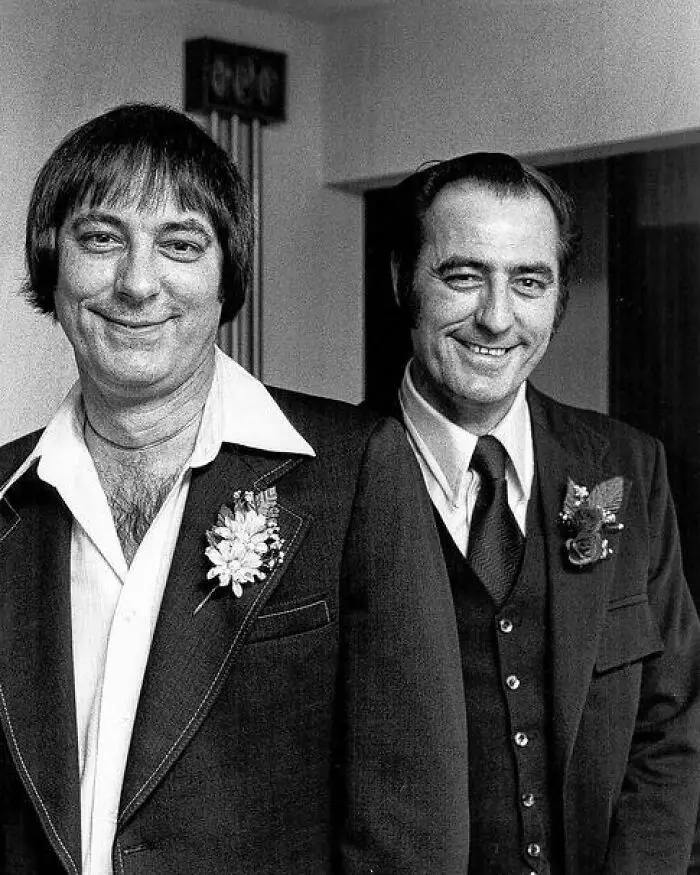
Coincidences have fascinated people for centuries, partly because they challenge the way we normally understand how events happen. As Discover Magazine explains, the human brain is naturally wired to recognize patterns and look for connections between seemingly unrelated things. This ability helps us make sense of our surroundings, learn from past experiences, and anticipate what might happen next.
When two unexpected events line up, however, our minds immediately begin searching for an explanation. For example, thinking about an old friend only to receive a message from them moments later can feel remarkably significant, even when there is no actual connection between the two occurrences. The unexpected match captures our attention because it seems to go against what we would normally expect.
#4
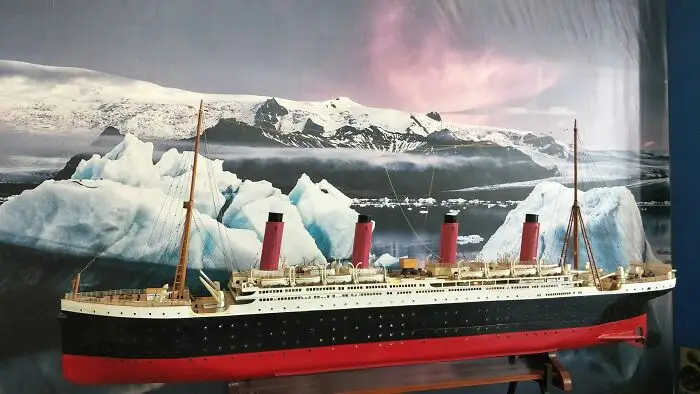
The ship was deemed practically unsinkable, and so didn't carry anywhere near enough lifeboats for the passengers and crew.
And the ship was called the Titan.
Google this if you don't believe me.
#5

Next year, in Toronto, Eero would sit on another panel, this time to decide on the design of Toronto's new city hall. As is his wont, Eero showed up late, and again, he decided to go sifting through the trash. He found a design he felt was better than the others, and repeating history for the second time, was able to convince the rest of the judges of this, too. The design, by Viljo Revell, was built a couple of years later.
Eero also designed the St. Louis arch. This guy was basically a truffle sniffing pig for monumental architecture.
#6

This is also why certain coincidences can feel almost supernatural, particularly when they happen during emotionally important moments. People sometimes interpret unexpected encounters, familiar songs, or unusual reminders as signs that something bigger is at work. Such experiences can provide comfort and make an uncertain situation feel a little more meaningful.
However, the sheer number of events happening around us means that unusual overlaps are bound to occur occasionally. With billions of people thinking, travelling, meeting, and communicating every day, even remarkably specific coincidences can emerge without having any deeper explanation. Essentially, what feels like an extraordinary message from the universe may simply be an unexpected meeting of circumstances.
#7

#8
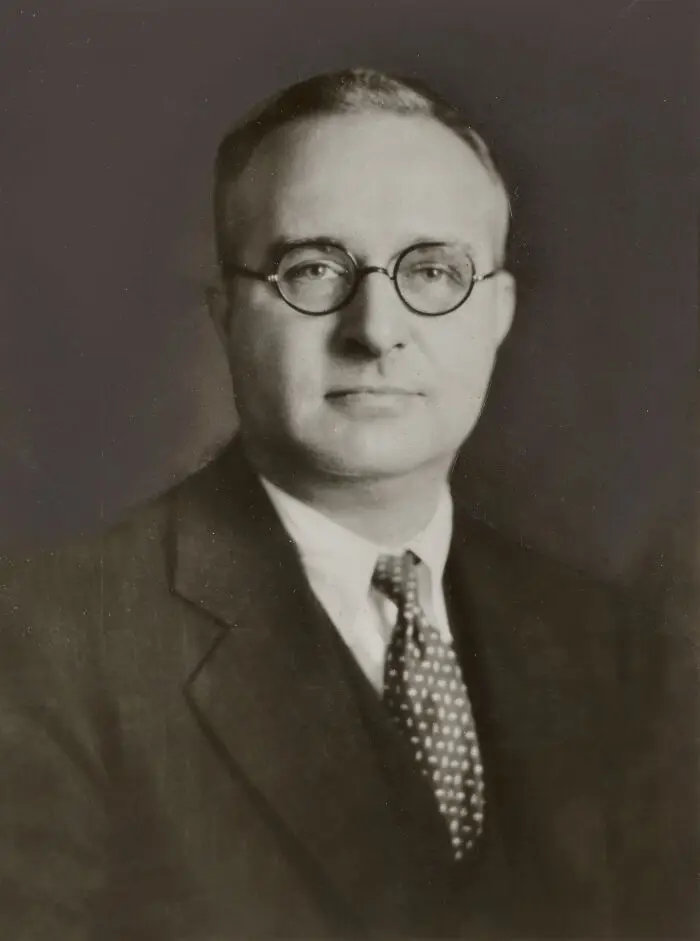
He also went on to synthesize a chemical called Freon to be used as a refrigerant (to be fair, the available refrigerants at the time were pretty toxic). Freon's known nowadays as part of a group of chemicals called CFCs - yup, responsible for the hole in the ozone layer.
As a tripartite addition to his unfortunate inventions, he also became severely disabled towards the end of his life and devised a series of ropes and pulleys to get himself out of bed. It strangled him.
#9

One mathematical principle that helps explain this is the law of truly large numbers, which the BBC discusses when examining why unlikely events happen more frequently than people might expect. The idea is that an event with an extremely small probability can become almost inevitable when there are enough opportunities for it to occur.
People tend to judge coincidences from an individual perspective, wondering how likely it was for them to meet a particular person or experience something unusual on a specific day. However, the chances look very different when considering millions of people and their countless daily experiences.
For instance, if an event had a one-in-a-million chance of happening to one person in a day, a population of 250 million would produce approximately 250 such occurrences daily.
#10

Edit: the German ship was the SMS Cap Trafalgar and the British one was the HMS Carmania.
#11

#12

Mona, however, did track down their father, and arranged a meeting with him; Steve Jobs asked her not to mention him, and she agreed to respect his wishes.
When she met her father, though, eventually the conversation turned to his career managing various restaurants throughout the world (he'd since given up teaching). He bragged about one particularly nice place he used to run in California, where plenty of the Silicon Valley types would sometimes show up, including Steve Jobs, who he described as a "great tipper."
Mona asked Jobs about this, and he remembered the place, and remembered meeting the man who ran it on several occasions. He met his biological father and didn't even know it.
The same principle applies to seemingly impossible situations involving repeated lottery wins, unusual family connections, or even multiple lightning strikes. Someone winning a major lottery twice might seem like an almost unbelievable stroke of luck, but when millions of people purchase tickets over several decades, such outcomes become considerably less surprising.
Similarly, while having three children in one family share a birthday would be extraordinarily unlikely for any particular household, it becomes more plausible when considering the enormous number of families with three children. These examples demonstrate how our intuition about probability can be misleading.
We tend to focus on the individual experience rather than all the opportunities that exist for something unusual to happen somewhere in the world.
#13
The government spent years trying to decode the message, with no luck. Eventually, a Russian spy defected to America, and in the process of handing over Russian secrets, the spy was asked about the coded message in the hollow coin.
The man translated the message, and it turned out to be a "Welcome to America, here's the way our operations work" message from Russia, meant for the very spy who decoded the message for the American government.
#14

End of the monarchy - 1918
Failed Beer hall putsch- 1923
Kristallnacht - 1938
Fall of the Berlin Wall - 1989.
Edit: got the year wrong on one.
#15
And guess what happened after that... he passed in 1932...
But 4 years after that (so 6 years after his last lightning strike) his gravestone gets struck by lighting.
Of course, not every coincidence feels extraordinary simply because of its rarity. Some seem particularly meaningful because of the circumstances surrounding them. Psychologist Carl Jung developed the concept of synchronicity to describe experiences in which unrelated events appear to have a personal significance despite having no identifiable causal connection.
For example, someone grieving a parent might unexpectedly encounter a familiar song, photograph, or place that reminds them of the person they lost. Although the encounter may have an ordinary explanation, its timing can make it feel deeply significant.
These experiences can be especially powerful during major life changes, including bereavement, illness, divorce, or career transitions, when people may be more inclined to search for reassurance and meaning.
#16
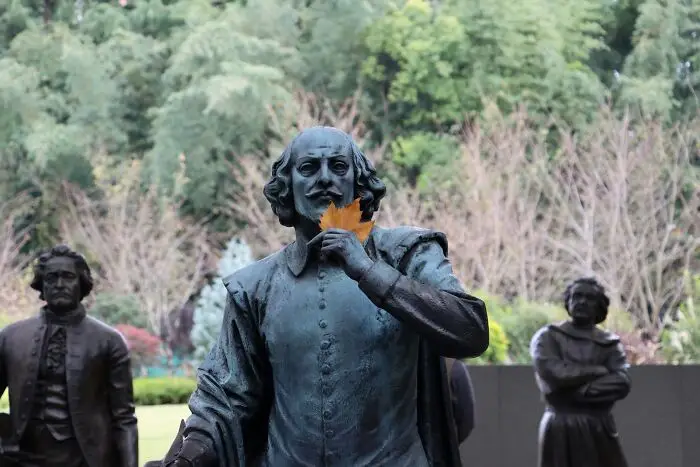
William Shakespeare had a wife called Anne Hathaway
I posted this before but seriously it is the best I have got
Edit: TIL that no one knows what Shakespeare looks like
Edit 2: TIL that 'no one' is actually two separate words and is not conjoined with a dash.
#17
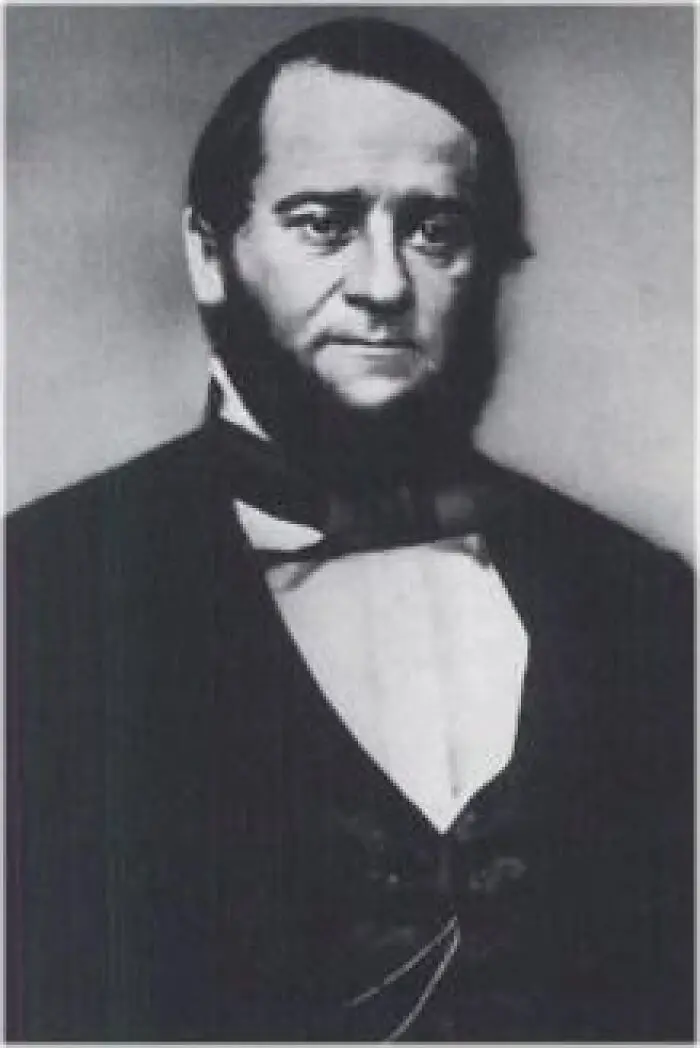
He was a grocer who lived in Manassas, Virginia, where the First Battle of Bull Run, one of the first battles of the Civil War, took place on July 21, 1861. The Confederates used his house as a base, and a cannonball came in through his window. Fearing for his family's safety, he moved to the small town of Appomattox Court House.
Almost 4 years later, on April 9, 1865, Confederate General Robert E. Lee surrendered to Union General Ulysses Grant. The surrender was signed in Mclean's parlor.
The First major battle took place in his front yard, and although he moved, the war found its way back to him. It started and ended on his property.
#18
There is, however, a psychological explanation for why these experiences can feel so convincing. During emotionally demanding periods, people often become more attentive to things that reflect their thoughts and concerns. Selective attention can make certain details stand out while countless unrelated occurrences go unnoticed.
Confirmation bias can also influence how people interpret events, making them more likely to remember experiences that support an existing belief while overlooking those that do not. This does not mean that the emotions attached to a coincidence are any less genuine, but it does help explain why some ordinary encounters can leave such a lasting impression.
An event that might otherwise have gone unnoticed can become unforgettable simply because of what was happening in someone's life when it occurred.
#19
#20
http://en.m.wikipedia.org/wiki/Tsutomu_Yamaguchi.